Kudichin Self-Guided Walk: Exploring Bangkok’s Hidden Portuguese Community
This Kudichin self-guided walk starts with a 10-baht ferry, ends at a temple full of turtles. Along the way you take in three centuries of history; Portuguese, Chinese, and Thai Buddhist all packed into one compact riverside neighbourhood that most Bangkok visitors walk straight past.
We did this walk badly the first time, wandering without knowing what we were looking at, but sensing it was worth coming back to. The second time we visited with a local historian. That walk was epic. Then we went back alone to spend time in the museum, reading all the history panels (English and Thai). Now we bring visiting friends here to show them a different side of Bangkok.
Why Kudichin?
Kudichin (also spelled Kudi Jeen) sits in a bend of the Chao Phraya River on the Thonburi side. Portuguese traders settled here in the late 18th century after King Rama I gave them land for supporting the new capital after its relocation from Ayutthaya.
Chinese migrants arrived later and added their own culture. A Muslim community followed. All three communities still live in the same few streets.
What you find here is quiet lanes, old wooden houses, a whitewashed church, incense from a Chinese shrine, and two impressive Buddhist temples. It feels quite different from the rest of Bangkok.
Prefer a guided experience? This tour with Magical Trip covers similar ground with a local guide who can provide deeper historical context and help you navigate the Portuguese sweets shop and community interactions.
Getting There: Atsadang Pier to Santa Cruz Pier
Ignore your instinct to head to Saphan Taksin BTS and the Chao Phraya Express. This route is simpler, cheaper and puts you in the right spot immediately.
Take the MRT Blue Line to Sanam Chai station and use exit 5. It’s a 3-minute walk to the water. Head towards the river, cross the bridge to the other side, and walk past the restaurant. You’ll see Atsadang Pier, which sits right next to Rajini Pier on the Bangkok side of the canal.
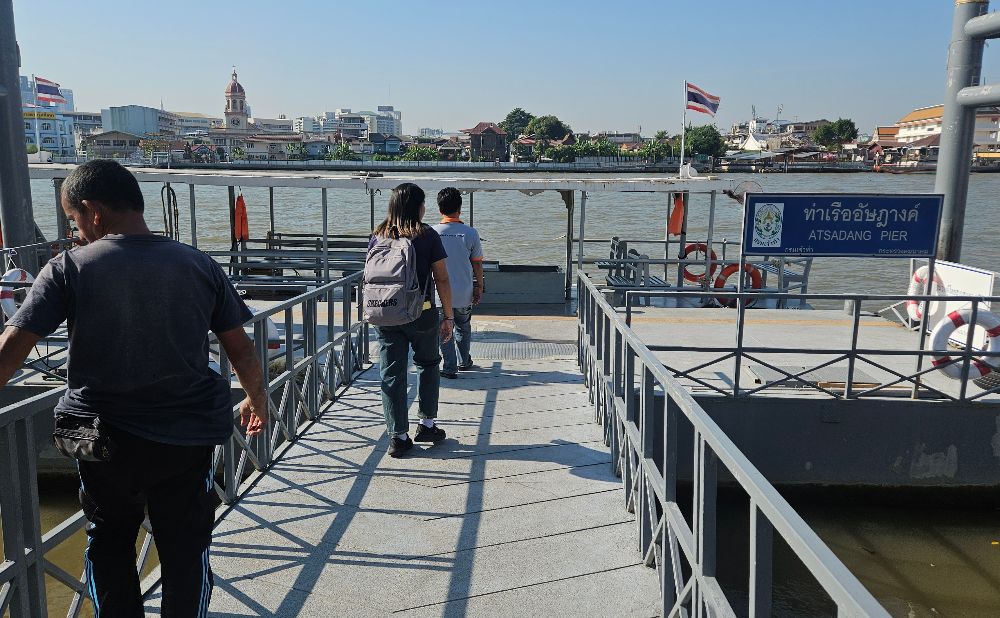
The cross-river ferry to Santa Cruz Pier costs 10 baht. When you board here they will collect your fare. You pay on the Bangkok side regardless of which direction you’re travelling. The crossing takes just a few minutes and drops you directly at Santa Cruz Pier on the Kudichin side.
For ten baht you cross the river and step into a different century.
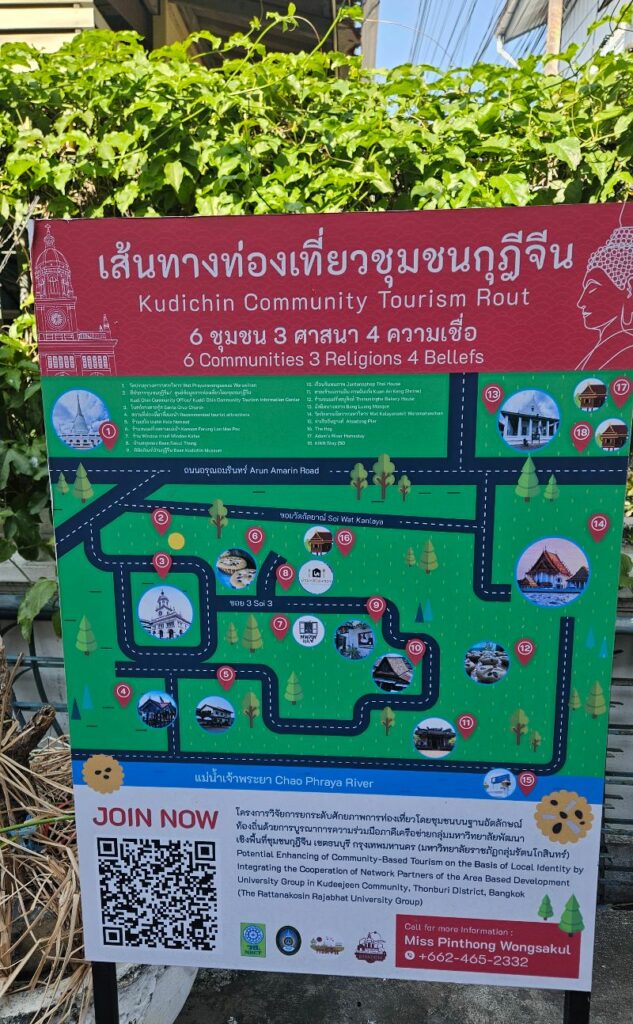
Kudichin Self-Guided Walk route
Santa Cruz Church
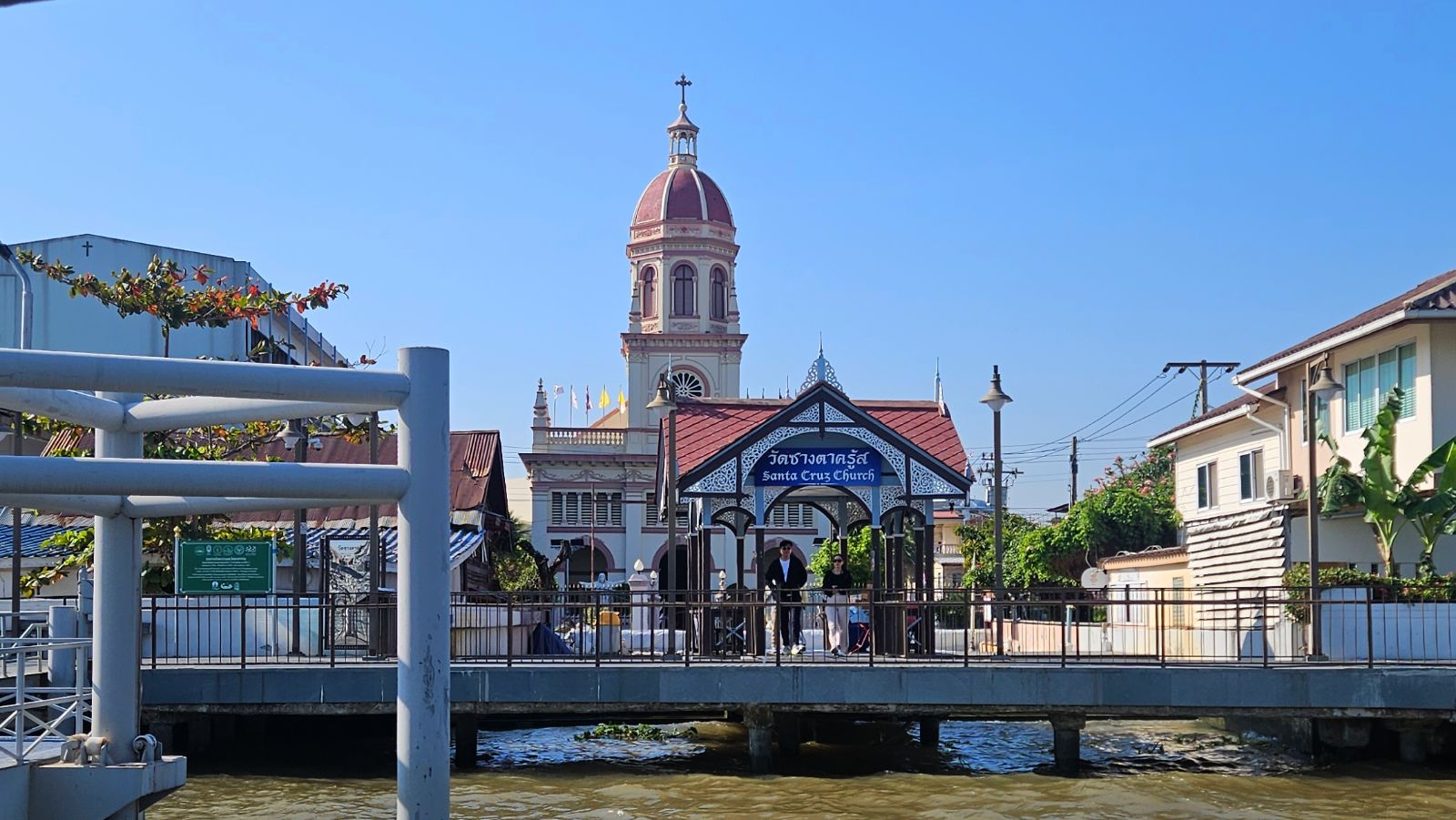
You step off the ferry and the church is right in front of you. Santa Cruz Church (also called the Portuguese Church or Wat Kalawar by Thai locals) is a pale pink Catholic church that’s stood here in various forms since 1769. The current building dates from the early 20th century. I have yet to see inside as it’s been closed on our visits.
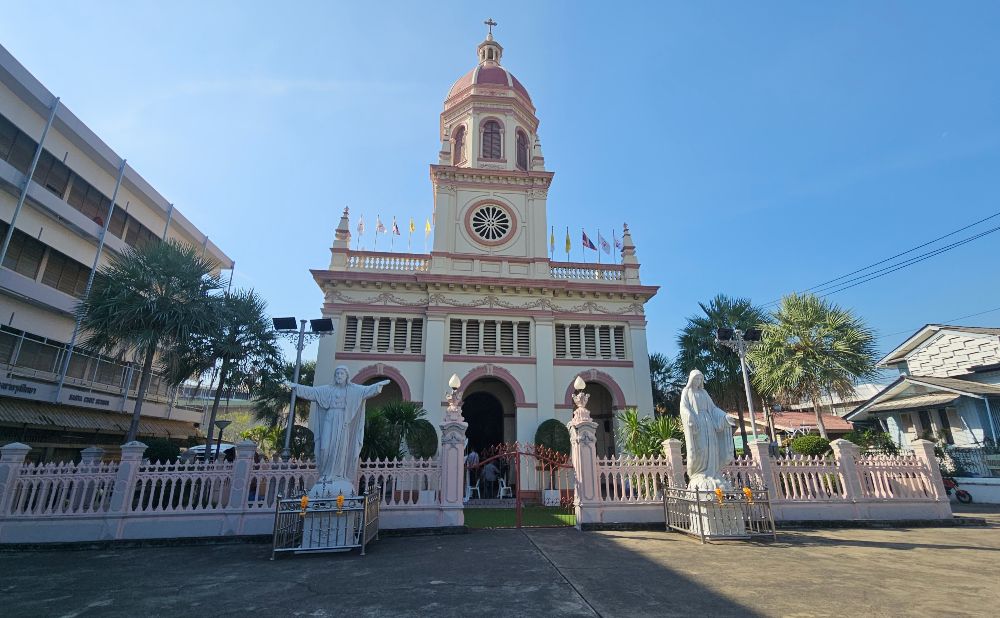
If you find it open grab your chance to pop inside. The strong Portuguese catholic community has maintained it for over 250 years.
Open: 7am-10am, 5pm-7pm – mass each day at 6am and 7pm
Into the Kudichin Community
From the church, we walk into the lanes of the community itself.
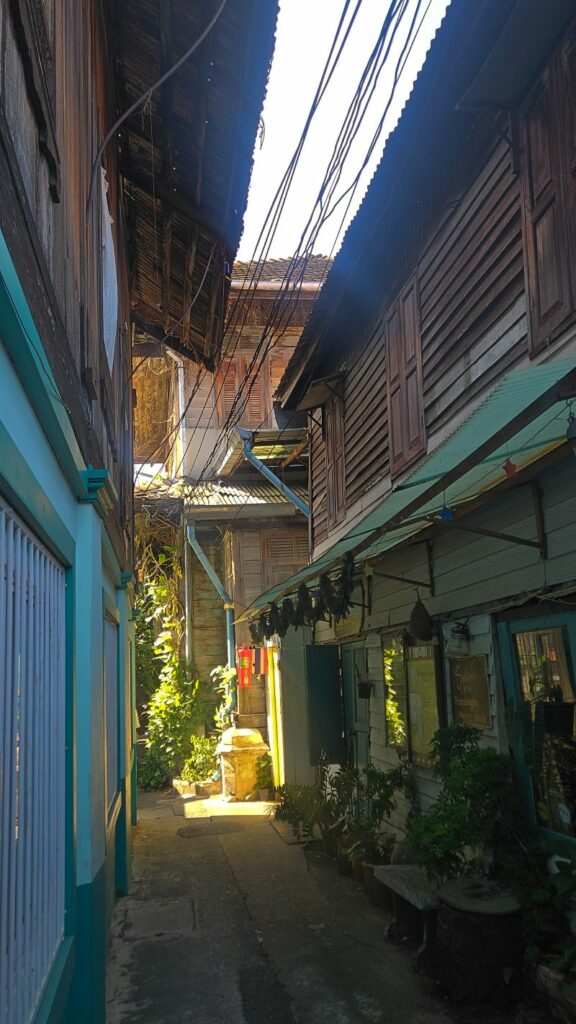
The streets are narrow and the houses are old. Keep in mind as you explore that people actually live here, if you spot someone say hello and smile. Keep your eyes out for the traditional wooden houses. Some are beautifully maintained, others are falling apart. Be respectful and don’t photograph people without asking.
The Portuguese Sweets — Charles’s Favourite Stop
This is the highlight of the walk for Charles, and the detail that makes Kudichin unlike anywhere else we’ve been in Bangkok.
There are two places to know about, and together they tell the story.
The first is the production bakery a fifth-generation family operation, passed down from Portuguese ancestors who settled in the Kudi Chin area.
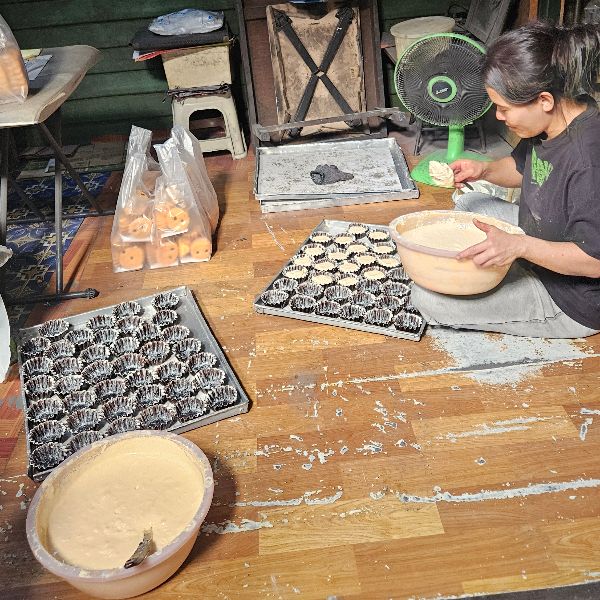
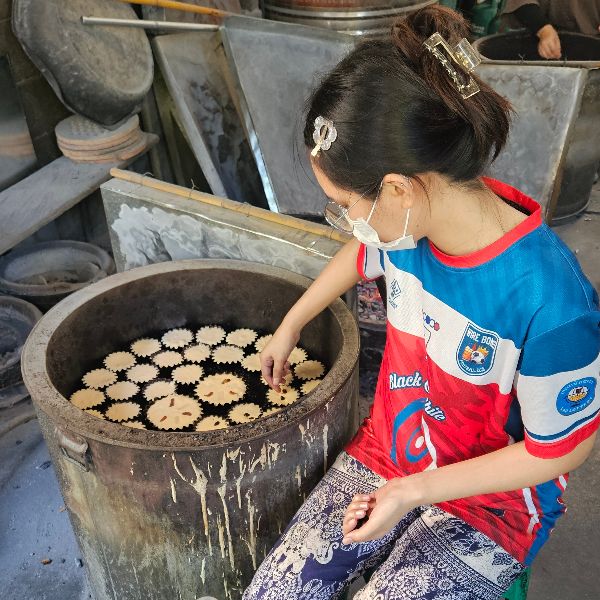
This is where the Khanom farang kudichin are actually made, and if your timing is right you can stand and watch the whole process: the dough mixed from wheat flour, sugar and duck eggs, shaped and baked over charcoal, then finished with granulated sugar, raisins and candied winter melon. The smell of charcoal and baking sugar hits you before you see the door.
Open: Monday–Friday, 9:30am–5:30pm. Closed weekends
Where: 382 Soi Wat Kanlaya, Thon Buri
Next look for Thanusingha (ธนูสิงห์ ขนมฝรั่งกุฎีจีน). It’s a tiny shop tucked inside one of the community’s small alleys. This is another popular spot to buy Khanom farang kudichin. It comes in two sizes, small for 20 THB and large for 50 THB.
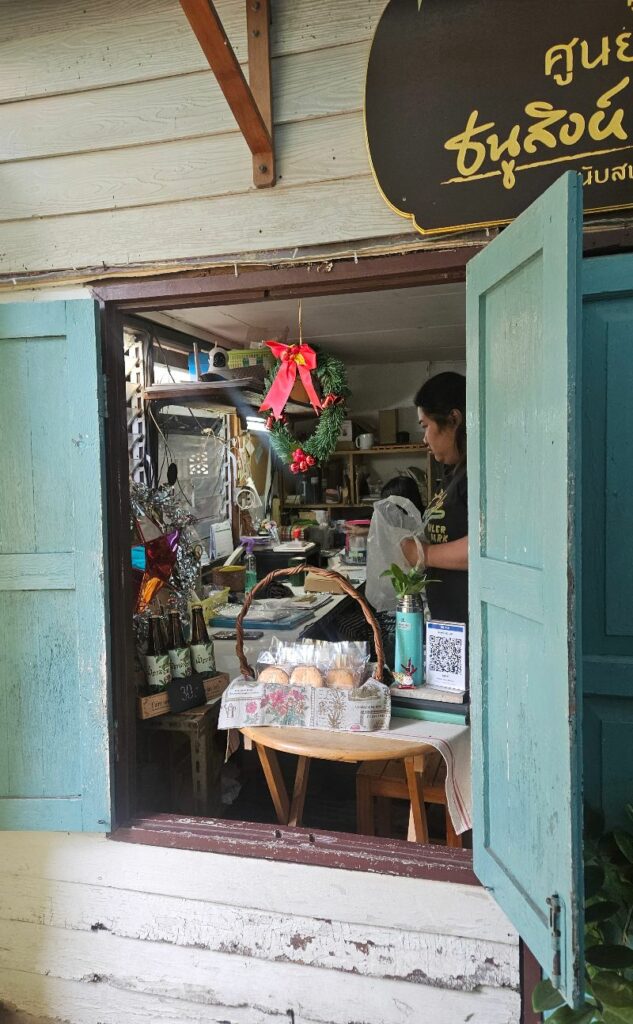
Charles grew up in Brazil and speaks Portuguese. The first time he spoke to the owner in Portuguese, she was delighted. That conversation alone was worth the edit.
Baan Windsor – The Gingerbread House
As you wind your way through the streets, keep your eyes open for Windsor House (บ้านวินด์เซอร์) It’s not open to the public, but it’s absolutely worth pausing at.
The house belonged to Khun Phra Prakob, a descendant of Louis Windsor, whose father was an English ship captain. Louis founded the Windsor Department Store on Charoen Krung Road. This beautiful old Thai wooden house is one of the last physical traces of that history.
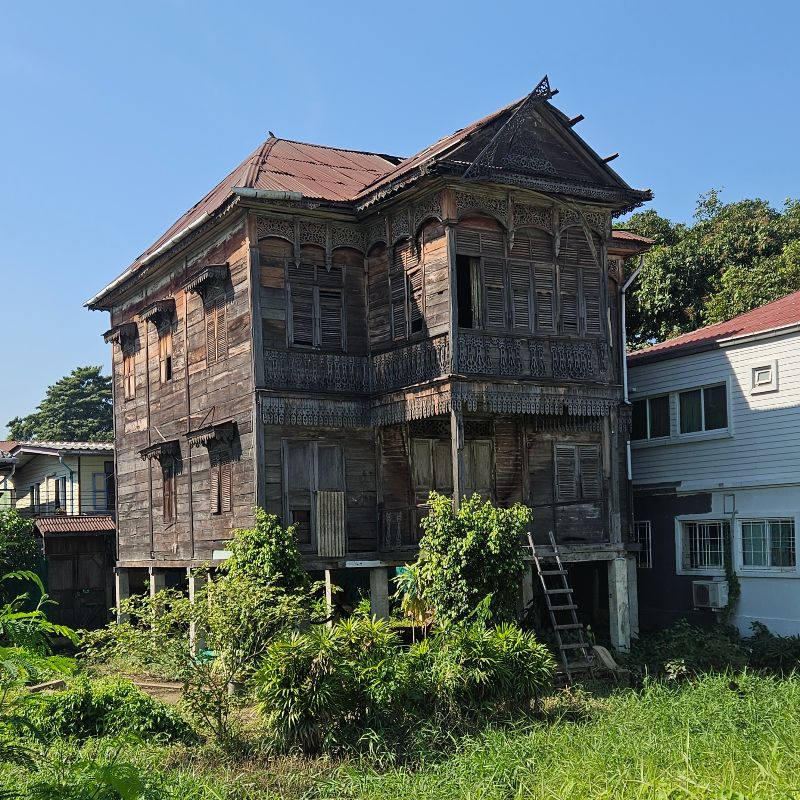
The house is often called a “gingerbread house” because of its ornate wooden fretwork. IT’s a colonial architectural style you’ll also find in Lampang’s old quarter, where European influence left a similar mark on Thai architecture.
When we last visited, the house was raised off the ground as part of renovation works. Something is happening, though what exactly comes next is unclear. The ownership situation is complicated. The land belongs to the temple, so any restoration needs religious permission. Apparently efforts to involve the Fine Arts Department have stalled.
The house is best seen from the river walk.
The Kudichin Museum and Old Houses
The Baan Kudichin Museum at 271 Thetsaban Sai 1 Road documents the layered history of the community, including the Portuguese founding, Chinese migration, the evolution of the neighbourhood through the centuries.
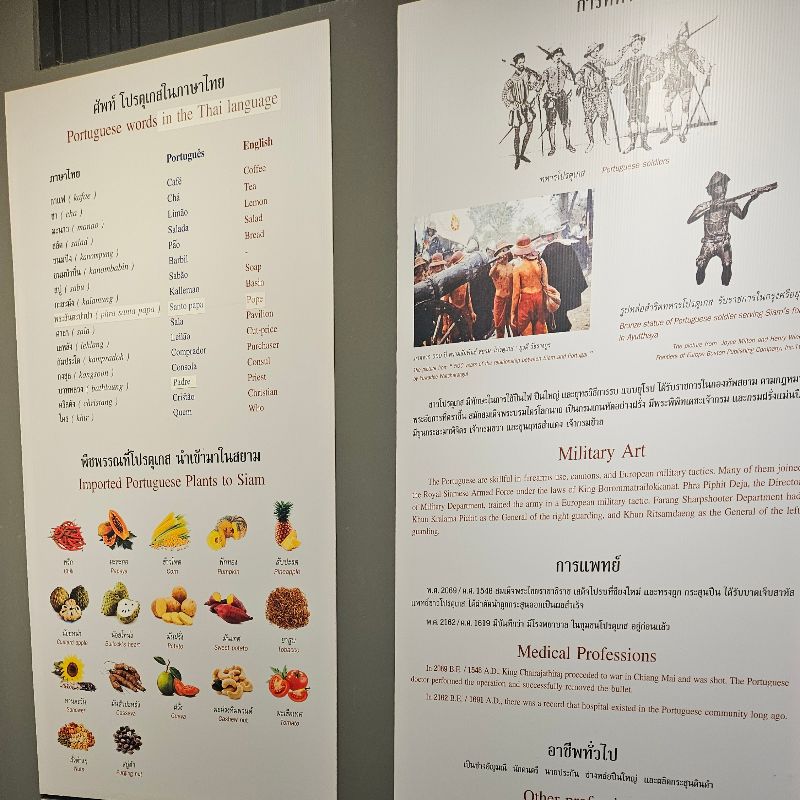
It’s modest in scale but more engaging than the size suggests. It really helped me to understand how this pocket of Thonburi ended up with such an unlikely cultural mix.
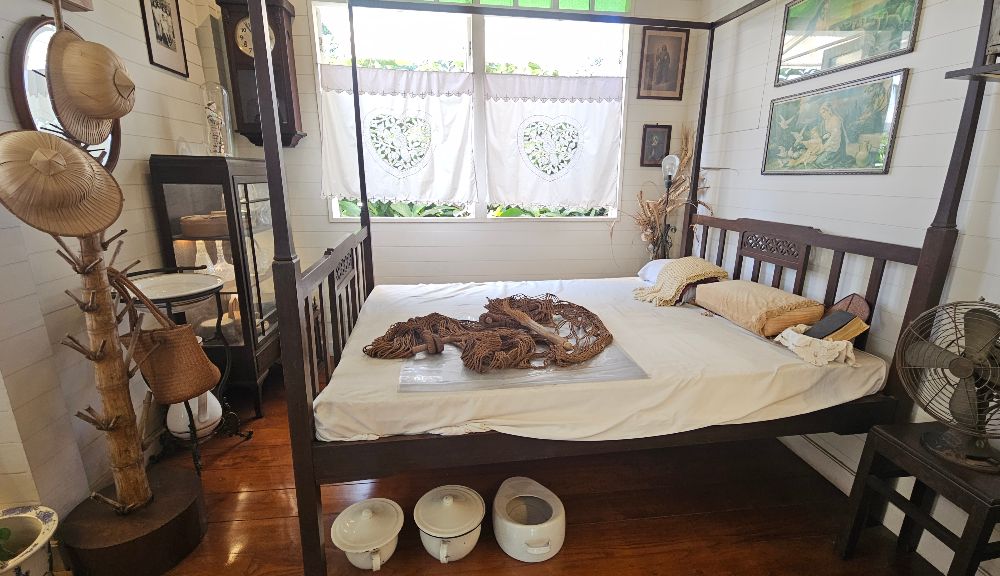
Opening hours: Tuesday–Sunday, 10am–5:30pm. Closed Monday. Entry: free
The old houses surrounding the museum are worth your time in themselves. Several are in excellent condition and give a real sense of what riverside Bangkok looked like before concrete took over.
Kian An Keng Shrine
Keep walking and you’ll reach Kian An Keng Shrine (San Chao Kian An Keng) near Wat Kalayanamit, right on the river. Chinese immigrants built it over a century ago. The intricate carvings, wooden murals and central Guan Yin statue are beautifully maintained. Locals still come to pray for success and fortune.
Opening hours: 7am-5pm Entry: free
The name Kudichin itself includes the word for Chinese (จีน = Jeen), so the Chinese presence is baked right into the neighbourhood’s identity. This shrine is its heart.
Photography is not permitted inside, so put the camera away and just absorb it.
Back to the River: Two Temples
From the community, we double back and walk along the riverside. This section of the walk is lovely, you’re following the curve of the Chao Phraya with boats going past and, depending on the time of day, good light over the water.
Wat Kalayanamit Woramahawihan
I’d passed Wat Kalayanamit dozens of times on river boats and never actually stopped. That changed on this walk, and I’m glad it did.
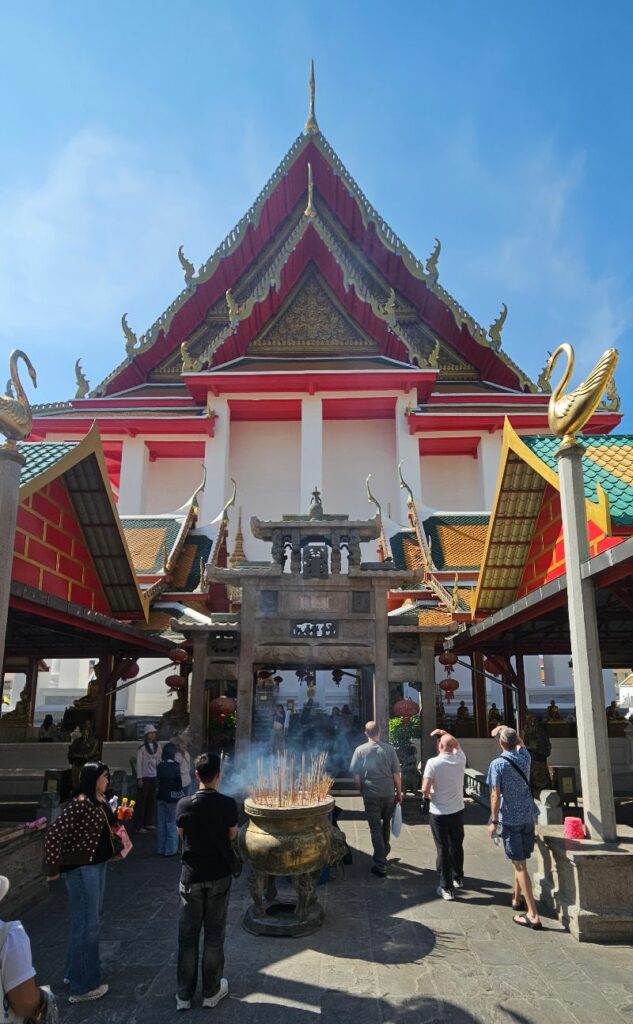
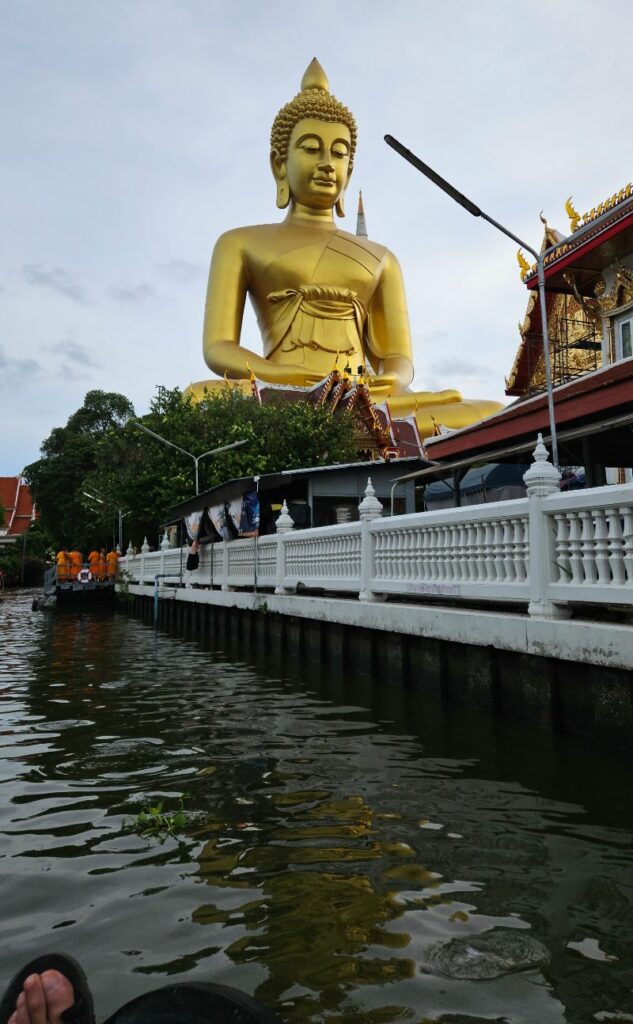
This royal temple dates back to the 1800s and blends Chinese and Thai architectural elements. It’s home to one of the largest bronze Buddha images in Bangkok. Up close, the seated Buddha inside the main hall is extraordinary. The large colourful yaksha (guardian warrior statues) near the entrance are quite different to any you will see elsewhere in Bangkok.
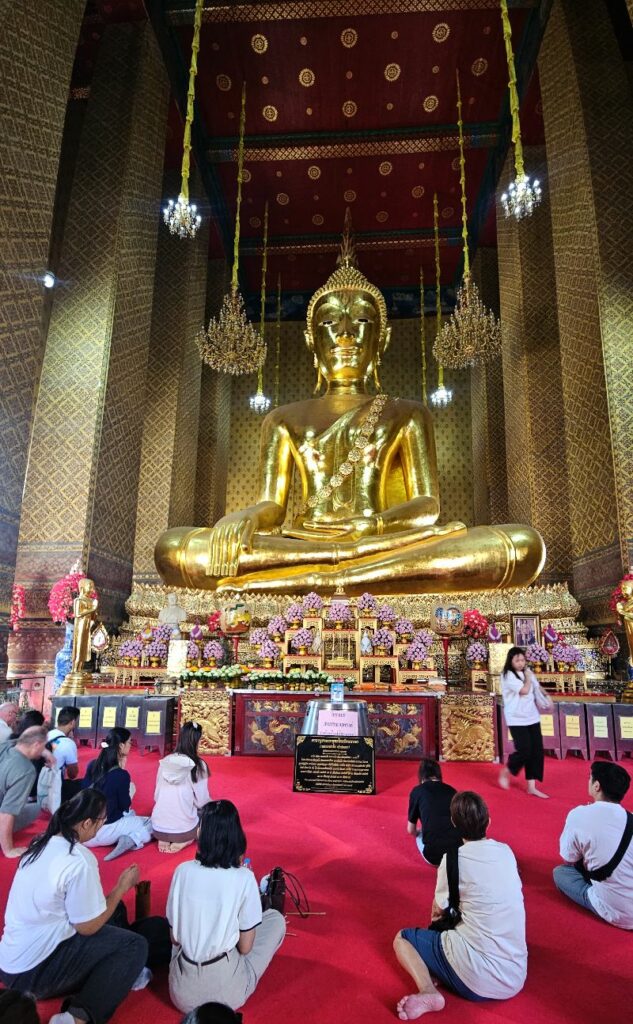
This is a working temple with real religious life, not a heritage site frozen in time. We visited in the late afternoon and it was fairly busy. This is not a bad thing because it gives you a chance to watch locals making their offerings, perfect if you are not sure what to do.
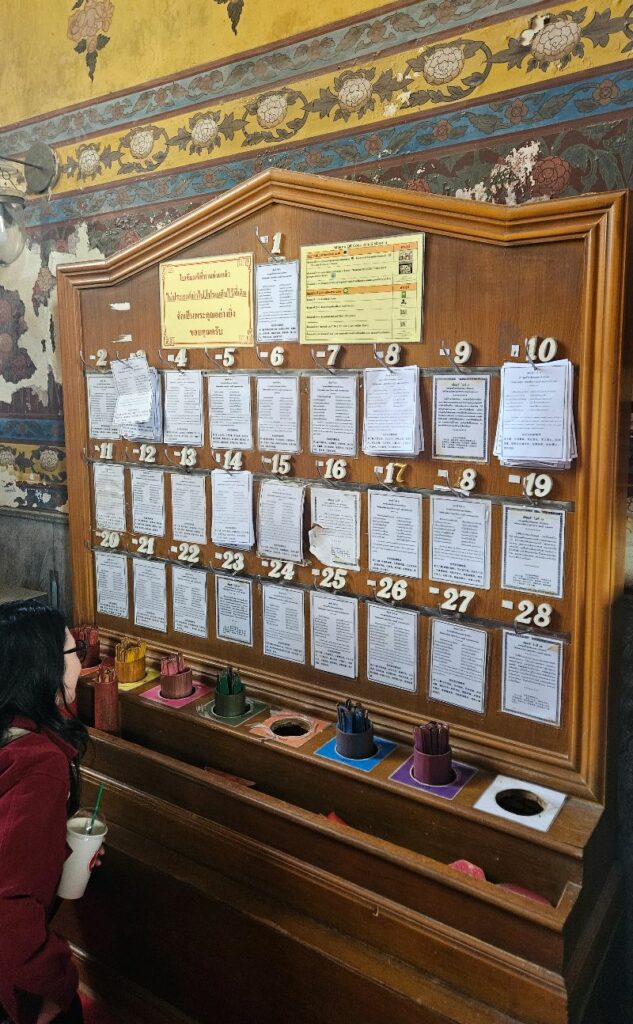
Make an offering or try the fortune sticks and see what the year holds for you.
It’s not as famous as Wat Arun or Wat Pho, which is exactly why it’s worth your time. No crowds, no entrance queues. If you want to explore more of Bangkok’s temples beyond the main tourist circuit, we’ve covered our favourites across the city.
Wat Prayurawongsawas Worawihan (Wat Prayoon) — The Turtle Pond
This is our favourite temple in the whole walk, and possibly one of the most underrated spots in Bangkok.
Wat Prayoon is famous locally for its artificial hill, a deliberately irregular rocky mound covered in small chedis (stupas), spirit houses and miniature temples, built to represent Mount Meru. Walk around and through it. It’s unlike anything else in Thai temple architecture.
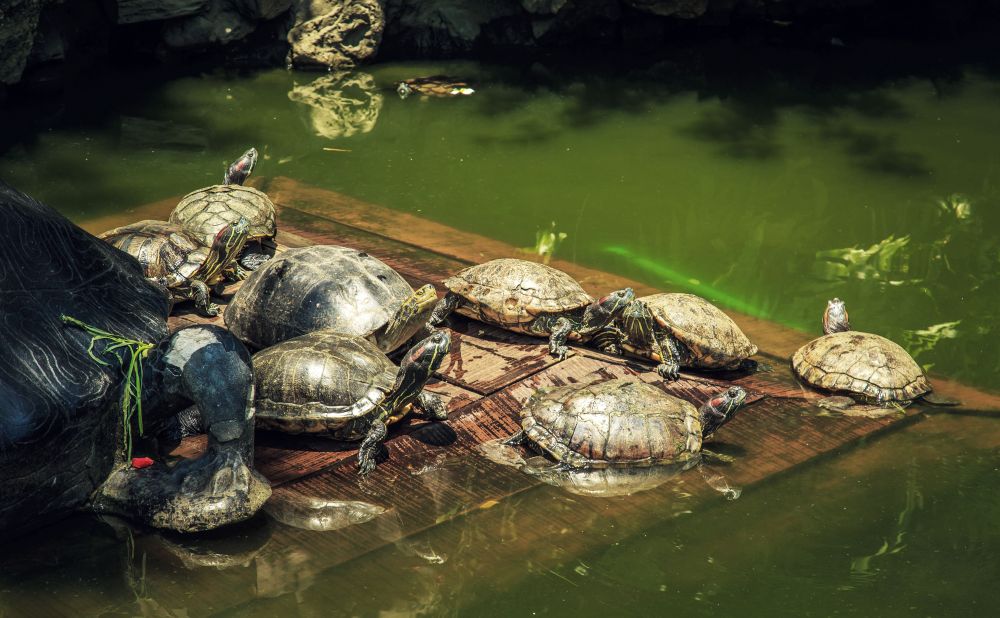
Below the hill is the turtle pond. Locals release turtles here to make merit, and over the years the pond has filled up with an improbable number of turtles.
It’s busy with turtles, kids throwing bread, locals making merit. Nobody’s performing for tourist. If you have children with you, they won’t want to leave which is why we suggest you double back and visit as you head back to take the cross river ferry home.
Time for lunch
Café Kudeejeen (Weekends Only)
If you’re visiting on a Saturday or Sunday, timing your walk to finish at Café Kudeejeen is highly recommended.
The 180-degree river view alone would make it worth stopping, but the food is good too, it’s not just a pretty café trading on its location. This is the kind of place you come to for coffee and end up ordering a full meal. Expect to pay between 200-400 baht per person.
This spot is only open on weekends, and there’s no direct street access so enter from the riverside walk.
If you’re coming on a weekend, save your appetite and backtrack to end here , the river view with a coffee after a morning walking the community is hard to beat.
Mui Lee Chicken and Rice (Wed-Mon.)
Visiting on a weekday? Head to Mui Lee Chicken and Rice (ร้านมุ่ยหลี) at 273–275 Thanon Wang Doem, a short walk from Wat Arun. This place has been cooking Hainanese-style chicken rice for 80 years and is well known in the neighbourhood, everything under 100 THB.
The chicken is expertly poached, the rice beautifully cooked, and the broth will have you wishing you ordered a second bowl. You can ask for specific cuts, I recommend you request the thigh if you want the juiciest meat.
Watch the clock, it closes around 1:30pm when they sell out. Don’t linger too long at the turtle pond if lunch is the plan. Opens 8:30am (closed Tuesday.)
Kudichin Self-Guided walk Map
Continue Your Day: Canal Tours
If you want to keep exploring Thonburi after this walk, two boat tours pick up where we leave off:
Bangkok Longtail Boat Canal Cruise takes you deeper into Thonburi’s canal network, the floating houses, local markets, and narrow waterways you can’t reach on foot.
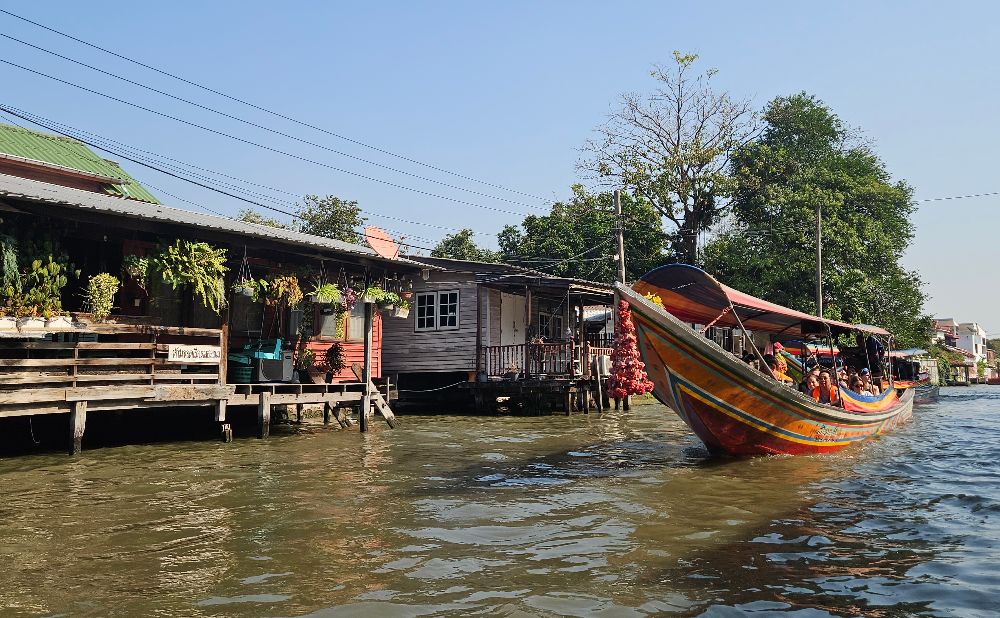
Hidden Bangkok: Artist Village by EV Boat connects to our next article in this Thonburi series. If you’re interested in the creative side of old Bangkok, the warehouses turned art spaces, the artist studios tucked into traditional shophouses then this tour bridges the cultural walk you’ve just done with the contemporary art scene we’ll cover next.
Optional Add-On: Wat Arun
We’ll be honest we’ve been to Wat Arun so many times that we usually skip it. But if this is your first visit to this part of Bangkok, it’s right there and absolutely worth including.
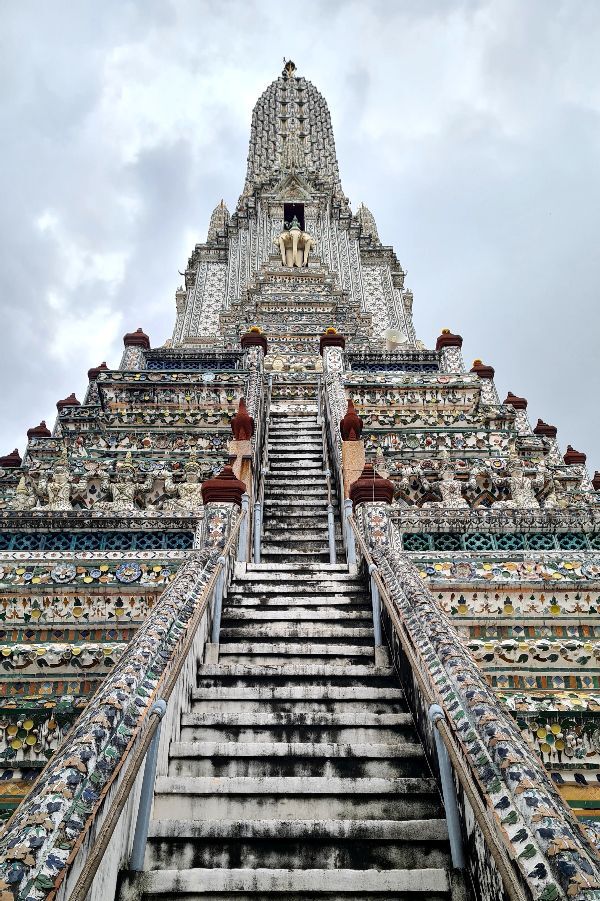
Most often photographed from the Bangkok side in the late afternoon when the light hits the Khmer-style prang (tower). If you want to climb the stairs or get close up photos, expect an entrance fee and moderate crowds, especially on weekends. You can return to the other side of the river by taking the short cross-river ferry from Wat Arun pier.
Want to go deeper? The Visit 3 Religions 4 Beliefs Community tour covers similar cultural ground with a private guide who can help you access stories and community interactions you might miss on your own. It’s a 4.5-hour experience that includes the flower market and expands on the multi-faith history we’ve walked through.
Practical Details
Getting there: Take the MRT to Sanam Chai station and leave via exit 5.
How long: 3–4 hours at a relaxed pace. You could rush it in 2 hours, but why would you?
Best time: Early morning (7–10am) for better light, cooler temperatures, and fewer people. Midday gets hot and the light is flat.
What to wear: Comfortable walking shoes. Shoulders and knees covered for temple interiors. I often carry a large scarf or sarong to cover up.
Cost: 10 baht ferry each way + whatever you spend on sweets and temple donations. One of the most affordable half-days in Bangkok.
Food: The Portuguese sweets are the local speciality. We also picked up some pineapple cookies which were equally delicious. For a proper meal, there are small local restaurants near Wat Prayoon and along the riverside.
What Makes This Walk Different
If you’ve seen Siam’s malls, walked Sukhumvit, and know the BTS stations inside out, Kudichin will feel like a different city.
Kudichin isn’t that Bangkok. There are no shopping centres, no Starbucks, no international hotel chains. Just narrow lanes, wooden houses, a church that’s been rebuilt three times, sweets made from recipes that crossed an ocean, and a turtle pond that makes absolutely no sense.
It costs 10 baht on a ferry.
Have you visited Kudichin? We’d love to hear your experience in the comments below.
First time in Bangkok and not sure of what you’re doing? Read our 42 tips for first time visitors before you arrive.
Next in our Thonburi series: The Artist Village and the extraordinary interior of Wat Paknam another great half day out.