Do You Need Cash in Thailand? Cards, ATM Fees and What Works Where
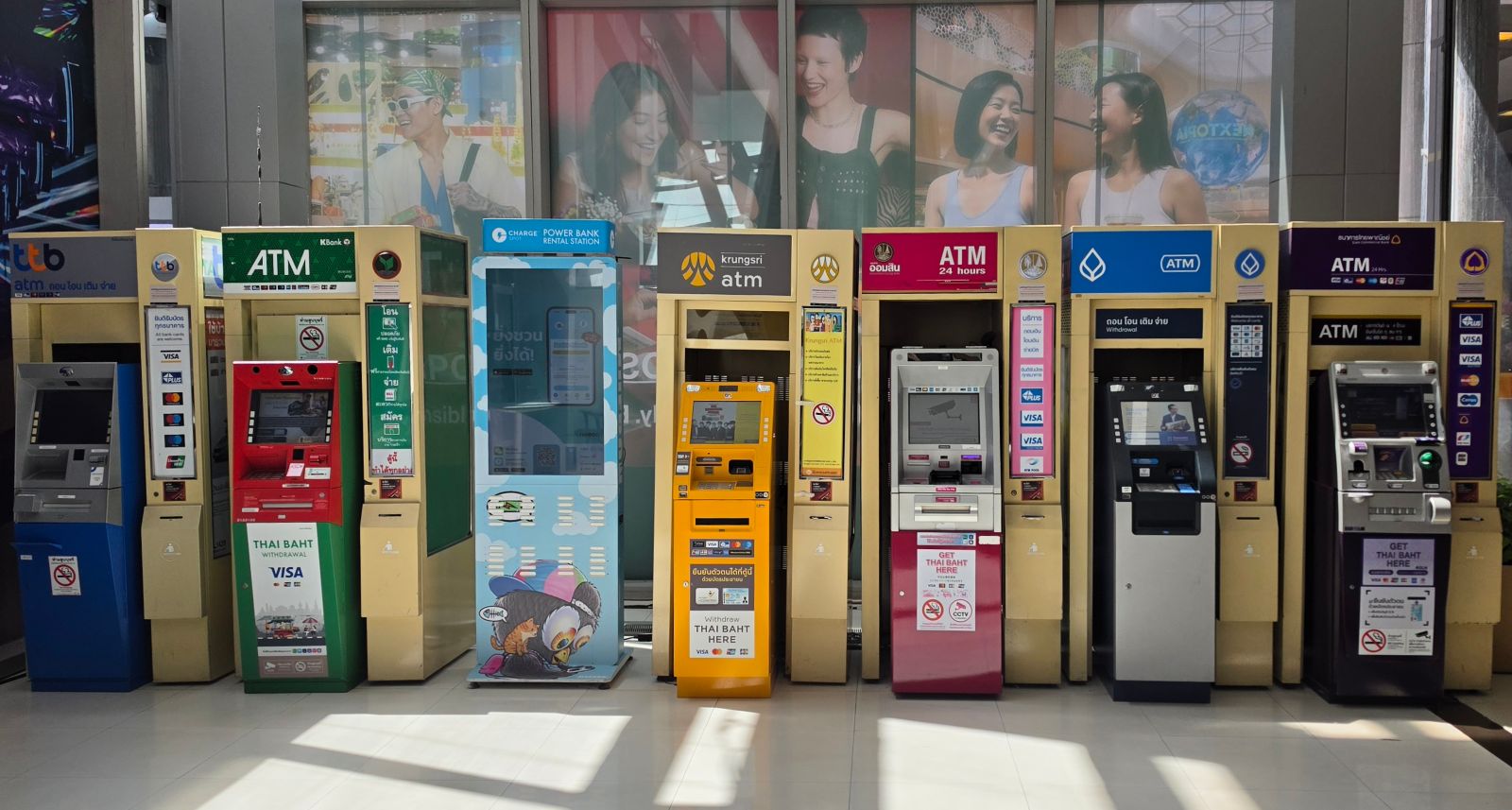
I’ve been coming to Thailand for more than 20 years, and for the last two and a half I’ve lived here full-time in Hua Hin. Paying for things has changed a lot in that time. It’s not a cash country any more. It’s not a card country either.
This is what I use, where I use it, and what it costs me, including the new ATM fees that came in this year.
This page contains affiliate links. Please see our disclosure policy for more details.
Do You Need Cash in Thailand?
Yes. Just not as much as you’d expect.
We live in Hua Hin and take out 20,000 to 30,000 baht a month. That covers us. We always have a couple of thousand baht on us, and anything that takes a credit card gets the credit card.
Cash is for the small, local stuff. Massages. The cafes at the food markets and small restaurants. Fruit and veg, and the butcher.
The supermarket goes on the card, and so does anywhere else that has a card machine.
If you’re here for a week or two, the same split works. A couple of thousand baht in your wallet, a card for everything else, and an ATM run when the cash gets low.
My other tip? Bring some cash from home if you have US dollars, Australian dollars, euros or British pounds. The exchange rate is usually better here than at home. Change it as you need it. Whatever’s left over, take home again, and you won’t lose money changing it back.
Where Cards Work and Where They Don’t
Card acceptance in Thailand is patchy, and it doesn’t always follow the logic you’d expect.
Supermarkets are fine. Lotus’s and the other big chains all take credit cards. So do shopping malls, hotels, chain restaurants and the higher-end spas. Petrol stations take cards too.
Hospitals take credit cards as well. Worth knowing if something goes wrong.
Makro, one of the supermarkets you may come across if you live here for a while, doesn’t take credit cards.
I have my credit card linked to Grab, so I never need cash for rides or food delivery.
Most 7-Eleven stores take cards, but only when you spend more than 200 baht.
In Bangkok, you can tap a Visa or Mastercard (or Apple Pay or Google Pay) at the MRT gates on the Blue, Purple, Yellow and Pink lines. The Airport Rail Link takes them too, so you can tap straight through from Suvarnabhumi into the city. The BTS Skytrain is the odd one out. It still needs a ticket or a Rabbit card.
Cards don’t work at the small places. Street food, market stalls, local massage shops, tuk-tuks, songthaews and the river boats are all cash.
Thai Baht Notes and Coins
Thailand’s currency is the Thai baht (฿, or THB).
Notes come in 20, 50, 100, 500 and 1,000 baht. Coins are 1, 2, 5 and 10 baht.
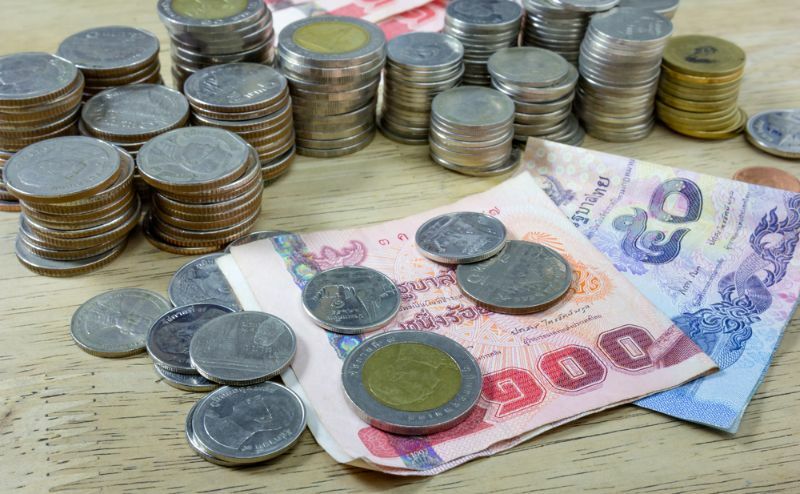
There’s a smaller unit as well. One baht is 100 satang, and there are 25 and 50 satang coins. I’ve only seen a handful in the last two and a half years. Some supermarkets still price things at .25 or .75, and if the cashier has no satang to give you, the price gets rounded up.
Exchange rates move every day, so I won’t list them here. Before you go, check a live converter like Wise or XE and work out what 100 baht is in your own money. Prices are much easier to judge once you know that one number.
Where to Exchange Money
At Suvarnabhumi, skip the bank booths in the arrivals hall. Go downstairs to the basement level, the same floor as the Airport Rail Link. That’s where the SuperRich (orange) and Happy Rich booths are, and it’s where we change money every time we land. They open from around 5.30 am to 11.30 pm.
Note: You’ll need your physical passport. A photo on your phone won’t do.
In Hua Hin, we change money on the lower ground floor of Market Village.
In Bangkok, we use SuperRich and Happy Rich. There are branches all over the city. SuperRich started out as an egg shop, with money changed out the back before it was legal, and these days it’s one of the best places for rates. It also changes currencies that many other booths won’t touch.
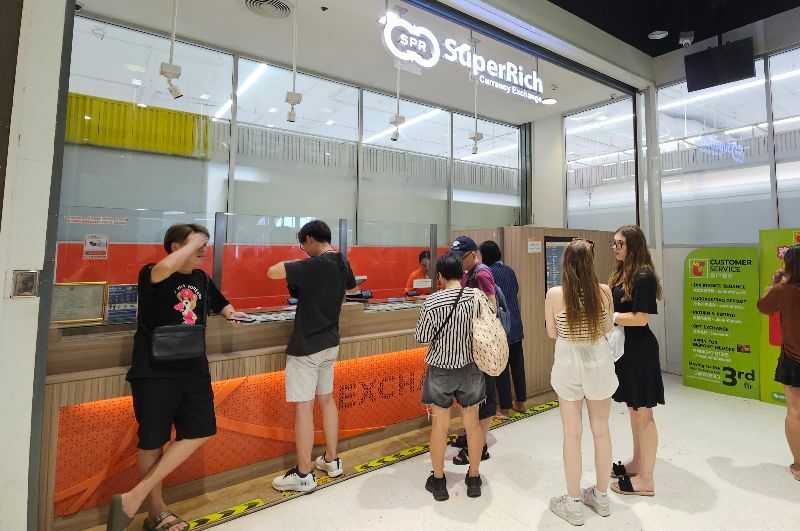
People will tell you one branch has better rates than another. In my experience they’re all pretty similar. We often stay in Silom and use the booth in the food court at Dusit Central Park, and the rates there are the same as everywhere else.
Don’t change money at your hotel’s front desk. The rates are poor, and some add a fee on top.
How to Break a 1,000 Baht Note
ATMs mostly hand out 1,000 baht notes, and plenty of places can’t change them. Small vendors often don’t have that much change. Taxi drivers sometimes suggest they keep the change “as a tip”.
Please don’t hand a 1,000 baht note to a street food stall or a market vendor unless you’re spending a fair bit. It’s hard on them.
These are the places I break mine:
- 7-Eleven. Everyone in Thailand knows they’ll change a 1,000. I’ve seen people buy a 10 baht item and walk off with 990 in change. Try not to be that person if you can help it.
- Coffee shops. I go to 1:2 Coffee, and two coffees usually come to over 100 baht anyway.
- BTS and MRT ticket counters in Bangkok.
- Mall food courts. Many still have a counter where you load money onto a card to pay the food stalls. Both of the big malls in Hua Hin have one, but newer malls are switching to card machines.
QR Code Payments in Thailand
Watch any Thai person pay for anything and they’ll hold up their phone and scan a QR code. It’s how most locals pay, from street food to the supermarket.
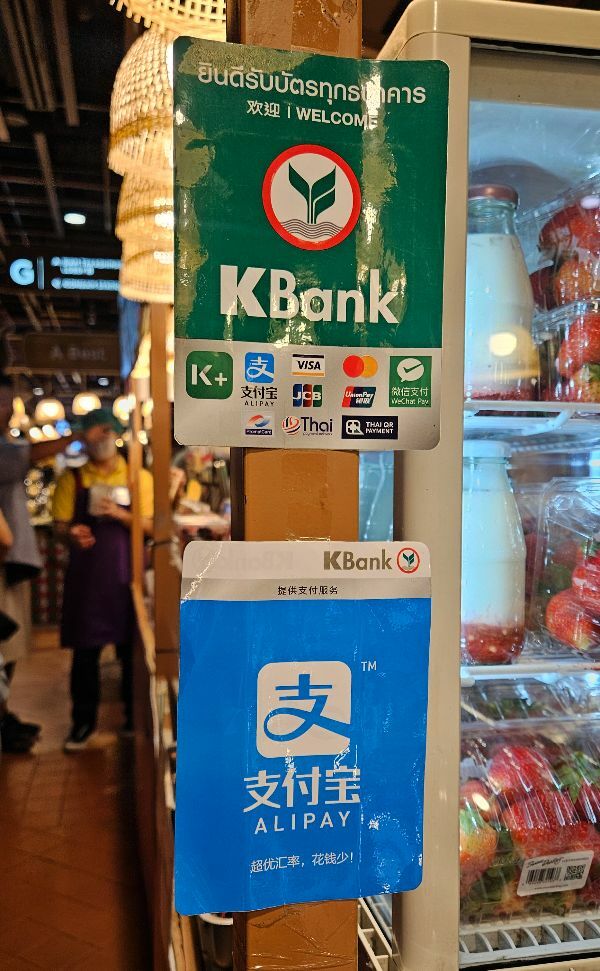
To use it the normal way, you need a Thai bank account. I live here, and I still haven’t set it up. I couldn’t be bothered. Cash and a card cover everything I need.
The options for visitors are growing, though.
If you’re from Singapore, Malaysia, Indonesia, Vietnam, Cambodia, Laos or Hong Kong, your own banking app may scan Thai QR codes directly. Visitors from China can pay with Alipay, UnionPay or WeChat Pay.
For everyone else, there are a few apps to look at:
- TAGTHAi Easy Pay was set up for foreign tourists. It used to need a KBank prepaid card, but since August 2026 you don’t need the physical card. Reviews are mixed, with complaints about exchange rates and a slow app.
- TrueMoney Wallet opened up to tourists in 2024. It works, but it’s built for Thais and can be fiddly for foreigners.
- Wise lets some customers pay certain QR codes from the app. Not every Thai QR code will work.
If you’re only here for a week or two, I wouldn’t bother either. You won’t miss out on anything.
Using Your Debit and Credit Cards in Thailand
Foreign cards work fine in Thailand, as long as they have a chip. Almost all cards do now, but check with your bank before you leave if you’re not sure.
A debit card needs a Visa or Mastercard logo on it, and a four-digit PIN. Some countries use five or six-digit PINs, so that’s worth checking too.
Credit cards are the easiest option in malls, hotels, supermarkets and bigger restaurants. They can also carry the highest fees, so find out what your bank charges for overseas purchases before you go.
Always Pay in Thai Baht
When you pay by card, the machine will often ask if you want to pay in Thai baht or in your home currency. Always choose Thai baht.
If you pick your home currency, the shop’s bank does the conversion at its own rate, and it’s always worse than your bank’s. You won’t see the extra cost at the counter. It turns up on your statement.
The same goes for ATMs. If the screen offers to convert for you, say no.
ATM Fees and How to Cut Them
Taking money out of a Thai ATM with a foreign card costs you every time.
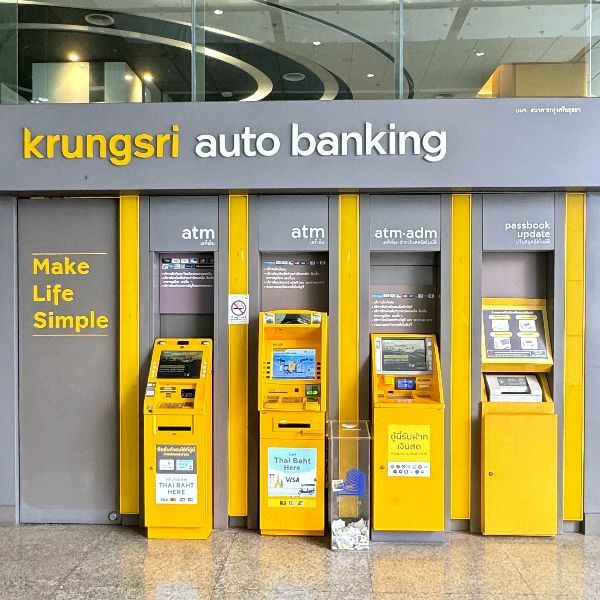
The Thai bank that owns the machine charges a flat fee per withdrawal. It used to be 220 baht at most banks. Not any more. SCB’s fee table from September 2026 lists 250 baht for a Visa card and 350 baht for a Mastercard, and the other big banks are reported to have made the same change.
The fee is the same whether you take out 2,000 baht or 30,000. So take out as much as you can in one go. I usually withdraw 30,000 baht at a time, which keeps the fee to around 1%.
Most machines let you take out 20,000 to 30,000 baht per withdrawal, but it varies by bank. Your own bank may also set a lower daily limit, so check before you leave home.
My Wise card is a Mastercard, so I now pay 350 baht each time. I only noticed the extra 100 baht recently. Check your screen and you’ll probably see it too.
If you carry both a Visa and a Mastercard, use the Visa. It’s 100 baht cheaper per withdrawal. The fee always shows on the screen before you confirm, so if it’s higher than you expected, cancel and try another machine.
Can You Avoid the Fee by Going Into the Bank?
You’ll see this tip online. Walk into a branch and withdraw at the counter, and you’ll skip the ATM fee.
It doesn’t work for most people. At SCB, for example, withdrawing cash at the counter with a foreign Visa or Mastercard costs 180 baht. And foreign debit cards can’t be used to withdraw cash at the counter at all. That leaves credit cards, where your own bank will usually charge a cash advance fee and interest on top.
Cards That Cut Your Fees
Several banks now offer cards with no international transaction fees. That takes care of what your own bank charges. It won’t touch the Thai ATM fee, which you pay whatever card you use.
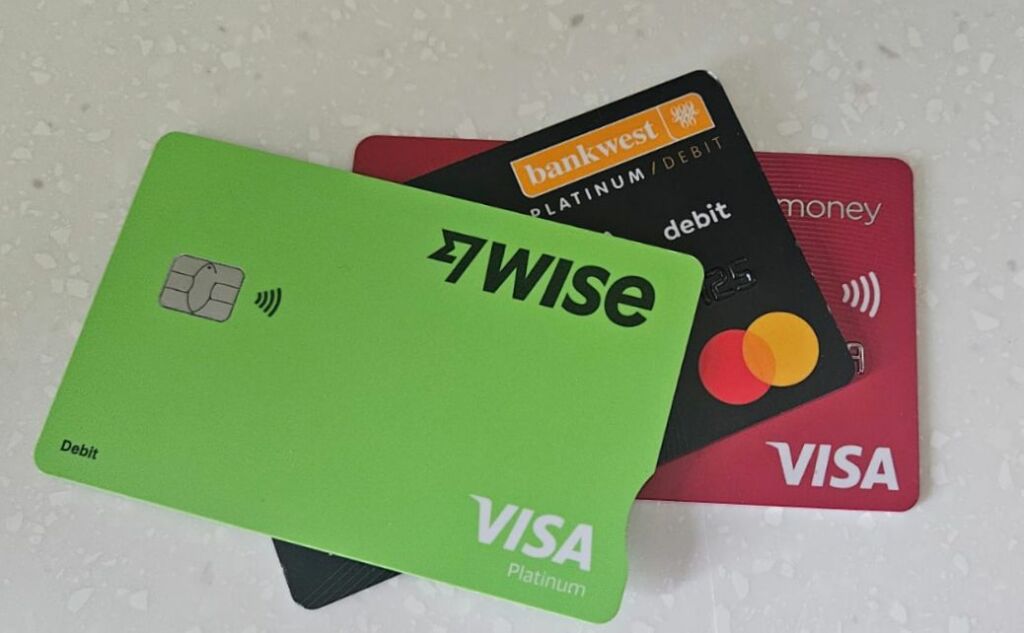
If you’re getting a card for this trip, try to make it a Visa card. A fee-free Mastercard still costs you an extra 100 baht at every Thai ATM. Bankwest is a good example. No foreign transaction fees, but it only issues Mastercards. Australian Wise cards also use the Mastercard network. Wise cards issued via other countries may use Visa so check before you apply.
I use a Wise card. I find it seamless, it holds multiple currencies, and the fees aren’t too bad. The one place it has never worked for me is Gourmet Market.
I also use Revolut. It seems quicker when I’m moving money around. Wise sometimes takes a little longer.
Bartering in Thailand
I don’t barter much.
In the really touristy markets, yes. Those are the places where prices start high because sellers expect you to haggle. The stalls selling copies of designer brands are the same. I don’t buy fakes, but if you do, expect to barter there.
Never with food. Never in malls. If there’s a price tag, that’s the price.
I also don’t bother on anything under 150 baht. The few baht you’d save isn’t worth it, and it matters more to the seller than it does to you.
When I do barter, I offer a bit over half the asking price and go from there. Keep it friendly. A smile gets you further than a hard line.
Proof of Funds at Immigration
Thai immigration can ask to see that you have enough money for your stay. If you’re entering visa-free or on a tourist visa, the safe amount to carry is 20,000 baht per person, or 40,000 baht per family. Children under 12 don’t count.
You don’t need it in baht. Your own currency is fine.
I’ve never been asked. I’ve heard of people who were, but it’s usually backpackers, or long-term nomads with lots of visa runs stamped in their passport. If you’re here for 30 days or less, you’d be pretty unlucky.
If this is your first trip to Thailand, our 42 tips for first-time visitors covers more of these quirky official rules that rarely get enforced but are good to know about.
Since 15 September 2026, most visa-free visitors, including Australians, Americans and Brits, get 30 days, not 60.
I still bring the equivalent of 20,000 baht in my own currency, just in case. It doubles as the cash I change on arrival anyway.
FAQ
Do I need cash in Thailand?
Yes. Small local places, like street food stalls, markets, local massage shops, tuk-tuks and songthaews, are cash only. Malls, hotels, supermarkets and chain restaurants take cards.
How much cash should I carry in Thailand?
A couple of thousand baht is enough for most days. That’s what I keep on me, and I use a card anywhere that takes one.
Can I use my credit card in Thailand?
Yes, in malls, hotels, supermarkets, petrol stations, hospitals, bigger restaurants and on Grab. Makro is the odd one out. It doesn’t take credit cards. Always choose to pay in Thai baht when the machine asks.
How much are ATM fees in Thailand?
The Thai bank charges a flat fee every time you withdraw with a foreign card. At SCB, it’s 250 baht for Visa and 350 baht for Mastercard, and the other big banks are reported to charge the same. Your own bank may add its own fees on top.
Is Visa or Mastercard better in Thailand?
For ATM withdrawals, Visa. It’s 100 baht cheaper per withdrawal at the big banks. For paying in shops, both work.
Does 7-Eleven take cards in Thailand?
Most do, but only when you spend more than 200 baht.
Can tourists pay by QR code in Thailand?
Not easily, unless you’re from a country whose banking apps link to Thailand’s system, like Singapore, Malaysia or Indonesia. Apps like TAGTHAi Easy Pay, TrueMoney and Wise offer some QR payments for tourists, but none of them work everywhere. For a short trip, cash and a card cover everything.
Got More Questions?
Money is one of the most common things people ask about before their first trip. If you’re still unsure about something, join our Facebook group. Ask your question there and you’ll get answers from other travellers and from people who live here.