Using the Skytrain and MRT in Bangkok: Exploring Like a Local in 2026
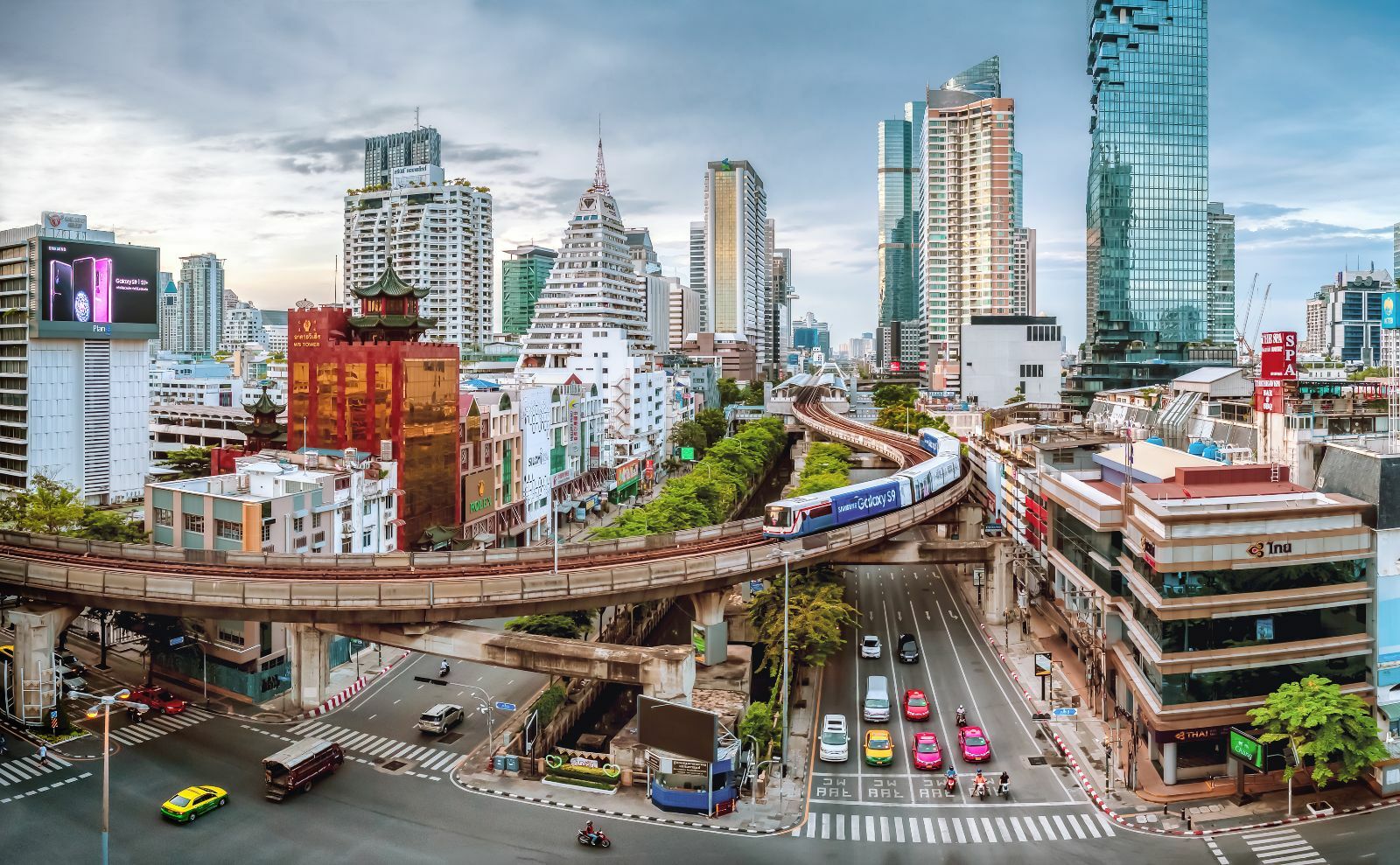
Bangkok’s Skytrain and MRT are the fastest way to get around the city and skip the traffic that clogs the roads most of the day. Most first-time visitors never quite work out how the system fits together, but once you do, it’s quicker than a taxi for almost every trip in the centre, and you travel in air-conditioned comfort the whole way.
This guide covers Bangkok’s three rail systems: the elevated BTS Skytrain, the underground MRT, and the airport-linking rail lines. You’ll find which lines go where, how to buy tickets, and what to expect at the stations.
This page contains affiliate links. Please see our disclosure policy for more details.
Getting Started: Understanding Bangkok’s Rail Systems
Bangkok’s public transport looks confusing on a map, but it comes down to three systems, each covering different parts of the city.
The BTS Skytrain runs on elevated tracks above the streets, so you get a view of the city while the traffic sits below you. The MRT runs underground and reaches some of the older, more historic parts of Bangkok that the BTS doesn’t touch. Then there’s the Airport Rail Link, which connects Suvarnabhumi Airport to the city centre.
The basics:
- Stations are air-conditioned and signed in English
- Trains run from 6am to midnight
- Fares are distance-based between 17-47฿
- Most tourist attractions sit within walking distance of a station
Using the BTS Skytrain
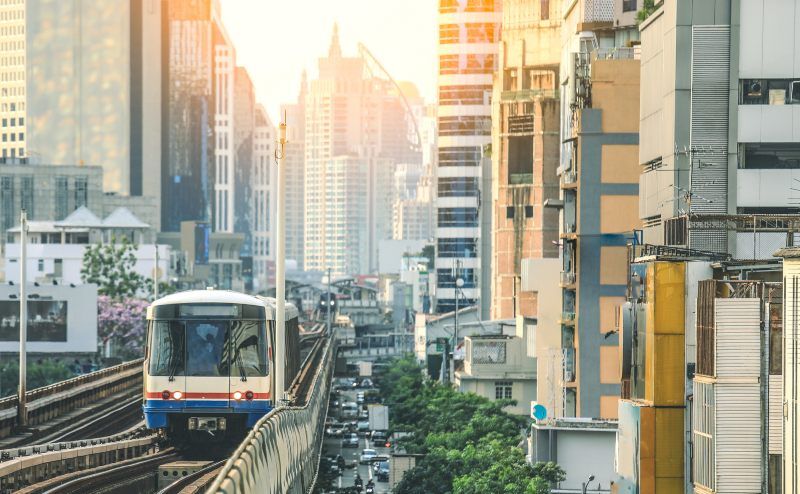
The BTS is likely to be your main way of getting around Bangkok. It’s clean, reliable, and covers most of the places visitors want to see. The elevated line also gives you a good look at the city as you travel, and it’s often the fastest option in central Bangkok.
BTS Ticket Options and Fares
You’ve got three main ways to pay, depending on how you’re exploring.
Single journey tickets work well if you’re only making a few trips. Buy them from the machines or from the counter (both have English options). Avoid the ticket queues during rush hour, 8 to 9am and 5 to 6:30pm. The system is tap-on, tap-off, and single tickets are collected when you exit.
Day Pass suits a day of visiting several spots. The pass gives unlimited rides, valid until service ends that day. It saves you queuing at every station. Currently 150฿.
Rabbit Card is what I’d recommend if you’re staying more than a few days. Top it up and tap your way around. It’s valid for 7 years, though the credit on it expires after 2, and you can use it at convenience stores too.
Tip: If you are travelling in a group of 2 or more and going across town sometimes it’s cheaper to get a rideshare.
Navigate Like a Local: Essential Routes
Once you’ve got a ticket sorted, here’s where the trains actually take you. The BTS runs two lines, Sukhumvit and Silom, and between them they’ll get you to most places you’d want to visit.
Sukhumvit Line (Light Green)
This line runs through the modern heart of Bangkok. The stations you’ll likely use most:
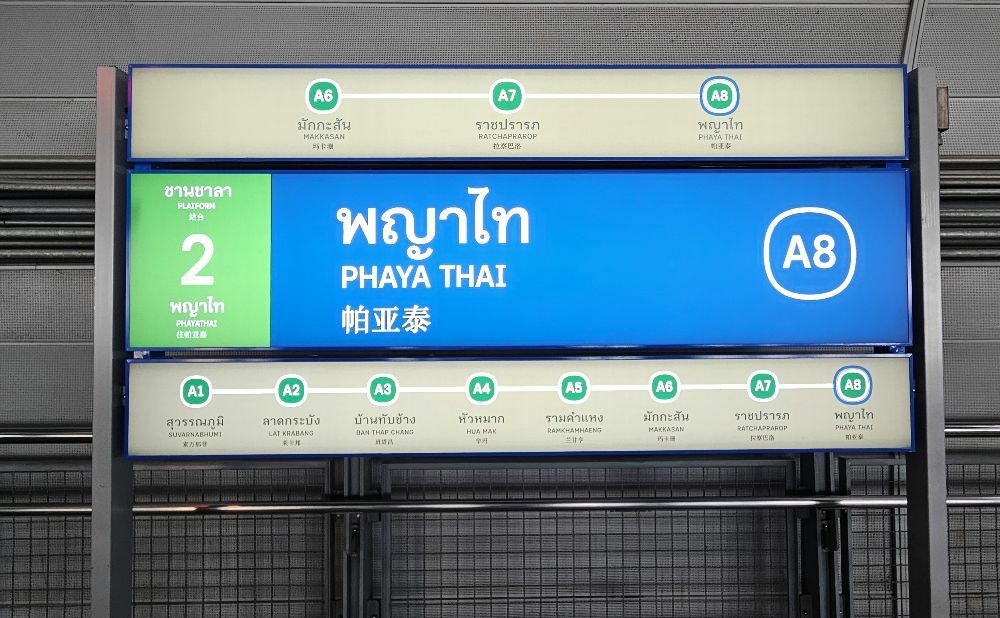
- Phaya Thai: your gateway to the airport, this is where you catch the Airport Link. It’s also within walking distance of Pratunam Market.
- Mo Chit: jump off here for Chatuchak Weekend Market
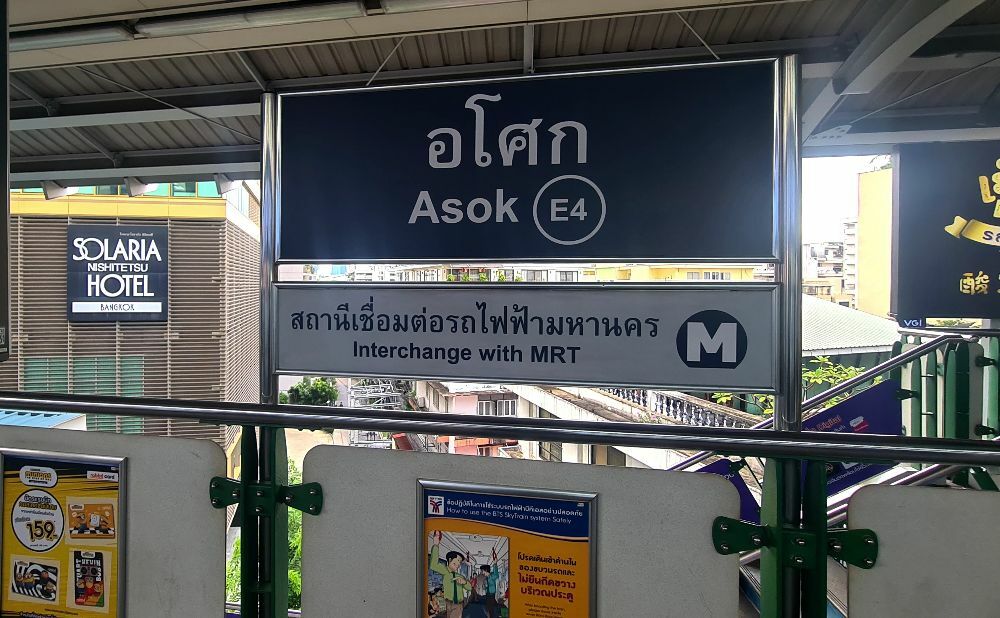
- Asok: home to Terminal 21 mall and a connection to the MRT
- Nana and Thonglor: this is where Bangkok’s nightlife is concentrated, with some of the city’s best bars and restaurants
- On Nut: a good area for local food markets and a more everyday feel of the city
Silom Line (Dark Green)
This line runs between the malls of Siam, older Bangkok, and the riverside:
- Siam: the centre of Bangkok’s shopping, where all the major malls sit, and where you switch between BTS lines
- Sala Daeng: for a morning walk in Lumphini Park, some serious shopping at Dusit Central or an evening at Patpong Night Market
- Saphan Taksin: the starting point for river ferries
- National Stadium: MBK Center is right here, with hundreds of market-style stalls indoors
- Krung Thon Buri: take the Gold Line connection here to reach ICONSIAM mall
Rush hour is worth avoiding if you can, especially at Siam, Asok, and Mo Chit, between 8 and 9am and 5 and 6:30pm. Even shifting your journey by 30 minutes makes a real difference.
If you prefer to be really organised, you can purchase a Rabbit card or one day BTS pass on Klook before you leave home.
Practical Details & BTS/MRT Accessibility
Before you head out, here’s what you need to know about BTS and MRT stations:
- Everything’s marked in English, so you won’t have any trouble finding your way.
- You’ll find small shops and convenience stores in most stations (great for grabbing water or snacks)
- Stations advertise free WiFi, though I haven’t tested how reliable it is myself.
- One important thing to note: no public toilets in the stations, Almost all central BTS stations (like Siam, Asok, Chit Lom, Phrom Phong, National Stadium, and Mo Chit) connect directly via skywalk to large shopping malls.
Getting Around the Stations
- There are elevators, but they can be tricky to find – look for the wheelchair symbols.
- The escalators switch directions during rush hour (and yes, it can be confusing!)
- You might need to tackle some stairs between street level and the escalators.
- Station staff are helpful if you need directions
Bangkok’s transit system isn’t the most wheelchair-friendly. I tore my meniscus when I first moved to Bangkok, and while elevators do exist, they’re often tucked away to the side of the street and connected to the station by a ramp. Look up if you’re not sure where one is.
Some stations have gaps between the platform and the train, and steps show up in places you wouldn’t expect. Station staff are assigned to help if you want to try navigating it anyway, but if you use a wheelchair or have mobility issues, it’s worth having a backup transport plan. Grab cars are a reliable option.
Beyond the Basics: Complete BTS Network Guide
Station Codes Make Things Easier
Look for the station codes, like N5 or E4, instead of trying to pronounce the Thai names. The first letter tells you the direction (N for North, E for East, and so on), and the numbers get bigger as you move further from central Bangkok.
Key interchange stations:
- Siam — central shopping hub, where the two BTS lines meet
- Asok/Sukhumvit — BTS to MRT connection, Terminal 21 mall
- Mo Chit/Chatuchak — Weekend Market access, arrive early
- Sala Daeng/Silom — night markets and Lumphini Park
- Phaya Thai — Airport Link connection
- Krung Thon Buri — Gold Line to ICONSIAM
I keep the BTS website bookmarked on my phone. Their station area maps are useful for working out which exit gets you closest to where you’re going.
The MRT: Bangkok’s Underground Network
I prefer the MRT for exploring the older side of Bangkok. The Blue Line curves through the city’s most interesting neighbourhoods in one loop, and it’s usually less crowded than the BTS.
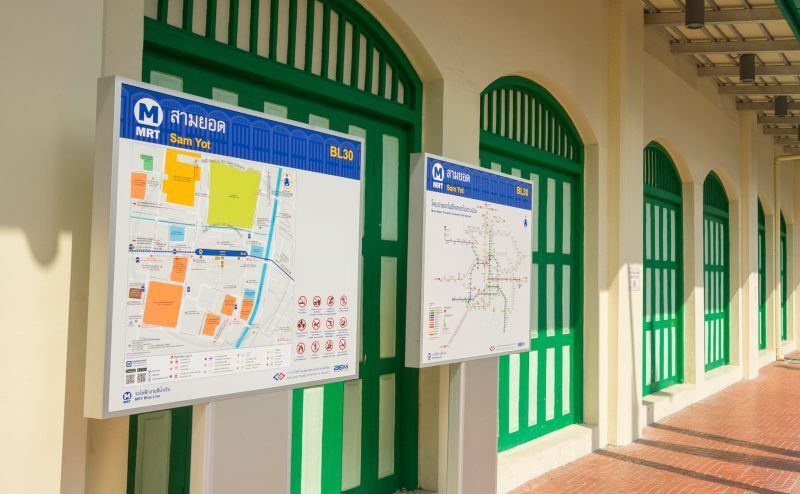
Blue Line Highlights — Where to Stop and Why
- Chatuchak Park: your weekend shopping stop, connects to both the Weekend Market and the BTS
- Wat Mangkon: the best stop for Chinatown, with street food and market alleyways
- Sanam Chai: closest station to the Grand Palace, and you can catch river boats from here
- Sam Yot: Bangkok’s Old Town, with architecture that’s worth stopping to look at
- Sukhumvit: links to BTS Asok and Terminal 21, which has a food court on the top floor
- Silom: good for Lumphini Park morning walks, connects to BTS Sala Daeng
The stretch of stations between Wat Mangkon and Sam Yot is my favourite for street photography. It’s where old and new Bangkok sit closest together.
The MRT isn’t just about getting from A to B. Some stations are worth visiting for their design alone. I take first-time visitors to these four just to see how they react:
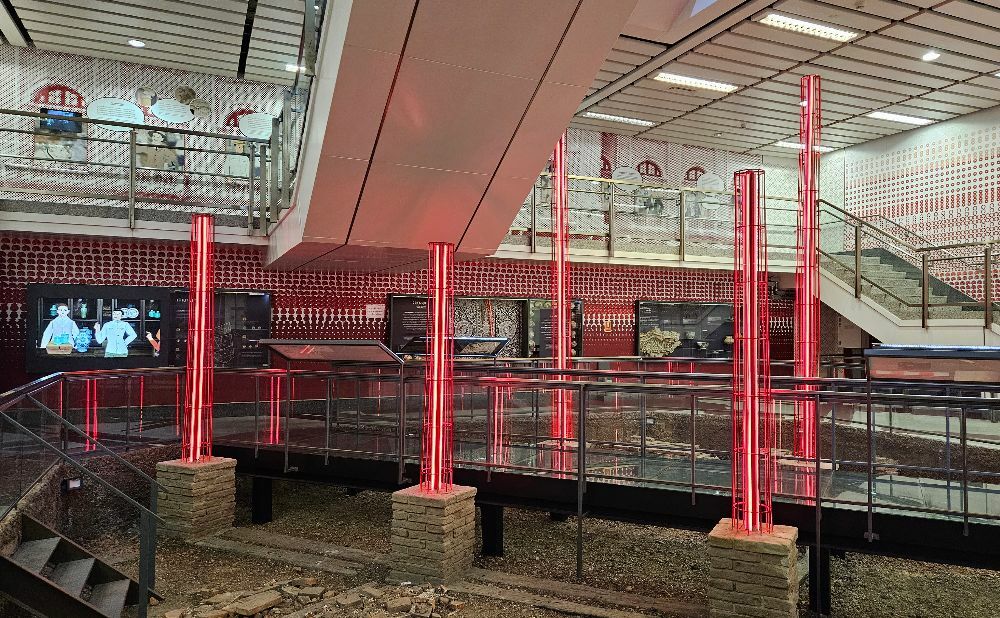
Bangkok’s Most Beautiful Stations
- Wat Mangkon: built as a tribute to Chinatown’s heritage, with Sino-Portuguese architectural details
- Sam Yot: my personal favourite, it feels like stepping into old Bangkok, with historical displays throughout
- Sanam Chai: designed like an underground palace, the Thai-style interior is worth slowing down for
- Itsaraphap: look up as soon as you enter, the gold Thai swan details on the ceiling are worth a photo
Getting Around on the MRT
Before your first ride:
- Buy a token, use a prepaid card, or tap in with contactless, all work here
- Your BTS tickets won’t work here, it’s a separate system
- Look for the blue “M” signs at street level
If you’re using both the BTS and MRT in one day, plan your route carefully. You’ll need separate tickets for each system, and switching between them means exiting one and entering the other.
Making the Most of the Blue Line
The Blue Line loops through both old and new Bangkok, crossing the river to connect both sides of the city. Trains come every 5 to 7 minutes, so you’re never waiting long.
Beyond the stops already covered, two more are worth building into your route. Bang Sue Grand Station is Bangkok’s newest transport hub and worth a look if you’re into architecture. Phra Ram 9 is the stop for Jodd Fairs night market, come hungry.
Connecting from the MRT to the BTS
Three main interchange points:
- Silom/Sala Daeng: easy connection, just follow the signs
- Sukhumvit/Asok: a bit of a walk but well signposted
- Chatuchak/Mo Chit: ideal if you’re heading to the market
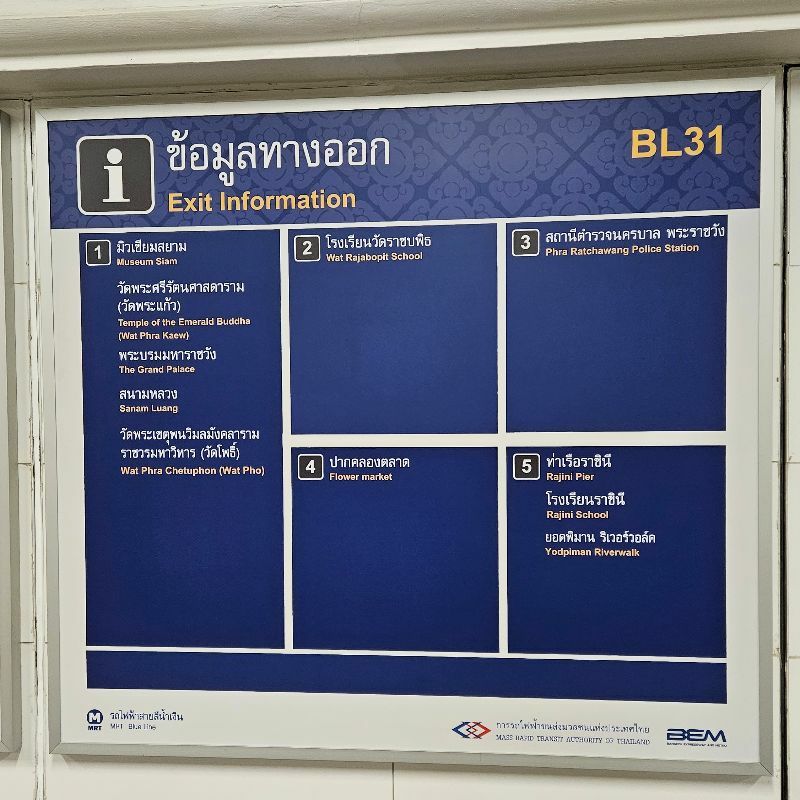
Pro Tip: Most stations have at least four exits and picking the right one can save you a lot of walking. I always check the maps (they show nearby landmarks) or ask the staff – they’re used to helping lost tourists find their way!
Where to stay along the Blue Line: if you’re looking for accommodation, I recommend the areas around Lumphini and Sukhumvit. You’ll find everything from budget guesthouses to luxury hotels, with easy access to both the MRT and BTS.
Beyond the Main Lines: Other Routes Worth Knowing
The main BTS lines and the Blue Line MRT will cover most of your travel needs, but Bangkok’s rail network keeps growing. Here’s what the newer lines are useful for.
The Gold Line: Your Shopping Express
This short line is ICONSIAM’s own route to the BTS system. It’s just three stations long, but worth knowing about:
- Free to transfer from the BTS at Krung Thon Buri
- Takes you straight to ICONSIAM, one of Bangkok’s biggest malls
- Good views along the short ride
If the Gold Line is busy, which happens on weekends, the river ferry from Saphan Taksin is a fun alternative.
Bangkok’s Newer MRT Lines
- Yellow Line (opened 2023): good if you’re staying out east. It connects to the Airport Rail Link at Hua Mak, and I’ve taken it out to Srinagarindra Train Night Market.
- Pink Line (opened 2023): mainly useful if you’re heading to Impact Arena or the Immigration Office. It serves the northern suburbs and most visitors won’t need it often.
- Purple Line: built for locals living in Nonthaburi, but an interesting ride if you’re curious about suburban Bangkok.
Getting to and from Bangkok’s Airports
Bangkok has two airports, and both connect to the rail network. The Bangkok Airport Transport Guide covers full fares, timing, and options for each, but here’s the short version.
Suvarnabhumi Airport (BKK), the Main International Hub
The Airport Rail Link runs from the basement level of the airport to Phaya Thai station in about 30 minutes, for ฿45. Trains run from 6am to midnight, every 10 to 15 minutes, with luggage racks in every car. From Phaya Thai, you can connect straight to the BTS.
Don Mueang Airport (Where Budget Airlines Fly)
The Red Line train connects Don Mueang to Bang Sue Grand Station in 25 to 30 minutes, for ฿20 to ฿45 depending on distance. Trains run every 15 to 30 minutes from 5:30am to midnight. From Bang Sue, switch to the MRT Blue Line for central Bangkok.
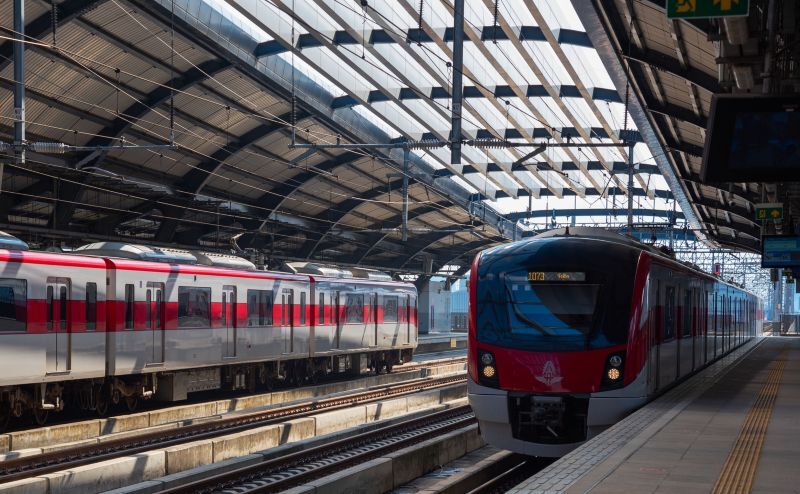
[Image: SRT Red Line service at Laksi station]
If your flight lands after 9pm, a taxi or Grab car is the better call. The train service gets patchy in the evening, and standing around after a long flight isn’t worth the saving.
Essential Bangkok Transit Map
The transit map looks like a rainbow-coloured maze at first, but it’s easier to read than it seems.
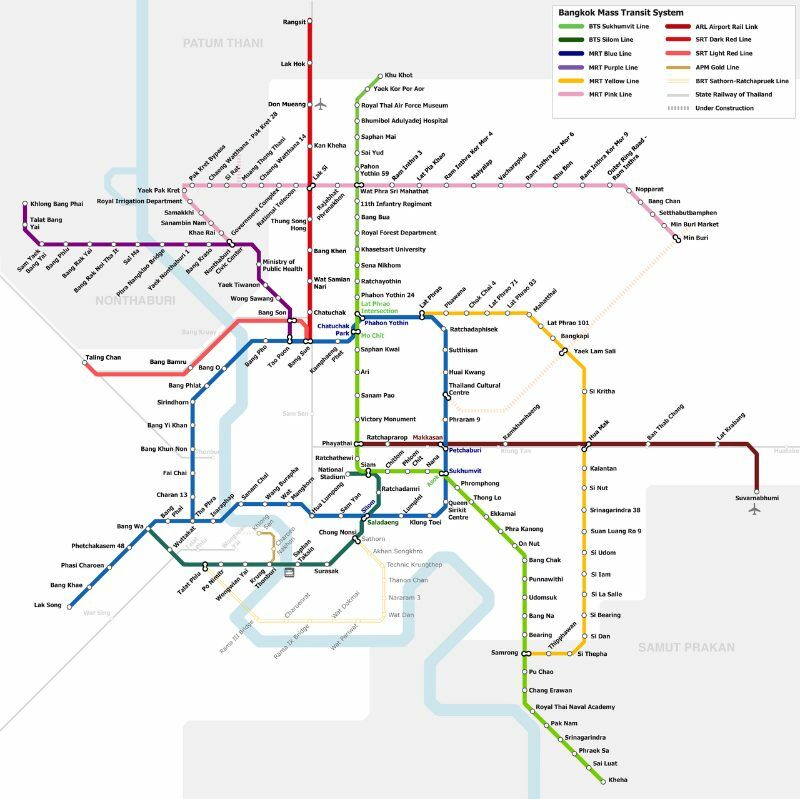
Click for larger view – Credit: Zeddlex, CC BY-SA
Making Sense of the Colours
- Green is the Skytrain, running above ground
- Blue is the underground MRT
- Red is the airport connections
- Grey lines are under construction
Is the MRT or BTS Cheaper in Bangkok?
Both systems charge by distance, so the difference usually comes down to where you’re going rather than which system costs less overall. The MRT tends to work out cheaper for trips through Chinatown, the Old Town, and the riverside, simply because those stops sit on the MRT and you won’t need to pay for a transfer. The BTS covers Sukhumvit, Siam, and Silom more directly, so for those areas it’s usually the straightforward option.
Where people overspend is by exiting one system and paying a second fare to enter the other. If your trip can be done entirely on one system, do that. If you need to switch, the three interchange points, Silom/Sala Daeng, Sukhumvit/Asok, and Chatuchak/Mo Chit, are your best options.
|
Feature |
BTS Skytrain |
MRT Blue Line |
|---|---|---|
|
Position |
Elevated |
Underground |
|
Fare range |
17-47฿ |
16-44฿ |
|
Operating hours |
6am-midnight |
6am-midnight |
|
Best for |
Sukhumvit, Siam, Silom |
Chinatown, Old Town, riverside |
|
Airport connection |
Airport Link at Phaya Thai |
Red Line at Bang Sue, via interchange |
|
Single ticket |
Tap-on, tap-off, collected on exit |
Token, collected on exit |
|
Stored-value card |
Rabbit Card |
MRT stored-value card |
|
Contactless payment |
Not yet accepted |
Accepted at most gates |
|
Cards cross-compatible |
No |
No |
My Top Tips for Not Getting Lost
Save an MRT map to your phone before you leave the hotel. Station numbers are a shortcut if the Thai station names are hard to say, and Google Maps is reliable for Bangkok transit if you get stuck.
Black dots on the map mark the stations where you can switch between lines, and they make good meeting points if you’re meeting up with a group.
Key Takeaways
- MRT Blue Line is the best route for Chinatown, the Old Town, and the Grand Palace
- BTS fares are 17-47฿, & MRT fares 16-44฿, both are distance-based
- BTS and MRT are separate systems with separate tickets, though contactless now works on the MRT
- Three interchange stations connect the two networks
- Both systems run 6am to midnight
- Sanam Chai and Sam Yot are worth visiting for the stations themselves
Frequently Asked Questions
What are the MRT lines in Bangkok?
The MRT network includes the Blue Line, the original underground loop through Chinatown, the Old Town, and Sukhumvit, plus the Purple Line serving Nonthaburi, and the newer Yellow and Pink lines. For most visitors, the Blue Line is the one that matters.
How much does the MRT cost in Bangkok?
How much does the MRT cost in Bangkok?
17-49 Baht. You can pay with a single-journey token, a prepaid stored-value card, or contactless payment at most gates.
What is the difference between BTS and MRT in Bangkok?
The BTS runs above street level and covers Sukhumvit, Siam, and Silom. The MRT runs underground and connects Chinatown, the Old Town, and the riverside. They’re separate systems with separate tickets, connecting at three interchange stations: Silom/Sala Daeng, Sukhumvit/Asok, and Chatuchak/Mo Chit.
Can I use my BTS card on the MRT?
No. A Rabbit Card doesn’t work on the MRT, and an MRT stored-value card doesn’t work on the BTS. Contactless bank cards and phone payments now work on the MRT, but not yet on the BTS, so budget for separate fares if your route needs both.
Which MRT station is closest to the Grand Palace?
Sanam Chai, on the Blue Line. It also connects to river boats, so it works as a base for exploring the riverside area.
Which MRT station is closest to the Grand Palace?
Sanam Chai, on the Blue Line. It also connects to river boats, so it works as a base for exploring the riverside area.
Is Bangkok’s rail system accessible for wheelchair users?
Not especially. Elevators exist but are often tucked away to the side of the street, connected to the station by a ramp. Some stations have gaps between the platform and the train, and steps show up in unexpected places. Staff can help if you want to try, but if you use a wheelchair or have mobility issues, it’s worth having a backup plan. Grab cars are a reliable option.
What is the best transit card for Bangkok tourists?
For a short visit with only a few trips, single tokens or tickets are fine. For a full day of BTS travel, the Day Pass covers unlimited rides on the Green Line for 150฿. For longer stays, a Rabbit Card (BTS) or MRT stored-value card is more convenient, just top up and tap. One card doesn’t cover both systems, so if you’re using both regularly, you’ll want two cards, or contactless for the MRT side.
When should I avoid the BTS and MRT?
Rush hour, 8 to 9am and 5 to 6:30pm, especially at Siam, Asok, and Mo Chit. Shifting your trip by even 30 minutes makes a real difference. Outside those windows, the trains are comfortable.
More Bangkok Transport Guides
Want to explore all your transport options in Bangkok? Check out our other detailed guides:
- Complete Guide to Bangkok River Boats
- Exploring Bangkok’s Saen Saep Canal
- Bangkok Airport Transport Guide
- Bangkok Bus Guide
With this guide and map in hand, you’re ready to explore Bangkok like a local. The rail system might seem overwhelming at first, but after a couple of rides, you’ll wonder why anyone bothers with taxis at all.
Planning a Thai adventure? Join our friendly Facebook community Thailand Awaits: Trip Planning for Beginners. Get expert advice from locals and experienced travellers, ask your questions, and discover how to make the most of your journey through Thailand.