Burning Season in Thailand: A Guide From Someone Who’s Lived Through It
Burning season in Thailand runs from late January through to April, with March typically the worst month for air quality. I’ve experienced it firsthand in Bangkok, Hua Hin, and Ayutthaya, and the honest answer is that it depends a lot on where you are and what year you visit. Some days are barely noticeable. Others, you wake up and the sky tells you everything you need to know. This guide covers which areas are most affected, what to realistically expect, and where to go if you want to avoid it altogether.
This page contains affiliate links. Please see our disclosure policy for more details.
Understanding Thailand’s Burning Season
Burning season happens when farmers in northern Thailand and Laos burn their fields to clear land for new crops. It’s a fast alternative to turning the soil, but the smoke it produces is significant and hangs over entire regions for weeks.
When Charles and I spent our first cool season in Bangkok, I was really looking forward to the lower temperatures. What I wasn’t prepared for was eight days of hazy skies that January. I knew burning season was a thing up north, starting later in March, but I hadn’t realised Bangkok gets hit too, and for different reasons. In the capital, it’s less about agricultural fires and more about construction dust and car pollution getting trapped low in the atmosphere by the cooler, stagnant air.
Either way, the result looks similar. Hazy skies, reduced visibility, and air that doesn’t feel great to breathe.
When is Thailand’s Burning Season?
Burning season in Thailand runs from late January through to April, with the peak varying depending on where you are in the country.
In northern Thailand, March and April are the worst months. The rainy season ends around October, and by January the land is bone dry. Add agricultural burning to three months of zero rainfall and stagnant air, and you have the conditions for serious smoke accumulation.
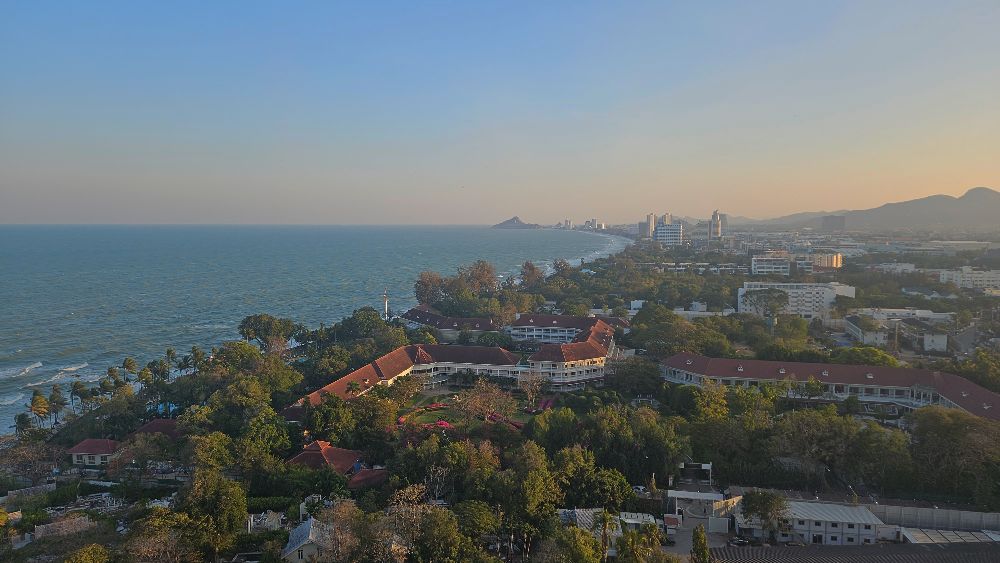
In Hua Hin, I start noticing some haze from January, but it’s nothing like what happens further north. By March it’s largely over here.
Isan, in Thailand’s northeast, follows a slightly different pattern. The peak there runs December through March, driven largely by sugarcane harvesting and rice stubble burning rather than forest fires. Research suggests AQI levels regularly hit unhealthy to very unhealthy during February and March, with cities like Udon Thani, Khon Kaen, and Nakhon Ratchasima sitting under haze for weeks at a time.
Across most of Thailand, conditions start improving by mid-April, which conveniently lines up with Songkran. When the monsoon rains eventually arrive, they wash the particulate matter out of the atmosphere fairly quickly. In some heavily affected areas though, the impact on air quality can linger a few weeks longer.
The Impact of the Burning Season on Air Quality
Burning season pushes a mix of pollutants into the air, mainly PM2.5 and PM10 particulate matter, carbon monoxide, and nitrogen oxides. PM2.5 is the one to pay attention to. The particles are small enough to get deep into your lungs, and at high levels it’s not just uncomfortable, it’s a genuine health risk.
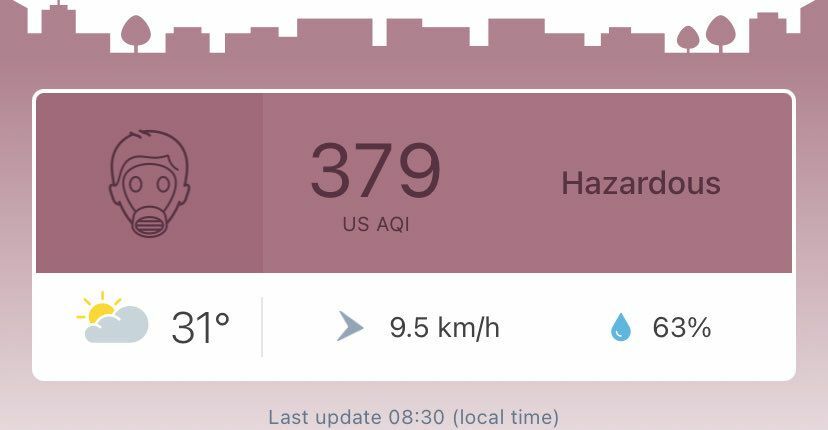
Download an air quality app if you want to monitor the situation in Thailand
I use the AirVisual app to monitor air quality, and during burning season I check it daily. It gives hourly forecasts, which meant Charles and I could plan our walks and exercise around the best times of day. I’ve seen PM2.5 levels hit the unsafe range regularly in Bangkok, and less often in Hua Hin.
Mornings are typically the worst. When Charles and I were renting a condo in Sathorn, I’d wake up and look for the Rama IV bridge from our window. Some mornings it was just gone, swallowed by haze, and it wouldn’t reappear until mid afternoon. In Hua Hin it’s a similar pattern. First thing in the morning is when the air feels heaviest, and it usually clears somewhat as the day goes on.
If you’re planning any outdoor activities, you may find the afternoon works better than an early start at this time of year.
Cities Most Affected by Thailand’s Burning Season
I can speak firsthand to Bangkok, Hua Hin, and Ayutthaya, but I haven’t been to northern Thailand during burning season. What follows for the north is based on research and the accounts of people who have.
- Chiang Mai consistently comes up as the worst affected city in Thailand. It sits in a valley surrounded by mountains, which traps the smoke and stops it dispersing. PM2.5 levels regularly reach hazardous during March and April.
- Chiang Rai is similarly badly affected, with haze reducing visibility significantly across the city and surrounding region.
- Lampang, about 100km south of Chiang Mai, gets caught in the same smoke belt and is often overlooked when people talk about affected cities.
The smoke doesn’t stop at city limits either. The entire northern region up to the Myanmar and Laos borders is affected, including smaller towns and rural areas.
- Isan (Northeast Thailand) follows its own pattern, peaking December through March, driven by sugarcane and rice stubble burning rather than forest fires. Major cities including Udon Thani, Khon Kaen, and Nakhon Ratchasima can sit under haze for weeks at a time.
Does Burning Season Affect Bangkok?
Bangkok’s air quality issues are separate from burning season in the north, though they overlap in the calendar. Rather than agricultural smoke, Bangkok’s problem comes from construction dust, vehicle emissions, and weather. By January the city hasn’t seen rain for three months, and the cooler, stagnant air traps pollutants low over the city instead of letting them disperse.
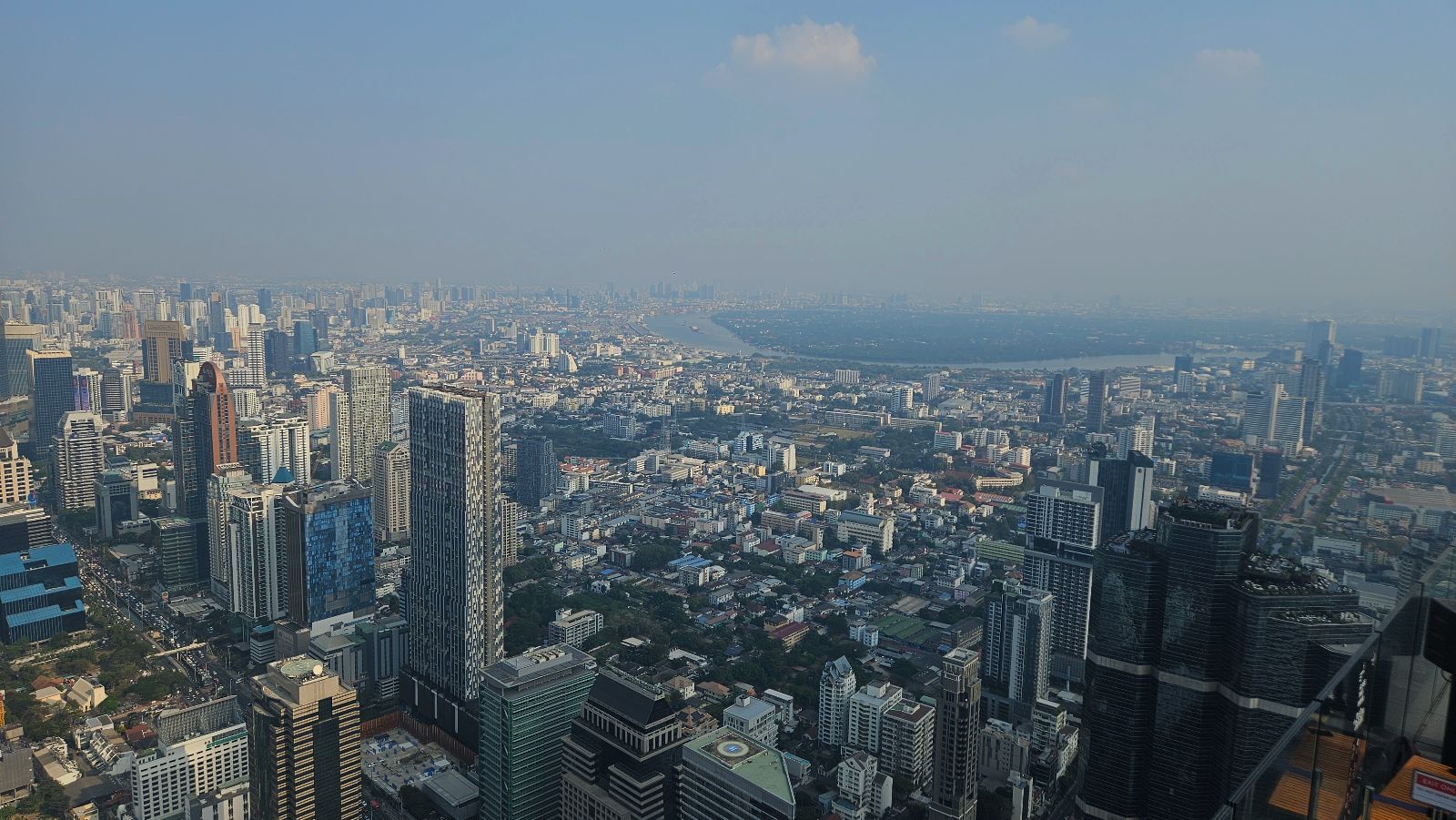
I’ve experienced this firsthand. Most days in January and February are manageable, but it can turn quickly. In early February 2024 we had six consecutive days of poor air quality in Bangkok, with the 5th being the worst. The next day was clear blue skies.

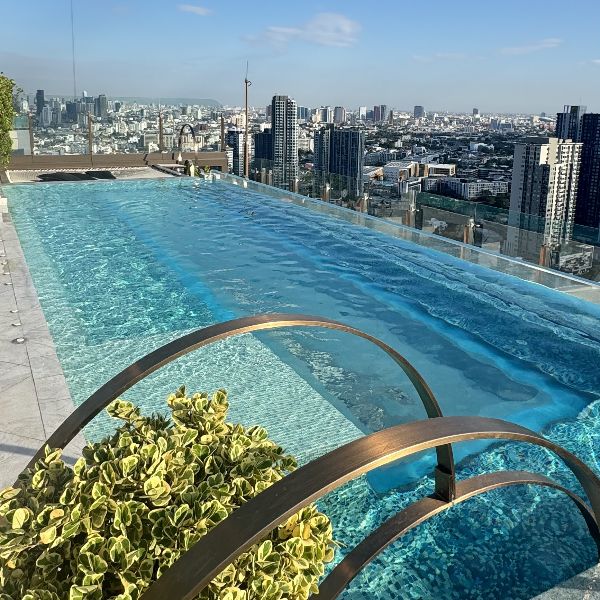
That’s actually what the photos above show. Both were taken in Bangkok in early February, the first from Mahanakhon Tower and the second from our hotel in OnNut the next day. One day the sky is blue and the city looks like itself. The next it’s gone. The months from December through to February are when Bangkok is most affected, with March and April seeing improvement as conditions shift ahead of the wet season.
Where to Go Instead: Escaping Burning Season
If burning season is putting you off northern Thailand, the south is your answer. The smoke from agricultural burning doesn’t reach down there, and the air quality is generally much better from January through to March.
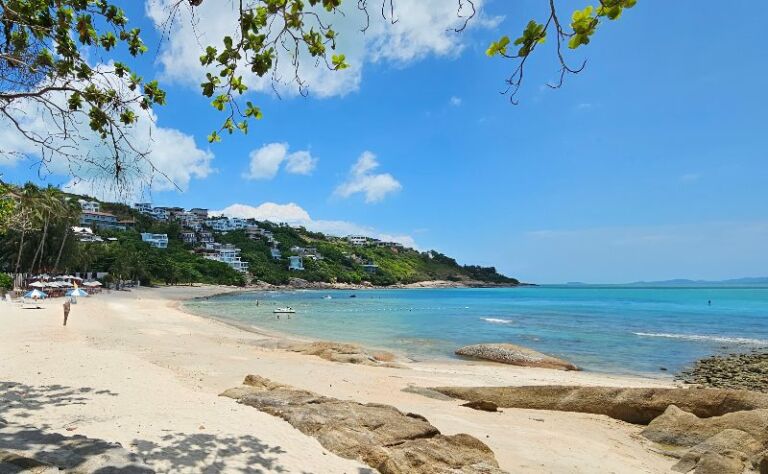
I’ve visited Phuket, Khao Lak, Krabi, and Koh Samui, and all of them make good alternatives during this time of year. Krabi is a particular favourite. The limestone scenery is dramatic, the beaches are genuinely beautiful, and the air is clean.
One thing to note on Koh Samui: January can still see some lingering rain on the island, so it’s worth checking the forecast before you commit. February and March are safer bets there.
Phuket and Khao Lak are both reliable choices across the whole January to March window, and if you want something a bit quieter than Phuket, Khao Lak is worth considering.

Other southern destinations like Krabi and Koh Yao Yai offer better air quality and scenic beauty.
Health Precautions for Travellers During the Burning Season
A few simple things make a real difference if you’re in Thailand during burning season.
We have an air purifier at home, and on particularly bad days I make sure it’s running overnight. Sleeping in clean air when the outdoor levels are high is worth a lot. If you’re staying somewhere for more than a week or two during this season, it’s worth asking your accommodation if they have one, or picking up an inexpensive portable unit.
For exercise, we skip outdoor sessions on bad air days and use the condo gym instead. If you don’t have access to a gym, most Thai malls are enormous and perfectly good for walking laps in air conditioned comfort. It sounds odd but it works.
We don’t wear masks often, but we have in Bangkok on days when we’ve needed to cover longer distances on foot. On a genuinely bad day it makes a difference. Look for masks rated for PM2.5 rather than basic surgical masks.
Checking AirVisual before you head out is a habit worth building during this season. The hourly forecast means you can plan around the better parts of the day rather than just hoping for the best.
If you have asthma or any respiratory condition, make sure you have enough medication for your trip and know where the nearest hospital or clinic is. On a really bad stretch, the honest advice is to stay indoors as much as you can.
Don’t Let Burning Season Ruin Your Holiday
Burning season is real, but it doesn’t have to derail your plans. It just requires a bit of thought about where you’re going and when.
Personally, I wouldn’t choose to visit Chiang Mai or northern Thailand in February or March. Plenty of people do, and they manage, but knowing what I know now I don’t think I’d enjoy it as much as I would at another time of year.
Bangkok is a different story. As long as you know what to expect and you’re not planning to spend every day exercising outdoors, it’s absolutely fine. Check AirVisual, plan around the bad days, and get on with it.
In Hua Hin, honestly it’s more of an annoyance than a serious issue for me. Some mornings are hazy, the app gets checked, and then we get on with the day.
If you want to avoid it altogether, head south. The islands and the Andaman coast don’t see anything like the air quality issues that affect the north and central regions, and March is actually a great time to be down there.
Planning a Thai adventure? Join our friendly Facebook community Thailand Awaits: Trip Planning for Beginners. Get expert advice from locals and experienced travellers, ask your questions, and discover how to make the most of your journey through Thailand.