BKK to DMK (and DMK to BKK): How to Transfer Between Bangkok’s Two Airports
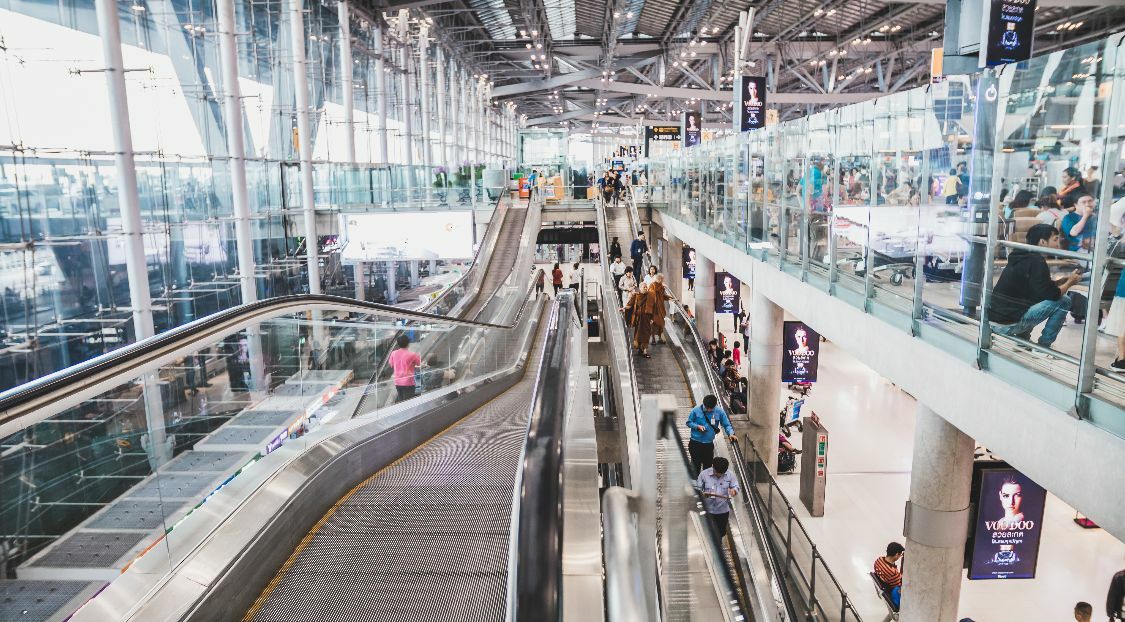
Transferring between Bangkok’s two major airports, Suvarnabhumi (BKK) and Don Mueang (DMK), can seem daunting at first. Whether you’re on a tight schedule or looking for the most budget-friendly option, there are several ways to make the journey. From private rides to public transport, getting between the two airports doesn’t have to be a hassle.
In this guide, I’ll walk you through every transport option available so you can choose the one that suits your needs best.
This page contains affiliate links. Please see our disclosure policy for more details.
Bangkok’s Two Airports: BKK and DMK
Bangkok has two airports. Don Mueang – code DMK – was the original. It’s north of the city. As travel to Thailand grew, there wasn’t enough space to accommodate extra flights, so a second airport, Suvarnabhumi – code BKK – was built and opened in 2006.
Suvarnabhumi or BKK is now the primary airport for international flights, with DMK mainly handling domestic and low-cost carrier services, although some international airlines still use it. DMK is now considered the largest low-cost carrier airport in the region.
There may be an occasion when you arrive at one airport but need to depart from the other. The distance between them is approximately 50 kilometres.
It infuriates me when travel agents book connections like this, as they should know better. However, with the rise of online bookings, many cheaper deals use this poor connection.
I call it a poor connection because, depending on the day, weather, or a myriad of other reasons, it could take 2 to 3 hours to get from one to the other. This can lead to heartbreak if the connection time isn’t at least 5 hours or more.
So, I’ve put together this guide with all the options to help you make an informed decision. Before we get to that I think some basics on how long things take on landing will help you work out your timeline.
Distance Between BKK and DMK
The two airports are approximately 50 kilometres apart, which sounds straightforward until Bangkok’s traffic enters the equation. On a clear run — early morning or late at night — the road distance takes around 45 minutes by taxi or private transfer. During peak hours, the same 50 kilometres can easily take two hours or more.
The train route covers more ground because it routes through the city centre, but the total journey time is more predictable — around 75 to 90 minutes regardless of traffic.
How Long Does the Transfer Take?
Budget a minimum of 45 minutes if conditions are ideal and you’re in a taxi on the tollway. In reality, most travellers should allow 1.5 to 2 hours door to door, and if you’re connecting between flights, you need at least 5 hours between your scheduled arrival and your next departure.
That buffer accounts for immigration, baggage claim, getting to your transport, the journey itself, and check-in at the other end. Anything tighter than 5 hours is a gamble — and Bangkok traffic doesn’t negotiate.
| Option | Typical Time |
|---|---|
| Taxi (tollway) | 45 min – 1.5 hrs |
| Private transfer | 45 min – 1.5 hrs |
| AOT Shuttle | 1 – 2 hrs |
| Train | 75 – 90 min |
| Public bus | 2 – 3 hrs |
What Happens When You Land?
If it’s your first time arriving in Thailand, here’s what to expect once the plane doors open. The whole process from landing to arrivals hall typically takes 30 to 90 minutes depending on the time of day and how busy the airport is.
Before you travel, make sure you’ve completed your Thailand Digital Arrival Card (TDAC) — it’s required for all non-Thai nationals arriving by air.
Step by Step – From Landing to Arrivals Hall
Once you’re off the plane, here’s what happens:
- Disembark and walk to immigration. At BKK, follow the signs through the concourse tunnel to the main terminal – it’s a big airport and this walk can take 10 to 20 minutes. At DMK it’s more compact, with a skywalk taking you straight to immigration.
- TDAC check and immigration. Have your passport and TDAC QR code ready – printed or on your phone is fine. The officer will scan your passport, check your QR code, and take your photo and fingerprints. Queue times at BKK during peak hours can run 30 to 60 minutes. At DMK it’s usually 15 to 30 minutes. Diplomatic passport holders, seniors, and children have priority lanes.
- Baggage claim. Head downstairs and check the screens for your belt number. At BKK baggage is in Hall 2, at DMK it’s on Level 1. Allow 15 to 30 minutes. If your bag doesn’t show up, the lost baggage counters are near the belts.
- Customs. Most people take the green “nothing to declare” lane. Use the red lane if you’re carrying duty-free goods over the limit or food items. Expect a quick scan or X-ray.
- Arrivals hall. You’re out. At BKK this is Level 1, at DMK Level 2. This is where you’ll find taxis, the train, Grab pick-up zones, and hotel transfer drivers. Ignore anyone who approaches you offering a ride – official taxis queue to the left and the Airport Rail Link is downstairs.
How to Get from DMK to BKK (and BKK to DMK)
There are quite a few options for transferring between the two airports. Your decision will come down to how much time you have and how much you’re prepared to spend. The options range from 45 minutes to 3 hours and from free to over 1,000 baht. Here’s the breakdown.
AOT Free Shuttle Bus
If you’re looking for a free option, the Airports of Thailand (AOT) shuttle bus is a good choice. It runs daily from 5am to midnight between both airports.
To be eligible, you must present a valid boarding pass for a flight departing from either DMK or BKK on the same day. The shuttle is for transit passengers only, so you can’t just rock up without a ticket.
There are also some luggage constraints. Oversized or excess baggage can be a problem, so it’s worth travelling light or making sure your bags meet standard airline size and weight limits.
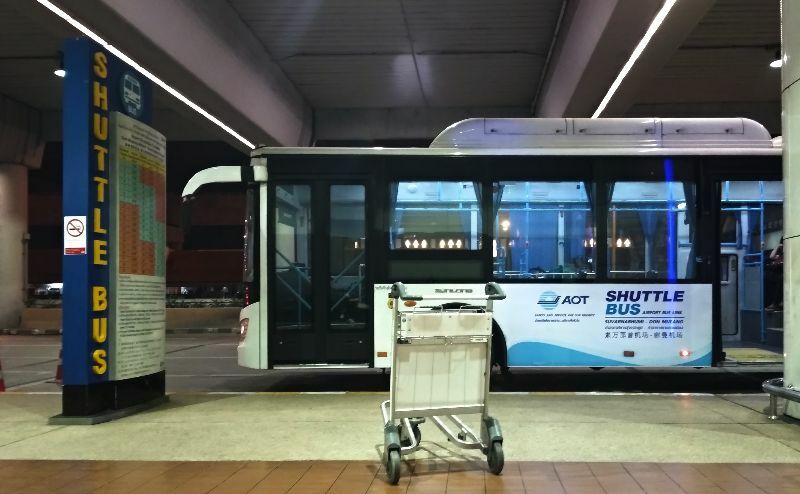
One thing to be aware of – because it’s free, the queues can be long. The buses run every 15 to 30 minutes, but during busy periods you may find yourself waiting for two or three to pass before you get on.
- At Don Mueang, the shuttle departs from Terminal 1, Floor 1, Gate 6.
- At Suvarnabhumi, it leaves from Level 2, Gate 3.
Make sure you check in at the counter before boarding.
The trip averages 1 to 2 hours depending on traffic, so factor that plus queuing time into your planning. If you have plenty of time between flights and are travelling light, it’s a perfectly solid option.
Taxi
The most popular choice for tourists, and for good reason. It’s the most straightforward option, especially if you have a lot of luggage.
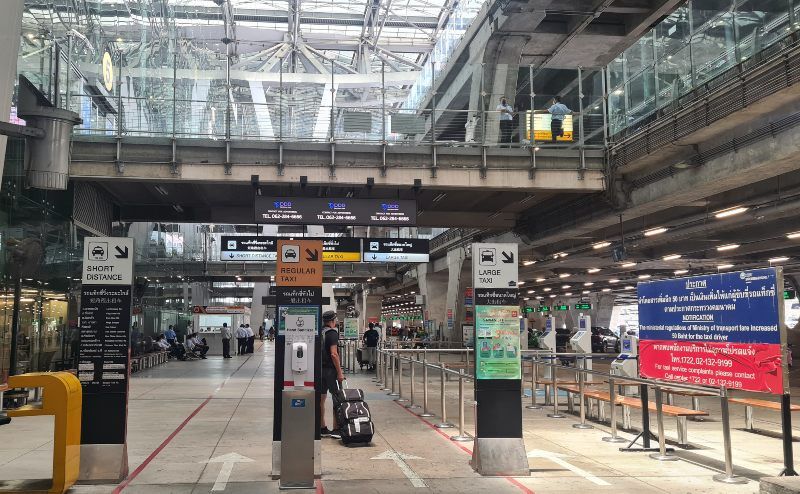
The journey should take 45 minutes to an hour, though traffic and weather can push that out. The driver will ask if you want to take the highway – the toll road. Say yes. The extra 100 or so baht is well worth it. Going through the city is asking for trouble.
One advantage of using the dedicated taxi rank at either airport is that drivers must use the meter, so there’s little chance of getting caught in a scam. There is an additional 50 baht airport exit fee added to the final meter cost. All up, including tolls, expect to pay somewhere between 550 and 650 baht.
To get a taxi at DMK, take a numbered ticket from the dispenser at the rank and wait for your number to be called. During peak season I’ve waited over 30 minutes, so factor that in. The rank at BKK is better set up – more space, more taxis – and I’ve rarely had to wait long there.
Private Transfer
The most expensive option, but there are good reasons to consider it – particularly if you’re arriving at BKK on a long-haul flight.
Flights from the USA to Bangkok take upwards of 12 hours. After that, the last thing you want to do is figure out Bangkok’s transport system on little sleep. Walking out of arrivals to see someone holding a sign with your name on it takes all the stress out of it. They handle the rest.
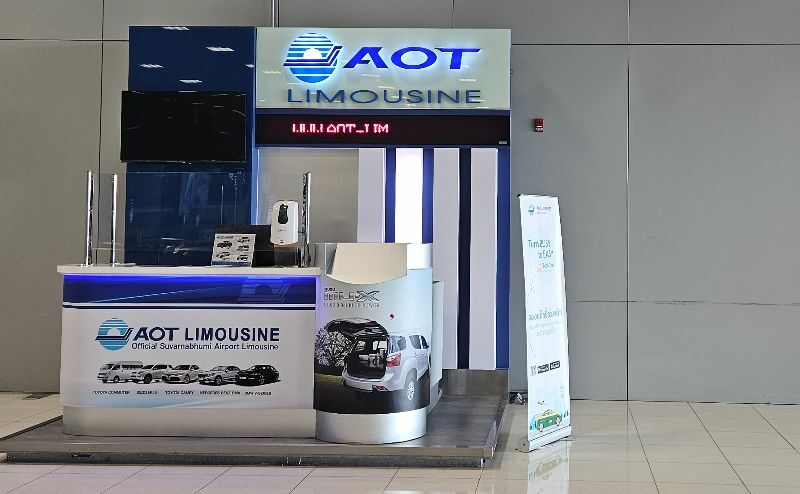
If it’s your first time in Thailand, it’s worth the extra cost.
You can book a private transfer from/to Suvarnabhumi Airport (BKK) or a Private Hotel Transfer with Free Tollway via GetYourGuide.
Rideshare: Grab, Bolt and InDrive
Thailand has two main rideshare apps – Grab and Bolt – plus a newer option called InDrive, which has become increasingly popular.
Both airports now have dedicated ride-hailing pick-up zones. Follow the signs, they’re clearly marked and easier than trying to find your driver in the general terminal area.
Grab is the most reliable, particularly when it’s raining or busy, but it’s also the most expensive and is notorious for adding peak surcharges. If you’re seeing fares above 700 baht for a standard transfer, you’re better off with a taxi.
Bolt is usually cheaper than Grab, but has fewer vehicles, so the wait can be longer.
InDrive is worth a look. It works differently – you can bid on the fare and negotiate directly with the driver. If you get a driver already heading in your direction, you can sometimes score a ride for well under 400 baht. We have used it for the trip between Bangkok and Ayutthaya and it worked really well but we have not tried it from the airport yet.
Taking the Train between airports
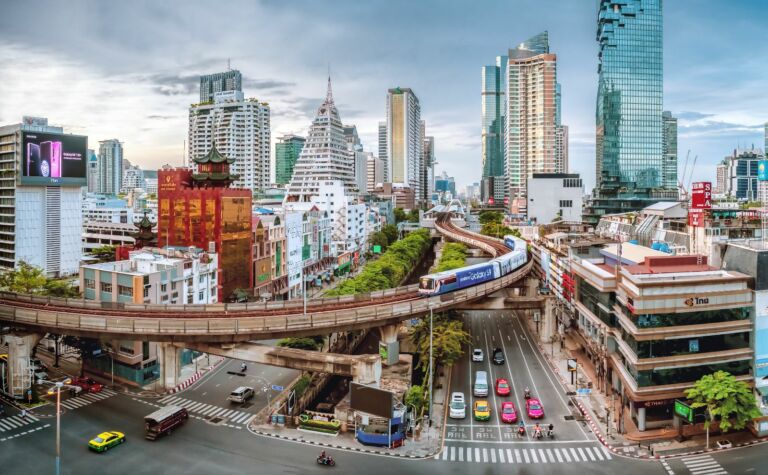
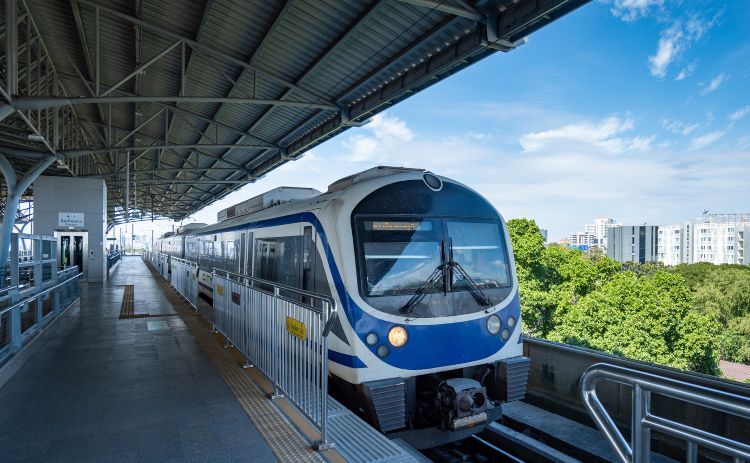
This is my favourite way to travel between the airports. You’re not at the mercy of Bangkok’s traffic, and the elevated sections give you a decent view of the city along the way.
A direct rail link between the two airports is in the works but isn’t expected to open until around 2029. In the meantime, the route has actually become much simpler than it used to be, thanks to the Krung Thep Aphiwat Central Terminal – the massive new rail hub that replaced the old Bang Sue station.
Here’s how to do it:
Step 1 – Don Mueang to Krung Thep Aphiwat Central Terminal
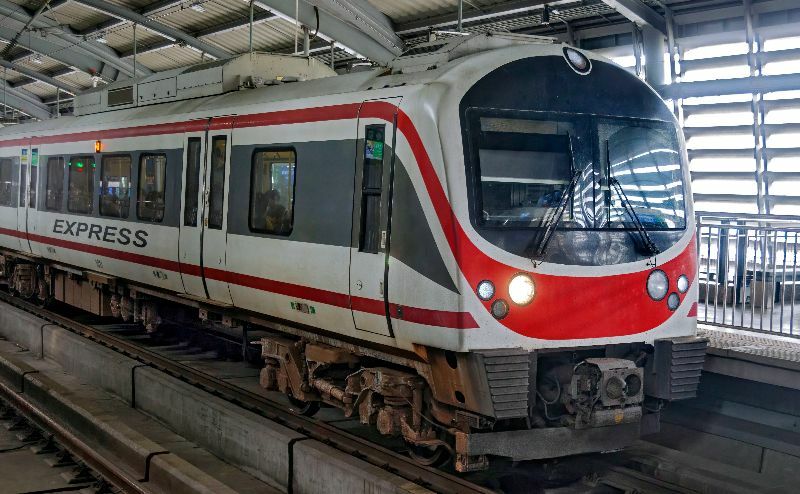
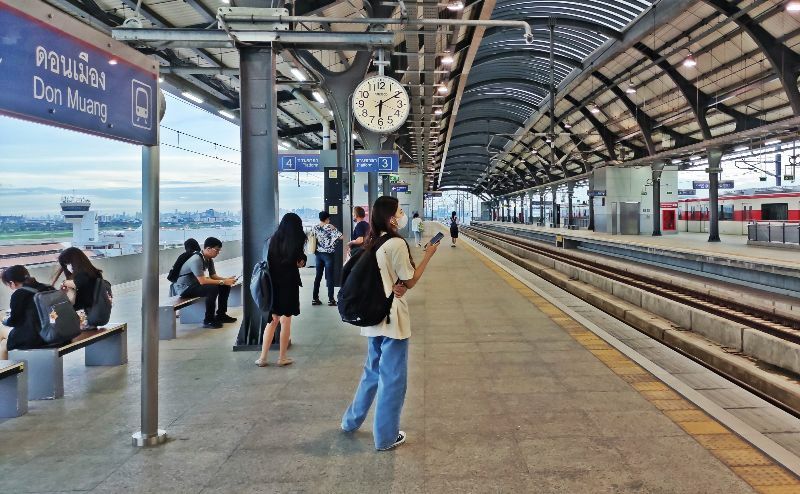
Head to the 3rd floor of DMK and follow the signs for the SRT Red Line. Catch the train south to Krung Thep Aphiwat Central Terminal. It takes around 20 minutes and costs about 33 baht.
Step 2 – MRT Blue Line to Phetchaburi
Inside the terminal, follow the signs to the MRT Blue Line and take it to Phetchaburi Station. A few stops, about 20 minutes, and costs around 30 to 40 baht.
Step 3 – Airport Rail Link to Suvarnabhumi
At Phetchaburi, follow the Skywalk – an enclosed elevated walkway – directly into Makkasan Station. From there, jump on the Airport Rail Link straight to the basement of Suvarnabhumi Airport. This leg takes about 25 minutes and costs 35 baht.
Total cos of the train transfer between Bangkok’s airports: around 100 to 110 baht per person. Total time: allow 75 to 90 minutes including transfers.
One practical tip – you can now tap a contactless Visa or Mastercard at the gates for these train, which saves queuing at the ticket machines.
Even for two people travelling together, the train works out cheaper than a taxi. It’s not the option for heavy luggage, but if you’re travelling light and want to avoid the traffic entirely, it’s hard to beat.
Public Bus
The cheapest option of all, and a genuine last resort if the shuttle queue is out of control and you have plenty of time. The public bus system is a way to travel around Bangkok like a local.
Buses 554 and 555 both run between the two airports for around 35 baht. They do use the tollway for part of the journey, but it will still take longer than any other option.
To catch the bus from DMK, you need to exit the terminal and walk across to the bus stop on Phahonyothin Road, next to the Family Mart. A lot of buses stop there, so make sure you’re getting on the 554 or 555.
Note that these buses drop you at the Suvarnabhumi Airport Bus Terminal, which is 5km from the actual airport. From there you’ll need to transfer to the Airport Shuttle Bus (Lines A, B, C, D or L) to complete the journey.
Departure Points from Don Mueang (DMK)
As you exit customs at DMK you’ll enter the arrivals hall, where private transfer drivers will be waiting with name signs. If you’ve booked a private transfer, your driver will be here somewhere.
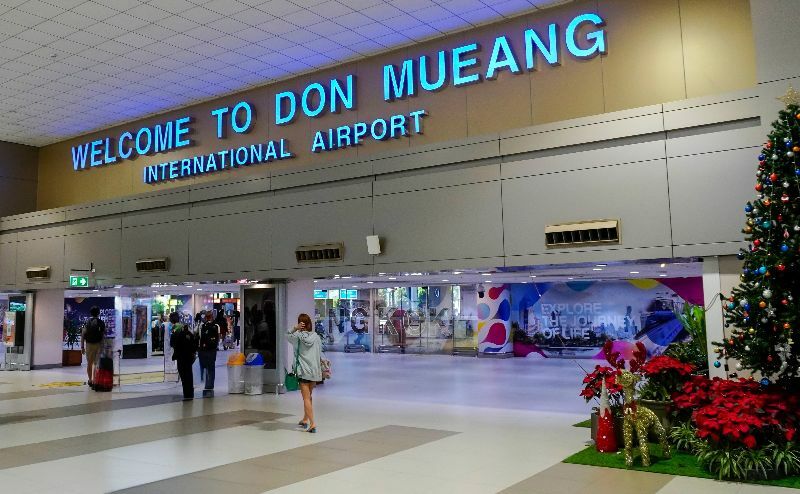
Signs above point you toward the taxi rank and shuttle bus on the same level.
For taxis, take a numbered ticket from the dispenser and wait for your number to be called. Tell the counter staff you want to go to BKK airport departures.
The free shuttle bus departs from Terminal 1, Floor 1, Gate 6. Check in at the counter before you board.
The SRT Red Line station is accessible from the 3rd floor – follow the signs. If you’re doing the train route I described above, make sure you take the commuter line, not the express.
For the public bus, exit the airport and walk across the pick-up zone to the bus stop on Phahonyothin Road next to the Family Mart. You want the 554 or 555.
Departure Points from Suvarnabhumi Airport (BKK)
BKK has transport options across three levels. You exit customs on Level 2, where private transfer drivers will be waiting. The AOT free shuttle desk is also on Level 2 – check in there before boarding.
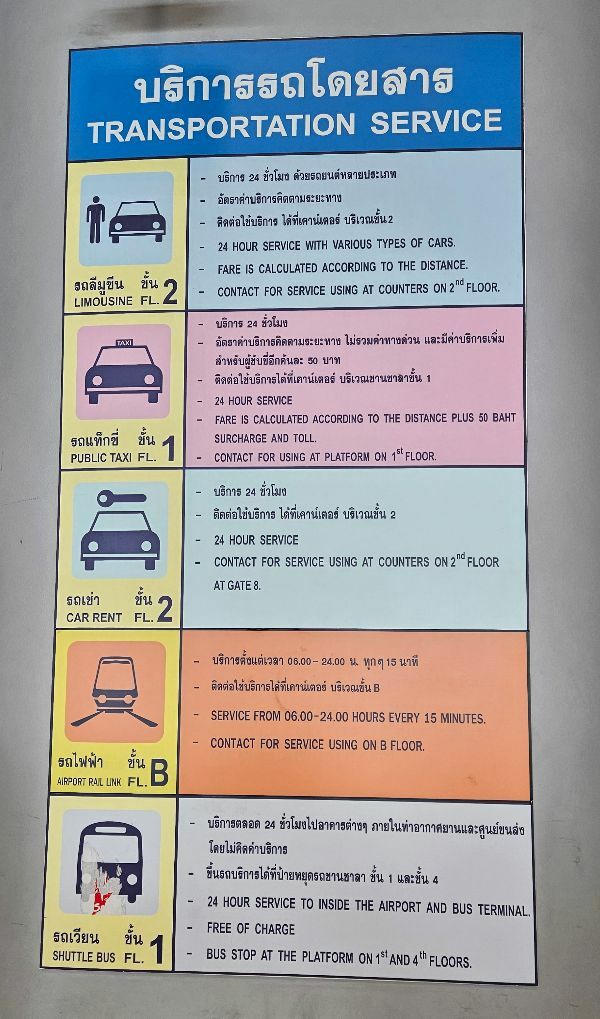
Taxis and local buses are one floor below on Level 1. For the 554 or 555 public bus, you’ll need to take the Airport Bus Terminal Shuttle (Lines A, B, C, D or L) to the bus terminal 5km away first.
For the train, head to the basement and follow the Airport Rail Link signs. It’s straightforward.
The taxi rank at BKK is better organised than the one at DMK, with more space and more taxis. I’ve rarely had to wait long here.
Lastly, if you’re going to do the train option, it’s incredibly easy from BKK airport. The train platform is located in the basement; just follow the Airport Rail Link signs.
VIP Fast Track at BKK and DMK
Bangkok’s airports are big, and arrivals can be a slog. Immigration lines at BKK can be brutal, and the taxi situation at DMK during peak hours isn’t much fun either. After years of shuttling between the two, I’ll book fast track when I have a tight connection or I’m arriving off a long-haul flight and my brain isn’t quite working yet.
Fast-track makes it seamless. A rep meets you at the gate and escorts you through priority lanes — TDAC included. Bags to car in 15 to 20 minutes instead of 60 plus.
At BKK, choose from Bangkok: Suvarnabhumi Airport Fast-Track Service & Assistant or Bangkok Suvarnabhumi Airport: VIP Fast-Track Service.
DMK generally has lighter crowds, but fast track still makes sense for early morning departures when the airport is understaffed and the queues move slowly. Check GYG for current DMK options.
If you have time to kill between connections, it’s also worth booking two hours at the Miracle Lounge at either airport. Showers, food, and Wi-Fi for around 800 to 1,000 baht – a lot more comfortable than sitting at the gate.
And if you’re connecting between the airports by private transfer, GYG also has Private Hotel Transfer and Airport Pick and Drop options by private van, with the tollway included in the price.
Once you’ve sorted your transfer, there’s one more admin task to check off before you arrive in Thailand.
Thailand Digital Arrival Card (TDAC)
Before we get to the airport itself, there’s one thing you need to sort before you even board your flight. As of May 1, 2025, all non-Thai nationals arriving by air, land, or sea are required to complete a Thailand Digital Arrival Card. It replaces the old paper TM6 form that used to get handed out on the plane.
It’s free, takes a few minutes, and needs to be done within 72 hours before you arrive. Go to tdac.immigration.go.th – don’t pay any third-party site that charges for this, it’s a free government service.
Here’s how to complete it:
- Go to tdac.immigration.go.th and select “Arrival Card”
- Enter your passport details and nationality
- Add your flight information – date, flight number, and country you’re flying from
- Enter your accommodation address in Thailand – you’ll need the province, district, and postcode
- Complete the health and address details
- Submit and save your QR code – screenshot it or print it out as a backup
A couple of practical notes. Do it two days before you fly rather than leaving it to the last minute. Some airlines will check for it at check-in. If you’re visiting on multiple entries, you need a fresh one for each arrival.
Which Transfer Option Is Right for You?
If you have a lot of luggage and a direct budget, take a taxi. If you’re arriving off a long-haul flight and don’t want any guesswork, book a private transfer in advance.
If you’re travelling light and have 90 minutes to spare, the train is the best value by a significant margin. If you have plenty of time and a same-day boarding pass, the free AOT shuttle gets the job done.
The public bus is a last resort — cheap, but slow and complicated enough that it’s rarely worth it unless you’re genuinely on the tightest of budgets.
Whatever you choose, build in more time than you think you need. Bangkok traffic can undo even the best-laid plans.
If you want more tips or advice for planning your trip, you can join our Facebook group: Thailand Awaits Trip Planning for Beginners. It’s a place to ask questions, get help from other travellers and locals, and find free resources for your Thailand holiday.