Renting a Car in Thailand: What We’ve Learned Across Five Regions
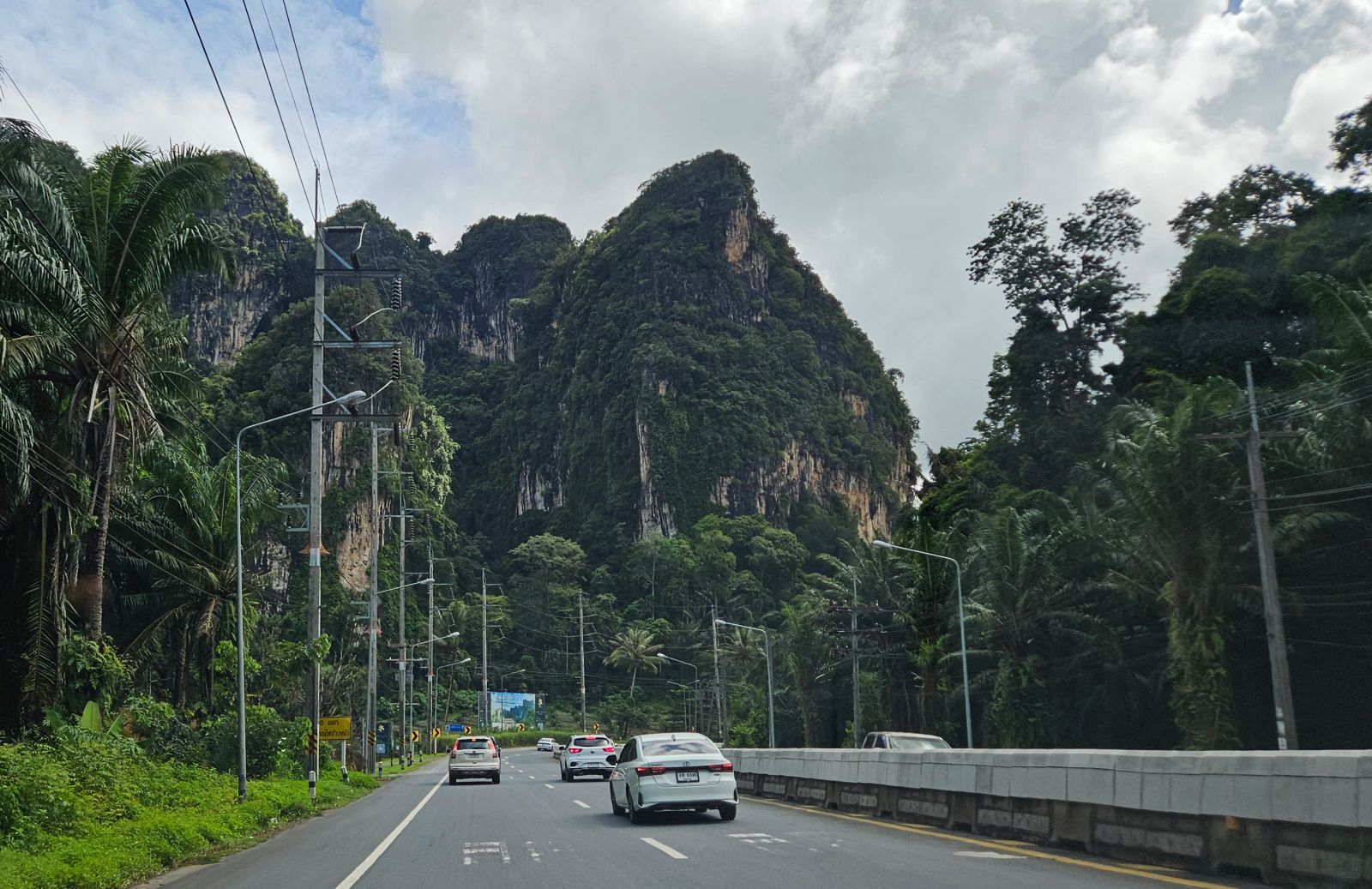
We have rented cars across five regions of Thailand: Chiang Mai, Hua Hin, Surat Thani, Phuket and Koh Samui. We have been pulled over at police checkpoints, woken up to a flat tyre in a small riverside town and had a motorbike ride straight into our car on a main road in Krabi.
If you are weighing up whether to hire a car in Thailand, this is what you actually need to know before you book.
This page contains affiliate links. Please see our disclosure policy for more details.
Should You Rent a Car in Thailand?
Renting a car in Thailand opens up parts of the country that public transport simply does not reach. National parks, small coastal towns, mountain roads in the north, none of it is easy to access without your own vehicle. For the right kind of trip, it is one of the better decisions you can make.
That said, it is not for everyone.
You need to be a confident driver. Traffic is unpredictable by most western standards. Motorbikes weave between lanes, trucks overtake on blind corners and road rules are not consistently followed. If you are a hesitant driver at home, Thailand will not be easier.
I also don’t recommend driving or picking up a rental car in Bangkok. Traffic can reduce a 5 km trip to an hour. The BTS, MRT and metered taxis are genuinely better options in the capital. Save the car for when you leave the city and pick one up on the outskirts.
If you are exploring regional Thailand, heading into the north, travelling between beaches or visiting areas with limited bus connections, having your own car makes a real difference to what you can see and how you see it.
Where We Have Driven in Thailand
Chiang Mai is one of the best places in Thailand to have a car. The city is manageable, the roads are well-signposted and the surrounding mountains reward anyone willing to leave the main tourist routes. Doi Inthanon, smaller hill tribe villages and the roads toward Mae Hong Son are all far easier with your own transport.
Hua Hin is a relaxed introduction to driving in Thailand. The roads are flat, traffic is light outside long weekends and public holidays, and the distances between the things worth seeing are short. Hua Hin is surrounded by national parks and lovely coastal drives. We have rented here more than anywhere else.
Surat Thani is often seen as a functional jumping off point to surrounding sites rather than a place to explore deeply. We used it to move between the ferry terminals for Koh Samui and Koh Tao and to reach Khao Sok National Park. More recently we have discovered it has plenty to offer if you take a closer look. The roads are a mix of highways and rural roads that can be challenging in the wet.
Phuket is straightforward. The island is well connected, most roads are paved and the signage is decent for Thailand. Traffic near Patong gets heavy during peak season. We have been stopped at a police checkpoint near the Patong intersection on multiple trips. The police usually just check your license and wave you on.
Koh Samui is easy. The main ring road circles the island and most things are accessible from it. Songthaews and taxis on Samui can be expensive so the biggest advantage to having a car here is avoiding the expensive taxi and tuk tuk scene.
What You Need to Rent a Car in Thailand
Sort these out before you book anything.
- International Driving Permit (IDP): Required by law in Thailand. You apply through your national motoring association before leaving home. In Australia, that means the NRMA, RACQ, RAA or your state equivalent. It costs around A$35 and takes minutes to issue in person. Do not skip this. Driving without one is technically illegal and if you are stopped without it, you will have a problem.
- Your home country licence: Needed alongside the IDP, not instead of it.
- Passport: All rental companies require it.
- Credit card: Required for the deposit. Most international companies do not accept debit cards.
- Age: Most companies require you to be at least 21. Some require 23. If you are under 25, check for young driver surcharges before you commit.
If You Are Living in Thailand
An IDP is valid for 90 days per visit under Thai law. If you are staying longer than that, you are legally required to hold a Thai driver’s licence to drive and to ensure your insurance remains valid. Driving beyond 90 days on an IDP alone may result in insurance claims being rejected.
Charles obtained his Thai licence earlier this year and the whole process took around half a day. He chose to use an agent to help with the application, which is not required but made the paperwork easier to navigate given the forms are in Thai.
What you need to apply:
- Passport (original and copy)
- Valid visa that permits a longer stay
- Residence certificate from the Immigration Bureau or your embassy (a work permit showing your address also works)
- Medical certificate from a Thai hospital or clinic, issued within 30 days of your application
- Completed application form, available at the DLT office or downloadable from their website
Your home country licence or IDP is optional but worth bringing. If you already hold a valid licence, you may be able to skip the written and practical tests and sit the physical tests only.
The test itself covers Thai traffic laws and road signs. If your Thai is limited, a translation app helps with the application form. Applications are processed at a Department of Land Transport (DLT) office.
How Much Does Car Rental Cost in Thailand?
Prices vary by company, region and season. As a general guide:
- Small car (Toyota Yaris or similar): ฿800 to ฿1,200 per day
- SUV: ฿1,500 to ฿2,500 per day
- Van (7-seater): ฿2,000 to ฿3,500 per day
Insurance runs an additional ฿300 to ฿500 per day. Take full collision damage waiver every time. The Ratchaburi story below shows exactly why that matters.
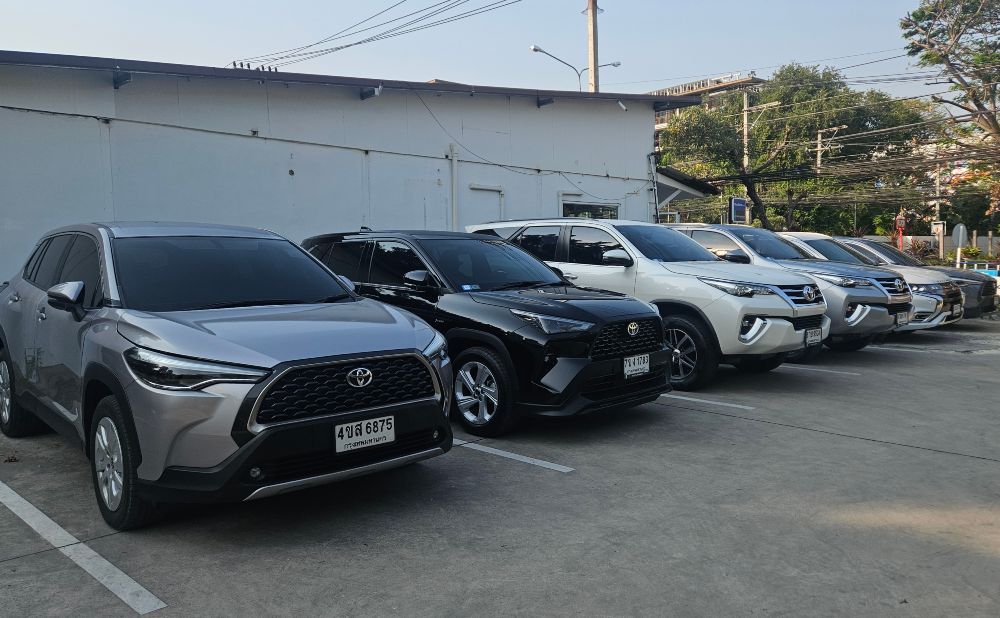
Local rental companies advertise cheaper rates, often ฿600 to ฿900 per day, but the insurance terms are frequently vague, the cars are often older and the customer service when something goes wrong is inconsistent.
Where to Book Your Car Rental in Thailand
We use Discover Cars for most bookings. It allows you to compare international and local suppliers, the insurance options are clearly explained and filtering by car type, pick-up location and supplier rating is straightforward. We have saved money when we compared with booking direct on several occasions.
For international companies operating in Thailand the main options are:
- Budget — budgetthai.com
- Hertz — hertz.co.th
- Avis — avisthailand.com
International companies cost more but the customer service when something goes wrong tends to be significantly better. Our experience in Krabi, detailed below, is a good example of why that matters.

Before You Drive Away: Pre-Rental Checks
Do these every time, regardless of how tired you are or how long the paperwork takes.
Photograph and video the entire car. Every panel, every angle, the roof, interior and boot. Do it before you sign anything if possible. This is your evidence if the company tries to charge you for pre-existing damage on return.
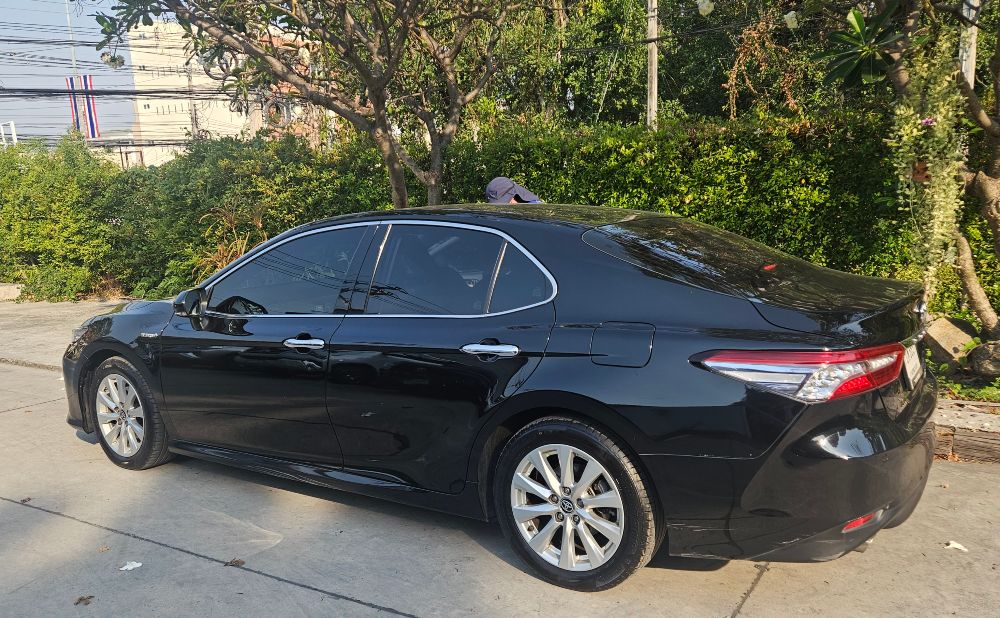
Check the spare tyre. This matters more than most people think. We cover this in detail in the section below on our Ratchaburi experience, but the short version: spare tyres are not always in perfect condition, and tyre damage is typically excluded from standard insurance. Check the tyre and the jack before you leave the car park.
Test everything: lights, air conditioning, brakes and indicators. Make sure the fuel level matches what is noted on the contract. Mark any existing scratches or dents on the condition report, no matter how minor they look.
Fill the tank before return. Returning below the contracted fuel level means you will be charged at a premium rate.
What Driving in Thailand Actually Looks Like
The official rules:
- Drive on the left
- Speed limits: 50 km/h in towns, 90 km/h on regional roads, 120 km/h on expressways
- Seat belts are mandatory for front and rear passengers
- No phone use while driving
- Speed cameras are widespread and police do issue fines to tourists.
- Drink driving is zero tolerance in practice. Fines start at ฿50,000 and jail time is possible. Do not drink and drive.
The reality:
Rules exist but are not consistently applied. Motorbikes treat lane markings as optional. Trucks overtake where they should not. Indicators are used selectively. The safest approach is to drive defensively, stay calm and match the general pace of surrounding traffic rather than rigidly maintaining a speed that everyone else is ignoring.
We avoid driving in rain to reduce risk. Visibility drops sharply, road surfaces become unpredictable and other drivers are less cautious. If you are caught in heavy rain, pull over and wait it out rather than push through.
We also recommend avoiding driving after dark where possible. Fatal road accidents in Thailand are disproportionately higher at night, with poor street lighting, speeding and drink driving all contributing factors. Motorcycles without functioning tail lights are a particular hazard on rural roads.
If you are driving during Songkran or the New Year period, be aware that accident rates spike significantly during these holidays.
Google Maps is reliable throughout Thailand. Download the offline map for your region before you leave your accommodation. Mobile data can be patchy on mountain roads.
What Happens at Thai Police Checkpoints
We have been stopped at roadside checkpoints in Phuket near the Patong intersection on multiple trips. Each time we greeted the officer in Thai, presented our IDP and licence and were waved through without issue.
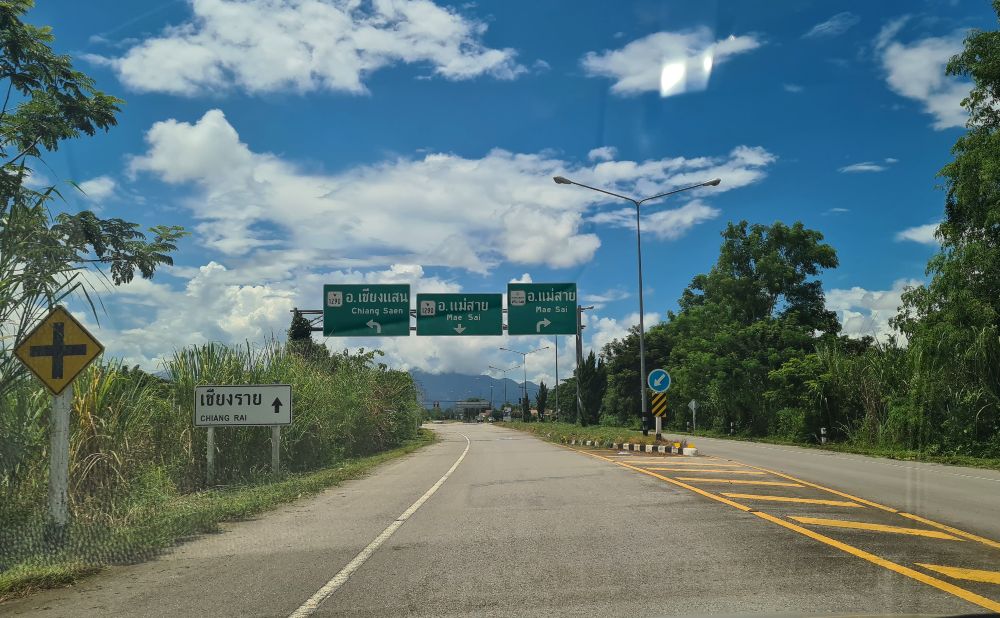
In the far north around Mae Sai, the road crosses close to the Myanmar border several times. We were stopped at both roadside checks and formal checkpoints in this area on multiple occasions. Officers inspected the car thoroughly, including underneath and in the boot, and photographed us with our passports. No rental car documentation was requested, but have everything accessible. It is routine and nothing to be concerned about if your papers are in order.
When Things Go Wrong
The flat tyre in Ratchaburi
We were staying overnight in Amphawa, in Ratchaburi province, and woke up to find a flat tyre. We do not know how it happened. We had not driven on unsealed roads and there was no visible damage to the tyre. We changed it using the spare, which was in good condition, and drove normally for the rest of the trip.
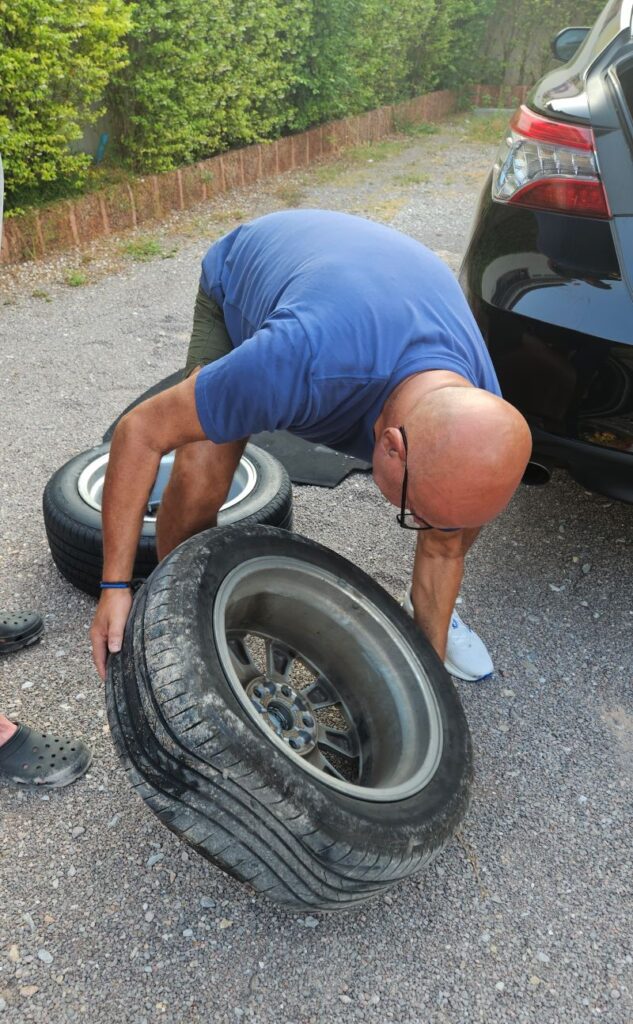
On return, Enterprise initially quoted us ฿2,000 for the tyre. We disputed it. There was no damage visible on the tyre and no way to establish how it had gone flat. They reduced the charge to ฿300.
The important lesson here: our full insurance through Enterprise did not cover the flat. Tyre damage is excluded from most collision damage waiver policies. When you book, ask specifically whether tyre and windscreen damage are covered. They usually are not.
The motorbike hit in Krabi
We were driving on a main road in Krabi when a motorbike rider, stationary on the shoulder and on his phone, pulled out directly into our lane as we passed. He hit the passenger door and rear passenger door. By the time we stopped, he had picked up his bike and ridden away.
No one was hurt and the damage to our car was cosmetic. We noted the exact location in Google Maps and called the rental company that evening. They confirmed everyone was safe, told us not to involve the police and said to continue the trip. We had eight days of hire remaining.
On return in Phuket, we were asked to draw a diagram of the incident and provide a written account. The damage was fully covered. We paid nothing.
The lesson from this: call your rental company before you do anything else. Their guidance matters, and in our experience they handled it far better than we could have on our own. If anyone is injured, in your vehicle or the other party, call the police immediately. Do not leave the scene.
Best and Worst Places to Drive in Thailand
These are the regions we would drive again without hesitation.
Chiang Mai and surrounding area is the best driving in Thailand for our money. Good roads, manageable traffic and excellent access to places that tours do not reach.
Hua Hin suits first-time drivers in Thailand. Flat, relaxed and low pressure.
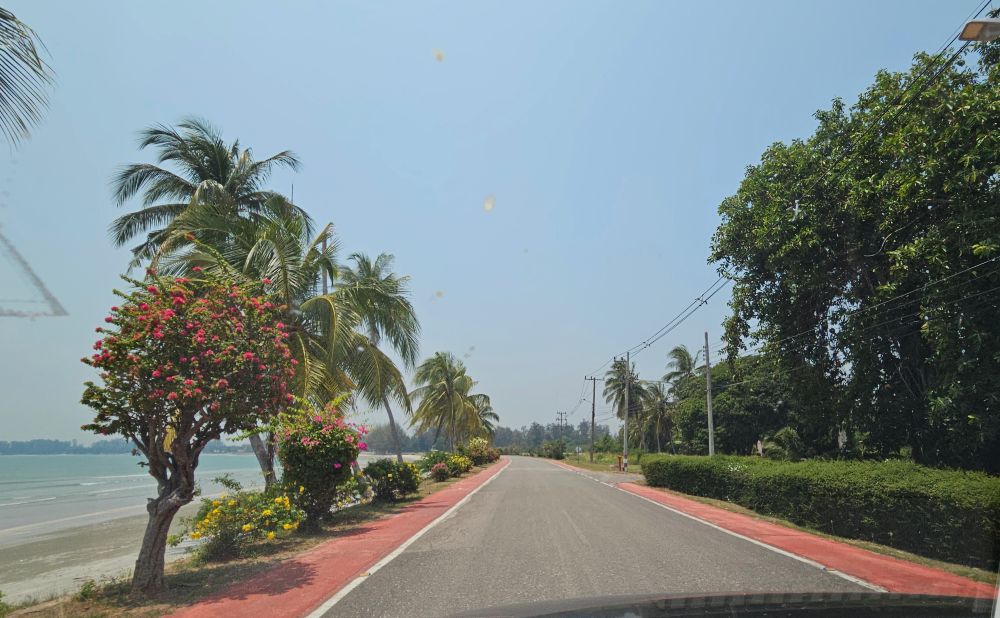
Phuket and Krabi have solid tourist infrastructure. Roads are paved, signage is reasonable. Busy near Patong but straightforward elsewhere.
Koh Samui is small enough to navigate confidently within a day or two. Better value than relying on local taxis if you are making multiple stops.
Chiang Rai is rewarding but requires more confidence. The roads toward the Myanmar border are unlike anything in the south, and worth every checkpoint.
There is one place we would never take a rental car, Bangkok. There is no practical reason to drive in Bangkok. The public transport network covers most of what you need and taxis cover the rest.
Thailand is one of the more rewarding countries to drive in, as long as you go in prepared. If you are from Australia, the UK or any country that drives on the left, you will feel at home immediately. Sort your IDP before you leave home and do the pre-rental checks every single time. The rest you will figure out on the road. Use Discover Cars to compare options and insurance terms before you commit.
Would you like to see more of our content?

Click the button above and then tick the box next to our name
If you want more tips or advice for planning your trip, you can join our Facebook group: Thailand Awaits Trip Planning for Beginners. It’s a place to ask questions, get help from other travellers and locals, and find free resources for your Thailand holiday.