Krabi Travel guide: Everything You Need to Know Before You Go
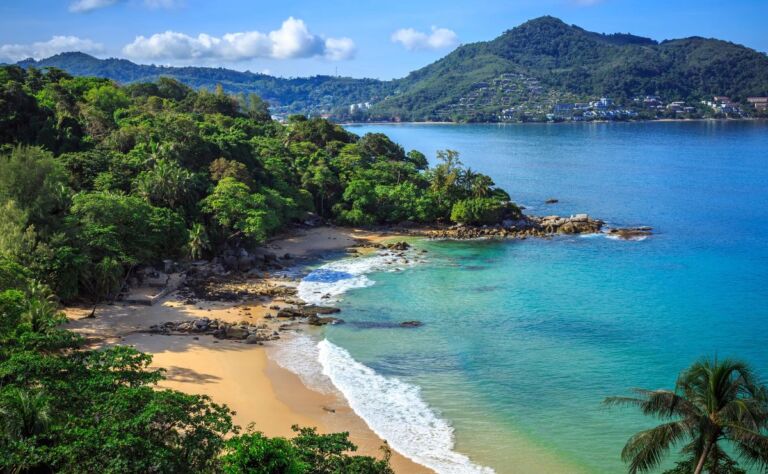
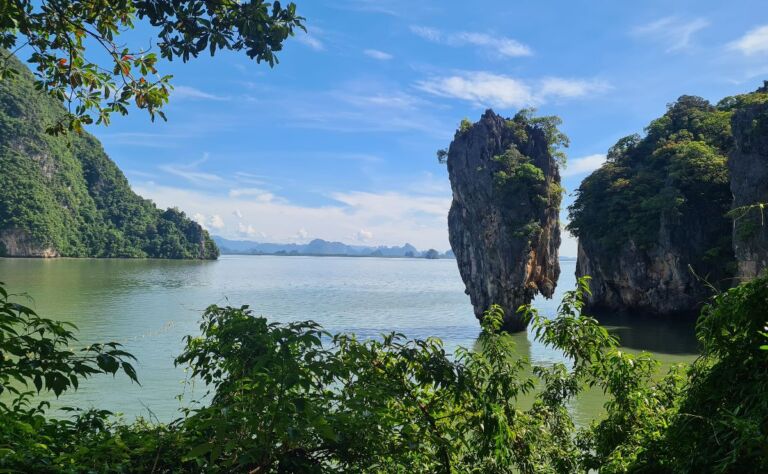
Krabi is THE image many people have in their heads when they think of Thailand. The karsts, the crystal clear water, the tiny islands with their impossibly beautiful beaches — it’s all real, and it really does look like you imagine. But there’s a lot you need to know to give yourself the best chance of a holiday as magical as the images in your head.
This page contains affiliate links. Please see our disclosure policy for more details.
Krabi is a province packed with gorgeous places to visit.
When most people plan a trip to Krabi, they end up staying at Ao Nang and maybe that is right for you. Just know going in that Ao Nang is a busy tourist hub, not a relaxing beach town. It’s beautiful, but it’s busy. If you dislike busy as much as I do, don’t worry — there are plenty of options to escape the crowds when you know where to look.
- Railay Beach is a popular choice. It’s accessible only by boat and feels like a completely different world.
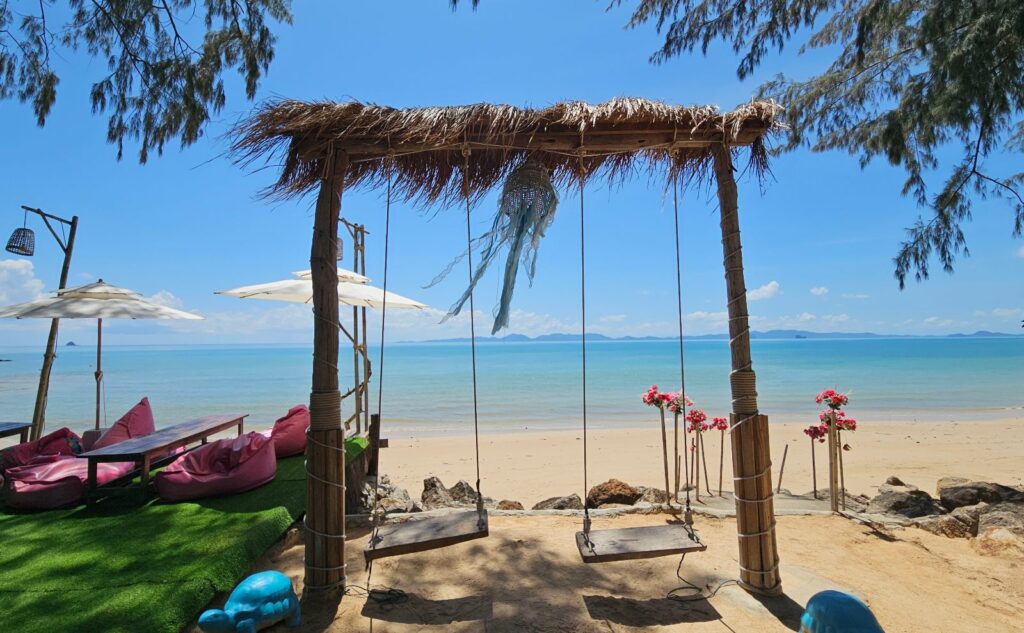
- Take the road north from Ao Nang and in 20 minutes you come to Klong Muang Beach, peaceful and impossibly beautiful.
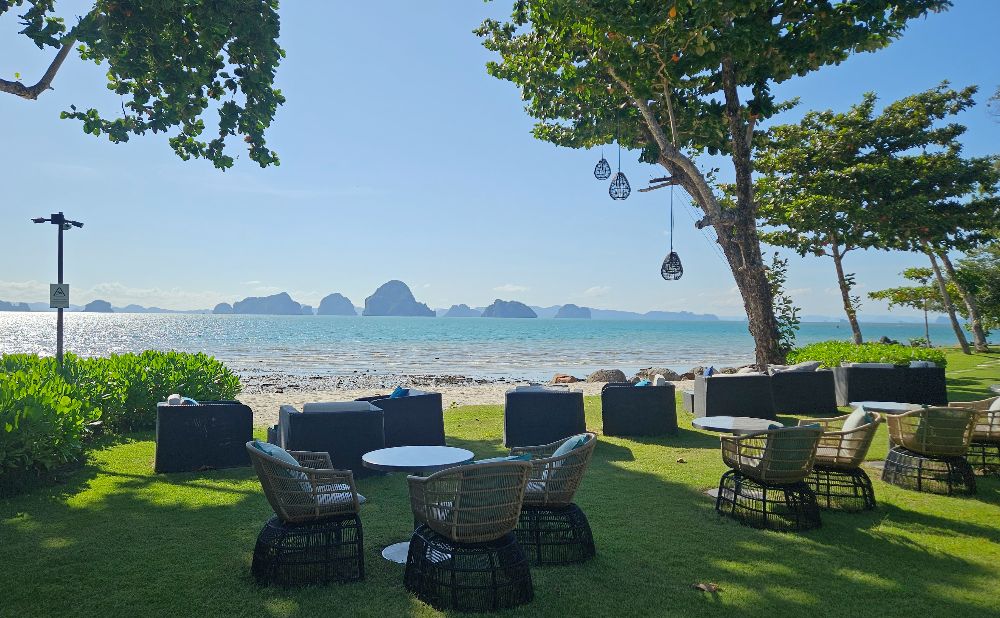
- Another 10 minutes brings you to Tubkaek Beach, backed by Hang Nak mountain with clear views to Hong Island. This beach is home to Banyan Tree Hotel and other 5 star properties.
- Koh Lanta, just under two hours south, is a snorkelling paradise and perfect for a week of slow island life.
Confusingly, the capital is called Krabi Town and it’s nowhere near the beach, it’s interesting for a visit but I don’t recommend staying there.
Krabi is worth exploring properly, so don’t short-change it. Whatever you decide just don’t spend your whole time in Ao Nang.
This guide covers the practical side of planning a visit to Krabi: where to base yourself, how to get here, when to come, and what to see. Let’s start by getting our bearings…
Where is Krabi?
Krabi is a province on Thailand’s southwest coast, facing the Andaman Sea. It sits south of Phang Nga, east of Phuket, and north of Trang — about 800 kilometres from Bangkok by road.
The province also takes in more than 150 islands, including Koh Lanta to the south and the Phi Phi Islands, which are technically part of Krabi Province despite most people associating them with Phuket.
Where to Base Yourself in Krabi
This is the question most people wrestle with before booking. The main options are Ao Nang, Railay, or the northern beaches of Klong Muang Beach, Nopharat Thara Beach and Tubkaek Beach. Each will give you a completely different experience.
Ao Nang
Ao Nang is busy for good reason. It’s the most practical base — a long stretch of beach backed by restaurants, tour operators, accommodation at every price point, and easy transport connections in all directions. The longtail boats to Railay leave directly from either end of the beach and day trip operators are everywhere.
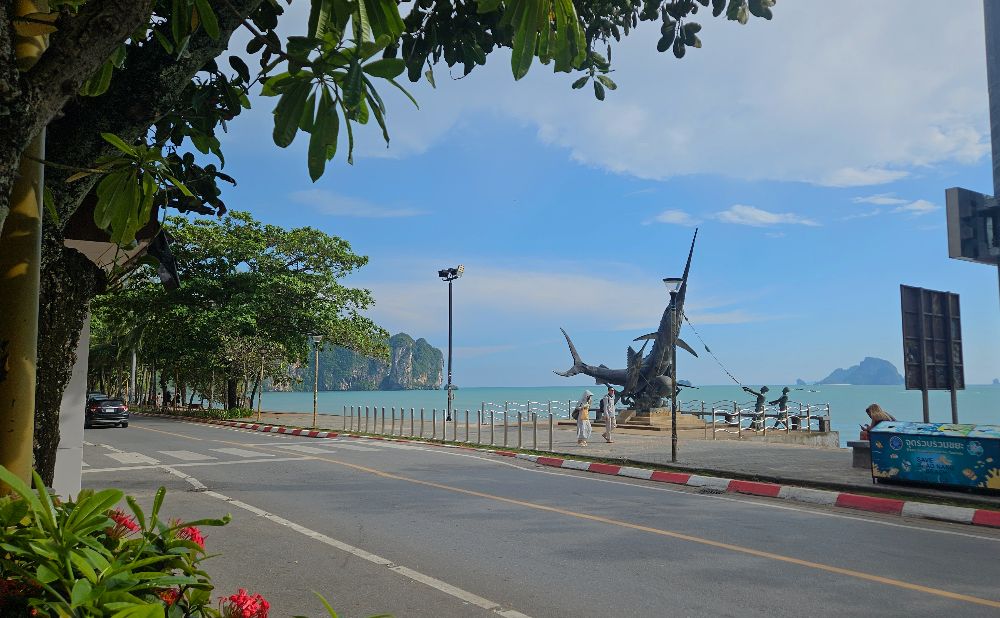
It is unquestionably touristy, and the main beach strip can feel relentless if that’s not your thing. But the beach itself is better than its reputation suggests, especially in the early morning before the island-hopping boats depart, and again in the late afternoon when the light changes and everyone heads to the waterfront for sunset and the fire shows.
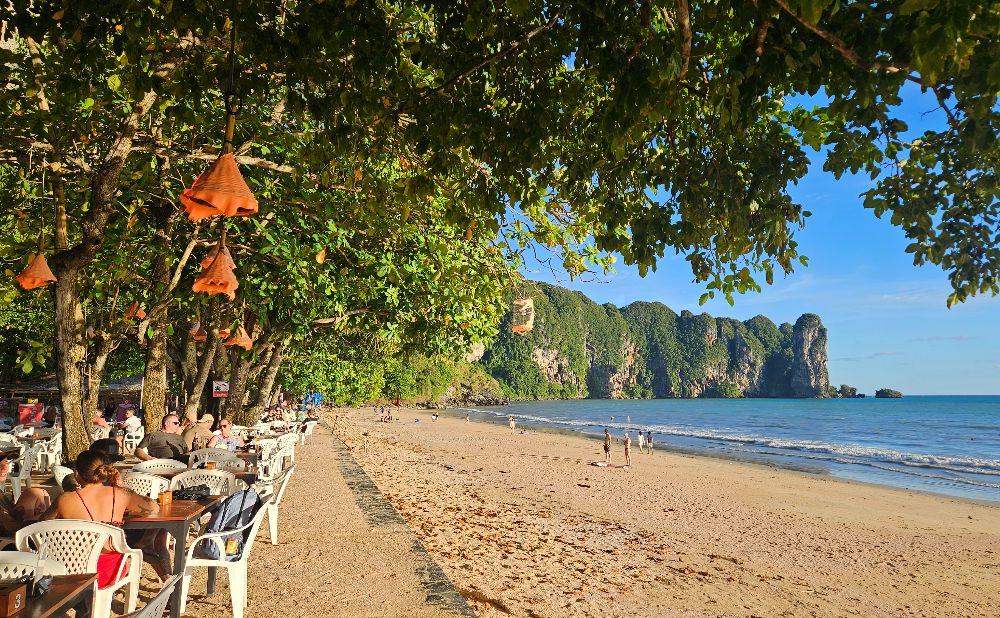
The main road can feel like the same restaurant repeats every twenty metres, but wander towards the Monkey Trail at the southern end of the beach or follow the main road in the opposite direction towards Krabi night market and the atmosphere shifts.
If it’s your first time in Krabi and you want easy access to everything, Ao Nang is a good choice.
I feel the area around the Landmark Night Market has a different energy. It’s more relaxed, making it popular with longer-stay visitors. If I were planning to stay more than a week I would choose this side of Ao Nang.
Railay
Railay sits on a small peninsula a 15-minute longtail boat ride from Ao Nang. There is no road access so while it’s close, once you arrive it feels like you are on an island. Limited accommodation keeps crowds down and the atmosphere noticeably quieter than Ao Nang after the long tail services have ended for the day.
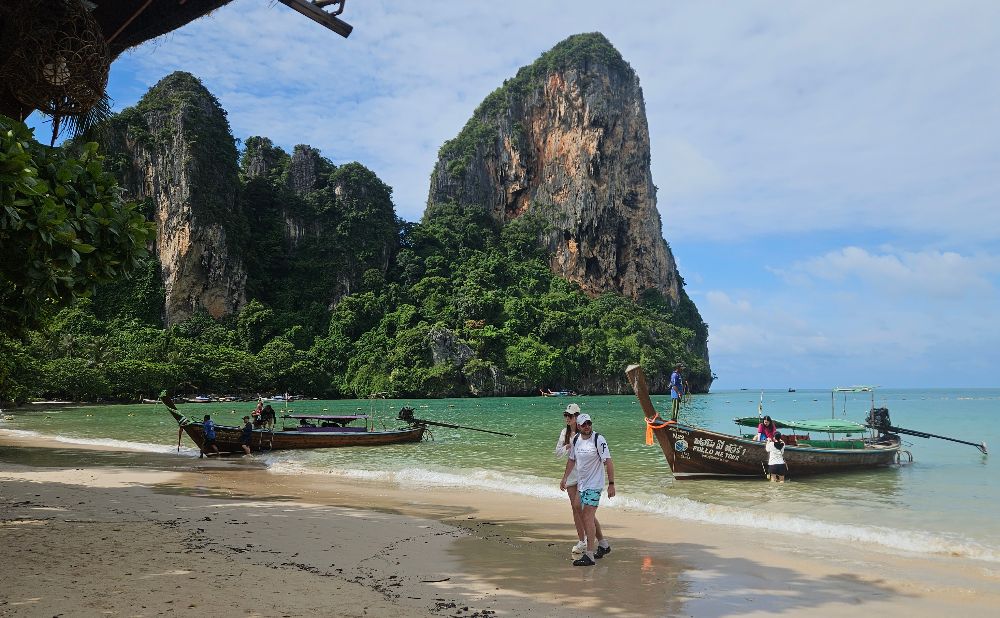
The drawcard here is the karst scenery and the local feel that hits at night and in the early morning.
The trade-off is that everything costs a little more and you’re dependent on longtail boats every time you want to leave. It suits people who want to stay put and soak it up rather than use it as a base for day trips across the province.
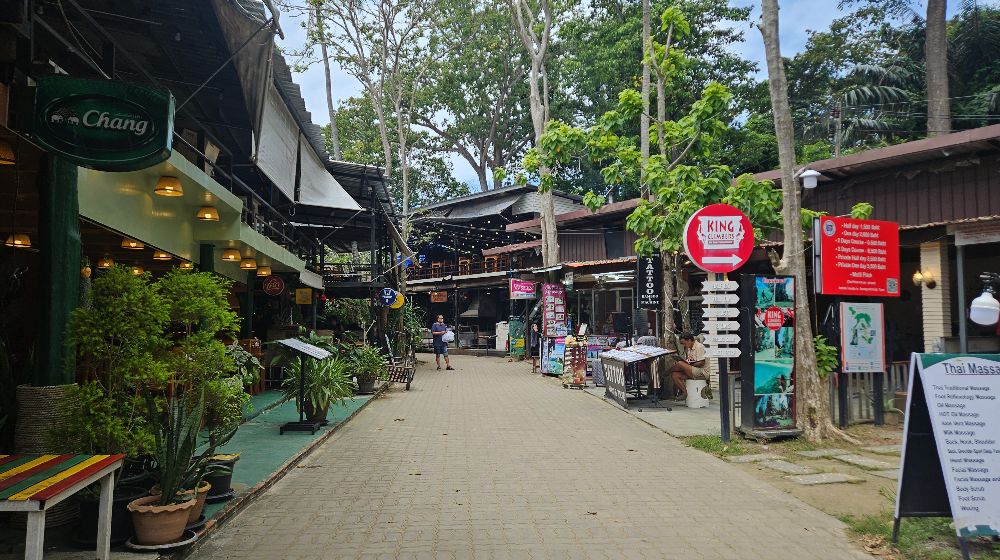
Railay West has the better beach. Railay East is where the boats dock and is muddier and less appealing — worth knowing before you book accommodation on that side.
Krabi Town
Honestly, unless you have a specific reason to be there — an early bus connection or a late arrival — it’s not where you want to base yourself for a Krabi holiday. The beaches are what makes Krabi special and staying in town means lots of time on the road.
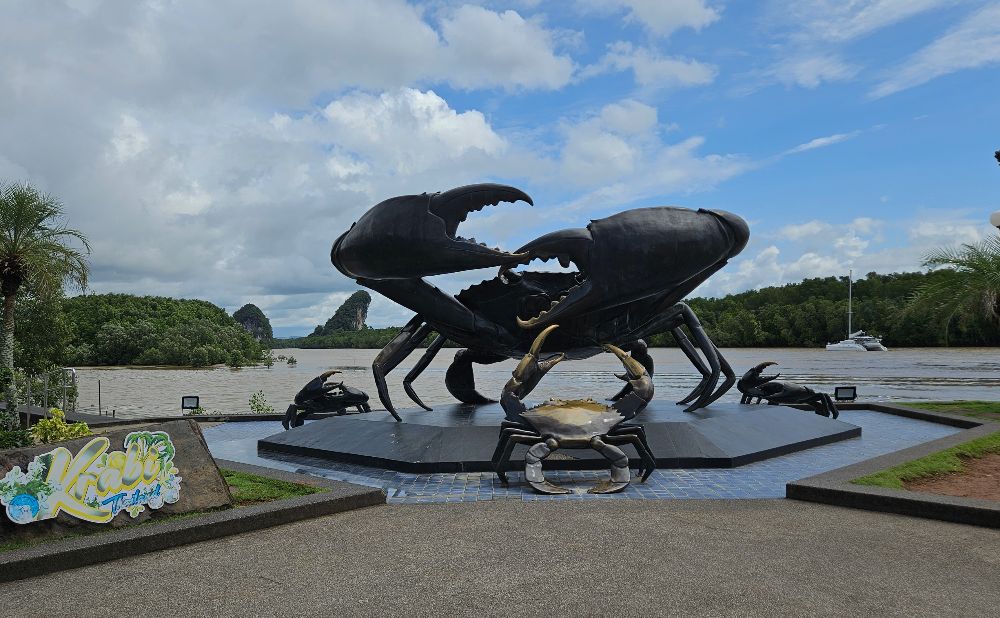
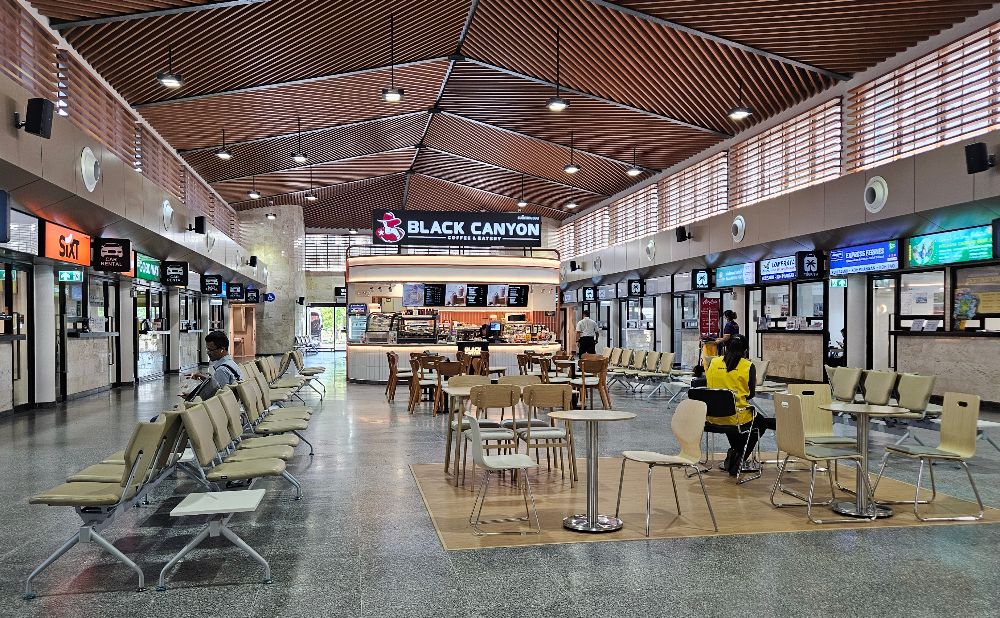
If you do find yourself staying there, songthaews run regularly between Krabi Town and Ao Nang and are cheap and straightforward to use.
How to Get to Krabi
How you arrive in Krabi depends very much on your starting point and your budget.
By Air direct to Krabi
Flying into Krabi is straightforward from most directions. If you’re coming from Bangkok, flying makes the most sense — it’s around 90 minutes from either Don Mueang or Suvarnabhumi, with plenty of options including Thai AirAsia, Thai Lion Air, Nok Air, Bangkok Airways and Thai Airways.
Coming from Chiang Mai, Thai AirAsia flies direct. From Ko Samui, Bangkok Airways offers direct flights although they are pricey.
Internationally, the most reliable connections from the region are from Kuala Lumpur (AirAsia and Firefly) and Singapore (Scoot). There are also routes from the Middle East and seasonal European connections, so it’s worth checking whether you can fly straight in rather than routing through Bangkok.
From the airport to Ao Nang is around 30 minutes by taxi or shared minivan.
From Surat Thani
Surat Thani is the main transport hub for this part of southern Thailand. You may find cheaper flights from Bangkok or Chiang Mai to Surat Thani. From Surat Thani, minibuses and shared minivans run directly to Krabi Town and Ao Nang, taking around 2.5 to 3 hours.
By Road
From Phuket
The drive from Phuket to Krabi takes around 2.5 to 3 hours. Minivans and buses run this route daily, and it’s a straightforward connection if you’re combining both destinations.
Renting a car opens up the region considerably. Krabi sits at the centre of a natural driving circuit through southern Thailand, which makes it easy to combine with other destinations if you have the time.
From Surat Thani
We picked up a car in Surat Thani and drove down through Nakhon Si Thammarat before arriving in Krabi two days later. After enjoying Krabi we continued north through Khao Sok National Park and Khao Lak before dropping the car in Phuket.
The coastline south of Surat Thani is worth exploring if you have extra time — local beaches, small towns, and very few other tourists. We spent a week on that stretch before reaching Krabi.
The road through to Khao Sok has plenty of cool stops if you’re not rushing. If you’re considering a similar loop, factor in at least one night at Khao Sok — it’s around two hours north of Krabi.
One practical note if you’re driving into Ao Nang: parking in the central area is difficult. Book accommodation that offers parking and confirm it before you arrive — don’t assume it’s included.
Getting Around Krabi
Getting around Krabi Province is straightforward once you understand how the different areas connect.
Longtail Boats
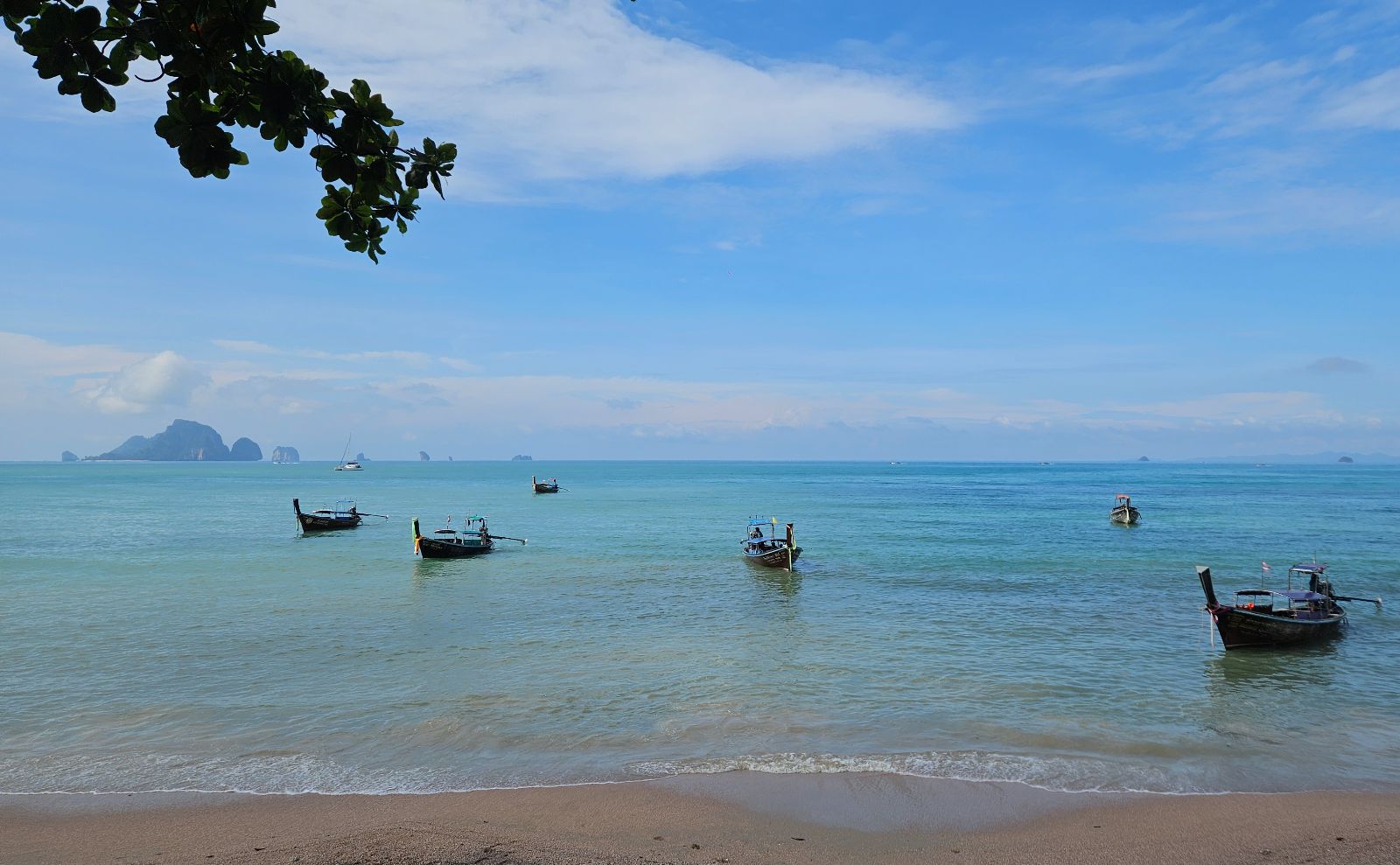
Longtail boats are the most iconic way to move around this part of Thailand and also the most essential. Railay is only accessible by boat — longtails depart from Ao Nang beach throughout the day and the short crossing takes around 15 minutes.
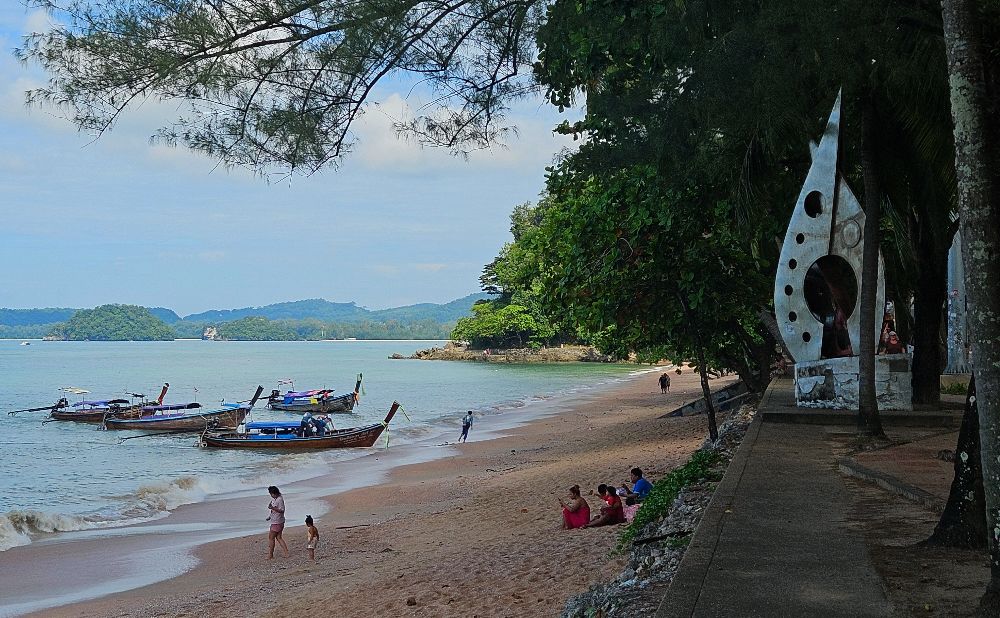
You can also use them for island day trips. Prices are fixed and displayed at the pier, so there’s no need to negotiate. You may have to wait for a few minutes for enough passengers to join however it’s not usually very long.
Songthaews
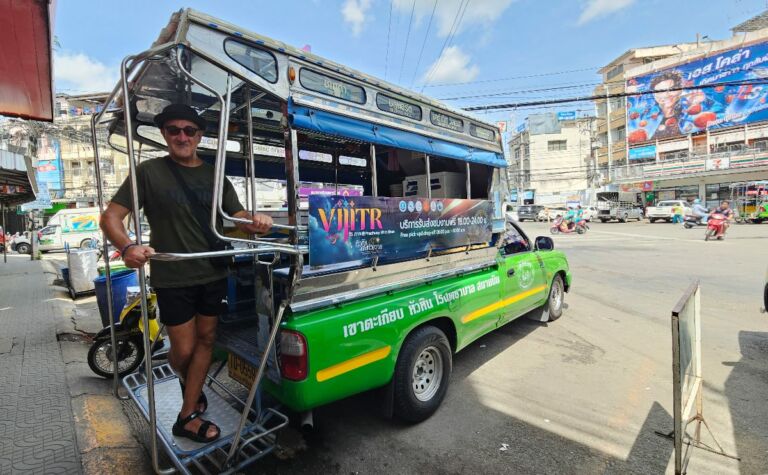
If you haven’t come across songthaews before, they’re converted pickup trucks with bench seats in the back and an open rear — basically Thailand’s version of a local bus. The white songthaews are the shared public ones; other colours are usually private vehicles operated by hotels or tour operators, so make sure you’re jumping into the right one.
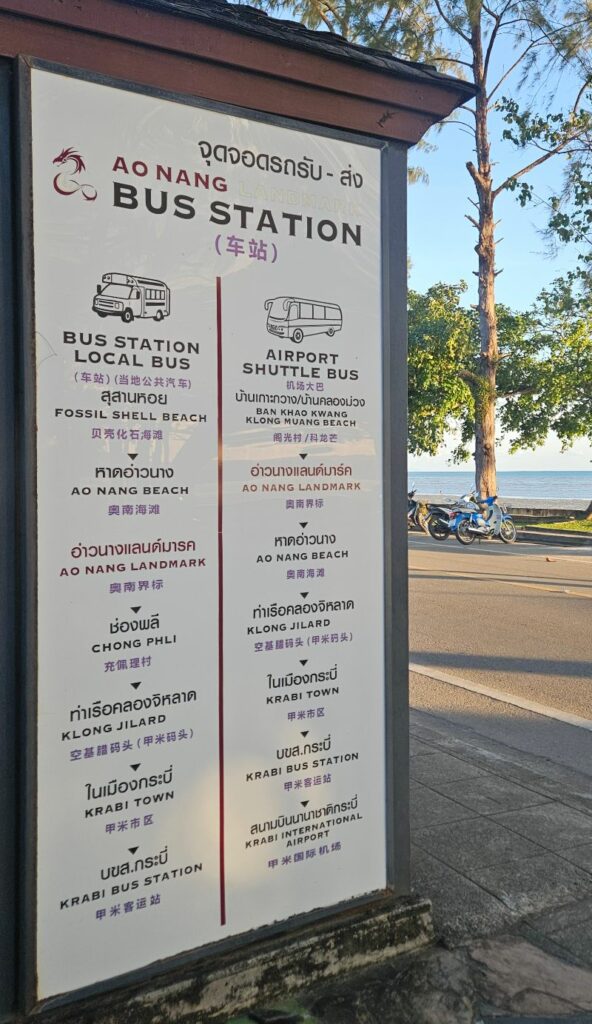
White songthaews run regularly between Krabi Airport and Krabi Town and between Krabi Town and Ao Nang — and at 50-60 baht they’re by far the cheapest option. They are a great way to get around, if you’re travelling light and arriving during daylight hours.
If you’ve got a big suitcase and land at 7pm, less so. They run roughly 6am to 6pm on a fixed route, so you may also need to walk the last stretch to your accommodation from the drop-off point.
Private Taxis / Grab
Taxis exist in Krabi but they’re not cheap, and there’s a bit of a mafia situation going on, short local trips within Ao Nang that should cost next to nothing will set you back 200-300 baht.
The Grab app works in both Krabi Town and Ao Nang and takes the guesswork out of taxi pricing. It’s worth having on your phone for airport transfers and any journey where you’d rather not haggle.
Airport transfers to Ao Nang run 600-1,200 baht for the 30-40 minute ride. Use Grab where you can . For airport transfers a better option is to walk to the main road and call a Grab or Bolt, you’ll pay around 300-400 baht and know the price before you get in.
Scooter Hire
Renting a scooter gives you genuine freedom on the mainland — useful for exploring beaches beyond Ao Nang, finding local restaurants, or just getting around at your own pace. Hire shops are easy to find in Ao Nang. An international licence is required and check if your travel insurance will cover you riding a scooter. There are way too many stories of visitors ending up with huge medical bills from road accidents. A helmet is non-negotiable.
Best Time to Visit Krabi
High Season: November to April
November to April is when Krabi is at its busiest and most expensive. The weather is reliable, dry, sunny and warm, and everything runs at full capacity. If it’s your first visit and you want the safest bet weather-wise, this is it. Just book accommodation early, and if you’re coming over Christmas or New Year, book it very early. Prices go silly.
Shoulder Season: May and October
My preference, if I’m honest. Charles and I have visited in both months and the weather was fine — warm days, the occasional afternoon shower, nothing that ruined anything. The crowds thin out noticeably, prices drop, and the karsts look incredible with everything lush and green. Most tours and boats still run normally. If your dates are flexible, seriously consider it.
Low Season: June to September
The southwest monsoon hits the Andaman coast hard during these months. More rain, rougher seas, and some island tours get cancelled when conditions aren’t safe. Krabi doesn’t shut down, it’s possible to visit and have a good time but you need a flexible itinerary.
If you’re coming in low season, consider spending time at Khao Sok National Park. It’s a rainforest, it’s at its most spectacular when wet, and it’s far less affected by the coastal weather than the beach areas.
How Many Days Do You Need?
The honest answer is that Krabi deserves more time than most people give it.
3 Days
Three days is the minimum to make the trip worthwhile. You’ll have time to settle into Ao Nang, spend a day at Railay, and fit in one island day trip. It’s enough to get a feel for the place but I suspect you’ll leave wanting more.
5 to 7 Days
This suits most people. Five to seven days gives you time to explore Ao Nang properly, spend a night or two on Railay, do a PhiPhi Island day trip, or visit the Emerald Pool and have at least one unscheduled day to just wander. You won’t feel rushed and you won’t run out of things to do.
10 Days or More
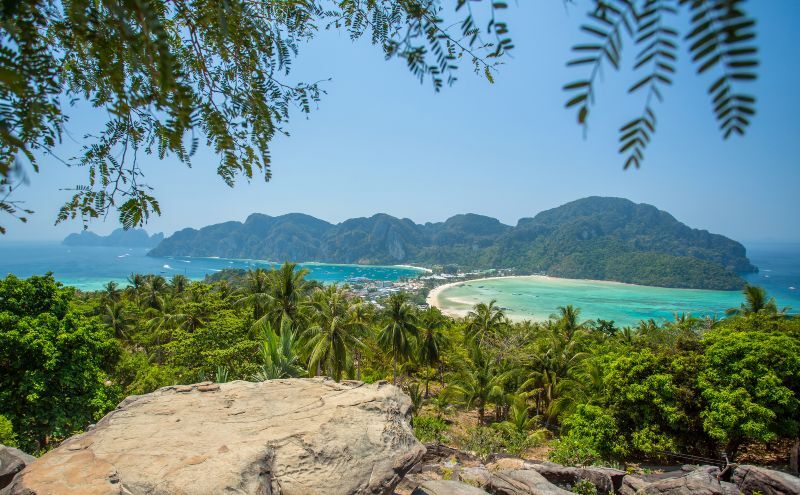
Ten days or more opens up the neighbouring provinces. Add a night or two at Khao Sok National Park around two hours north. It’s a great contrast to the beaches and islands. Koh Lanta to the south is worth considering for longer stays too, particularly if you want somewhere quieter than Ao Nang.
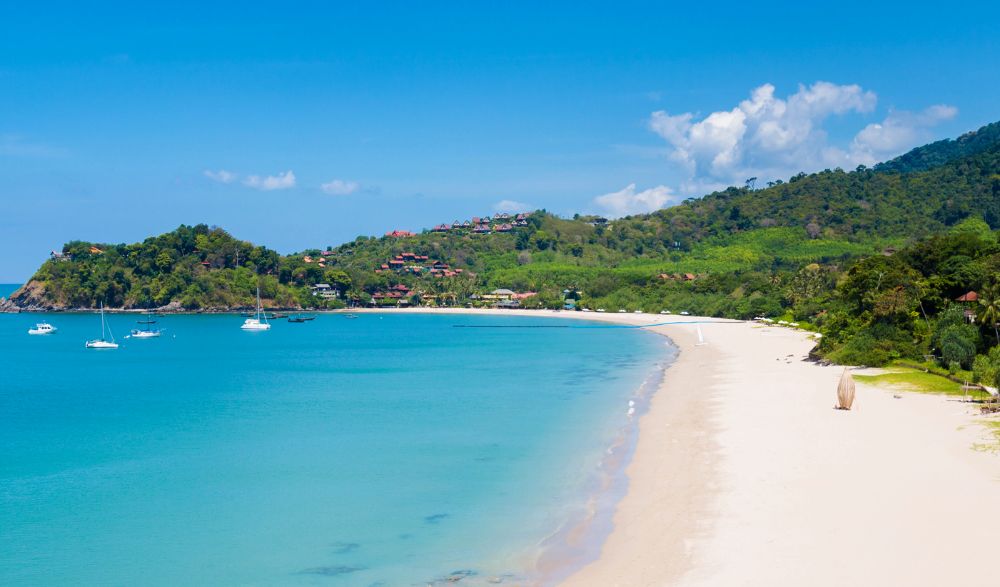
If you are driving a circuit through southern Thailand, Krabi sits naturally between Khao Sok and either Phuket or Koh Lanta, making it easy to combine without backtracking.
What Does Krabi Cost?
Accommodation
Accommodation in Ao Nang is relatively expensive, particularly anything on or near the waterfront in high and shoulder season. A view will cost you. Book early — especially if you’re looking at mid-range properties, which fill up fast.
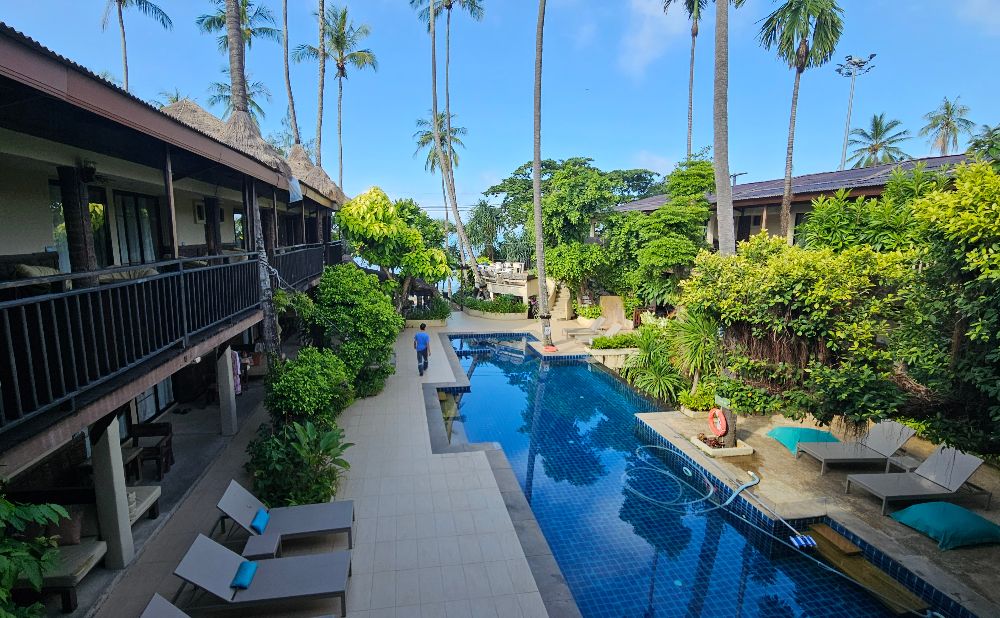
Step back a couple of blocks from the water and you’ll get a better price, and you’re still only a short walk from the beach.
Food
A decent Thai meal from a local restaurant or market stall runs around 150 baht. Ao Nang’s main strip has no shortage of restaurants but what surprised us was the number of places that seemed exactly the same.

Lots of Indian restaurants often selling pizza and Thai meals as well. We felt the food on the main drag was average for the price. Wander off the main road or head to the night market for better value and more interesting eating.
Tours and Activities
Island day trips cost 800–1,500 baht per person depending on the operator and destination. In many case a private tour will work out better value for families or groups.
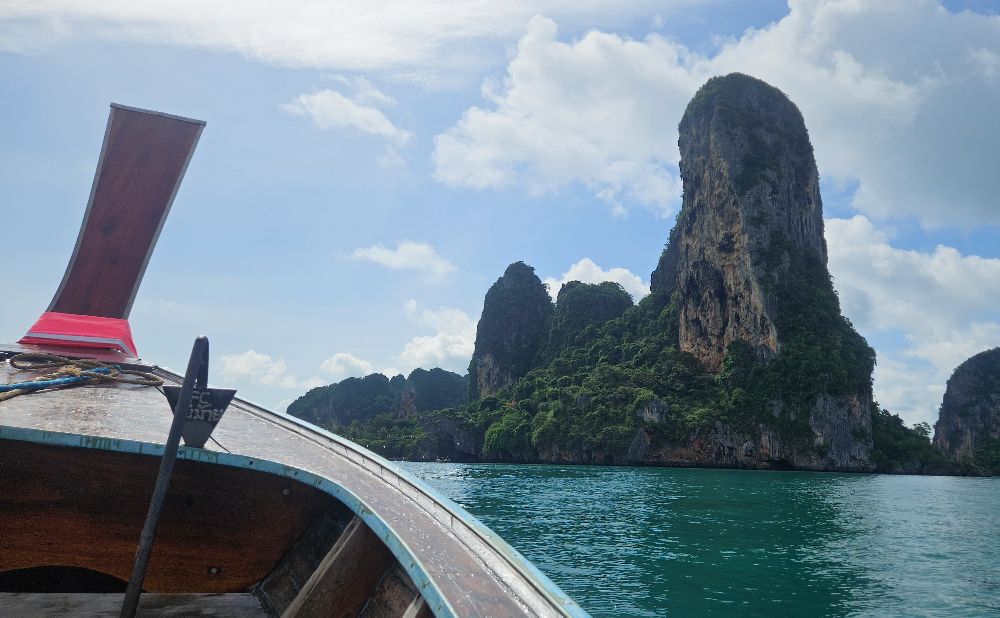
Longtail boats to Railay from Ao Nang beach are around 100–120 baht per person each way. You can also choose to take a long tail boat to any one of the islands instead of doing a tour.

Rock climbing half-day courses start at around 1,200 baht. Booking through your accommodation or a reputable tour desk on the beach is straightforward. You don’t need to book everything in advance unless you want your itinerary sorted before you go.
Daily Budget Estimates
On a tight budget, eating local, using shared transport, staying back from the beach, you can manage on around 1,500 to 2,000 baht a day. Move up to beachfront accommodation and a tour every couple of days and you’re looking at 4,000 to 6,000 baht. And if you want to spend more, Ao Nang will happily help you do that too.
Practical Information
ATMs are easy to find throughout Ao Nang and Krabi Town. There is a foreign transaction fee of around 220 baht per withdrawal for any non-Thai account. Withdraw larger amounts less frequently to minimise this. Cash is still essential for markets, longtail boats and smaller restaurants.
If this is your first stop in Thailand, pick up a local SIM at the airport on arrival — we cover SIM and eSIM options in our Thailand eSIM guide. If you’re arriving from elsewhere in Thailand you’ll already have this sorted.
Is Krabi Worth It?
I know saying “that depends” doesn’t really help you but in this case there are some variables. In the wet season with rough seas, it’s probably not the right time unless you have enough flexibility to wait out the weather
Go with realistic expectations about Ao Nang and how commercial it is and you’ll have a better trip.
The province delivers on its reputation. The karst scenery is incredible, Railay is special, and there’s enough variety to keep you busy for well over a week.
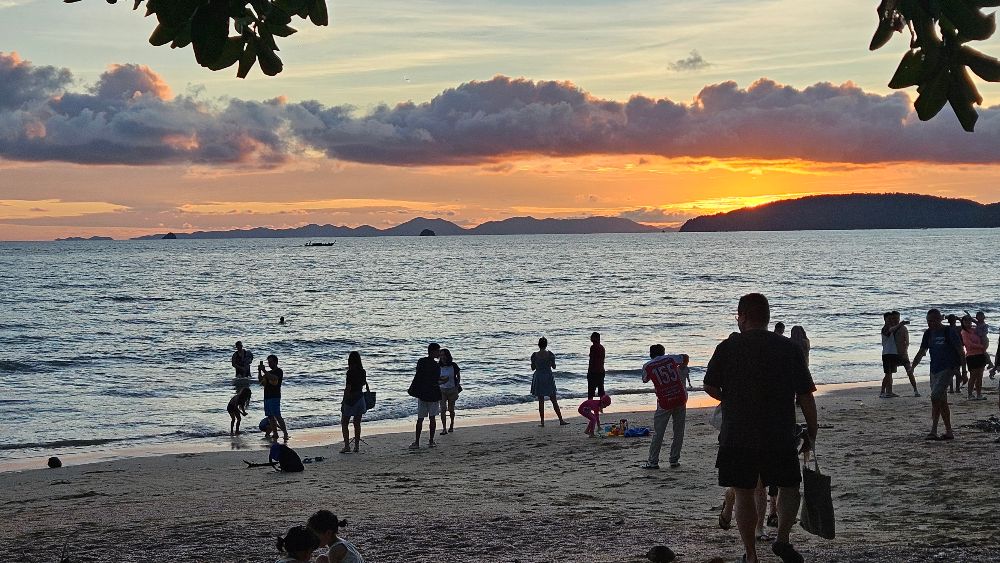
If I were going back for a romantic trip, I’d look seriously at the quieter beaches further north, the stretch around the Banyan Tree Hotel has a different pace entirely.
For a longer stay, the beach near the Landmark Night Market end of Ao Nang is worth considering over the main strip — a slightly different crowd, a little less frenetic, and still well connected.
Railay is beautiful and absolutely worth including. Just make sure you’ve read the logistics section before you book — it’s not complicated but it helps to know what you’re getting into.
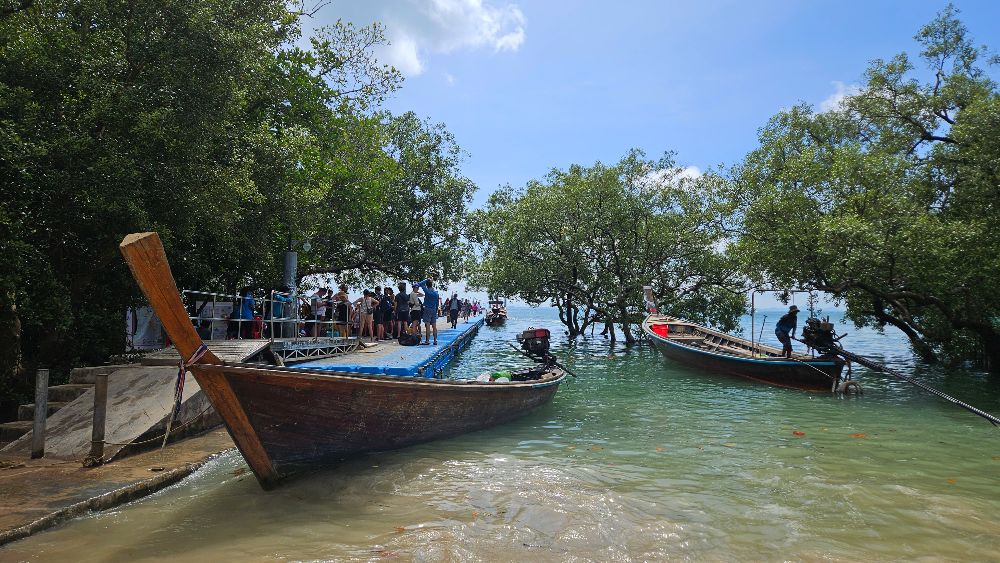
If you have the time and a rental car, the coastline south of Surat Thani down to Krabi sees far fewer tourists.You’ll find small Thai beach communities, fishing villages, and a different pace of life. The drive through to Khao Sok is similar with plenty of stops if you’re not rushing.
Plan at least seven days in the province if you want to see it properly. Three days will give you a taste, but a week or more lets you explore beyond the main beach areas and actually relax.
Planning a Thai adventure? Join our friendly Facebook community Thailand Awaits: Trip Planning for Beginners. Get expert advice from locals and experienced travellers, ask your questions, and discover how to make the most of your journey through Thailand.